Buyer Summary
The sample fee should be reviewed from the buyer’s actual artwork and component brief. Existing fabric, lining and zipper routes usually need less setup than custom dyeing, custom hardware or a molded puller. The fee can also change with new pattern work, pockets, padding, embroidery, woven labels and the number of revisions required.
Buyer insight: the design file decides the development route
When a buyer asks for a sample price before sharing artwork, the answer can only be provisional. The same-looking pouch may use an existing canvas and stock zipper, or it may require a custom-dyed fabric, special lining, plated zipper, molded puller and new woven label. Those are different development routes.
A useful sample-cost review therefore starts with the design file, target color, component references and intended order quantity. This protects the buyer from comparing a basic stock-component sample with a fully custom retail specification.
Stock route versus custom route
| Component | Lower-setup route | Higher-setup route | Approval evidence |
|---|---|---|---|
| Outer fabric | Existing fabric and available color. | Custom dyeing, coating, quilting or uncommon weight. | Material swatch and finished sample. |
| Lining | Current lining in a suitable color. | Custom color, print, coating or special pocket construction. | Loaded sample and cleaning review. |
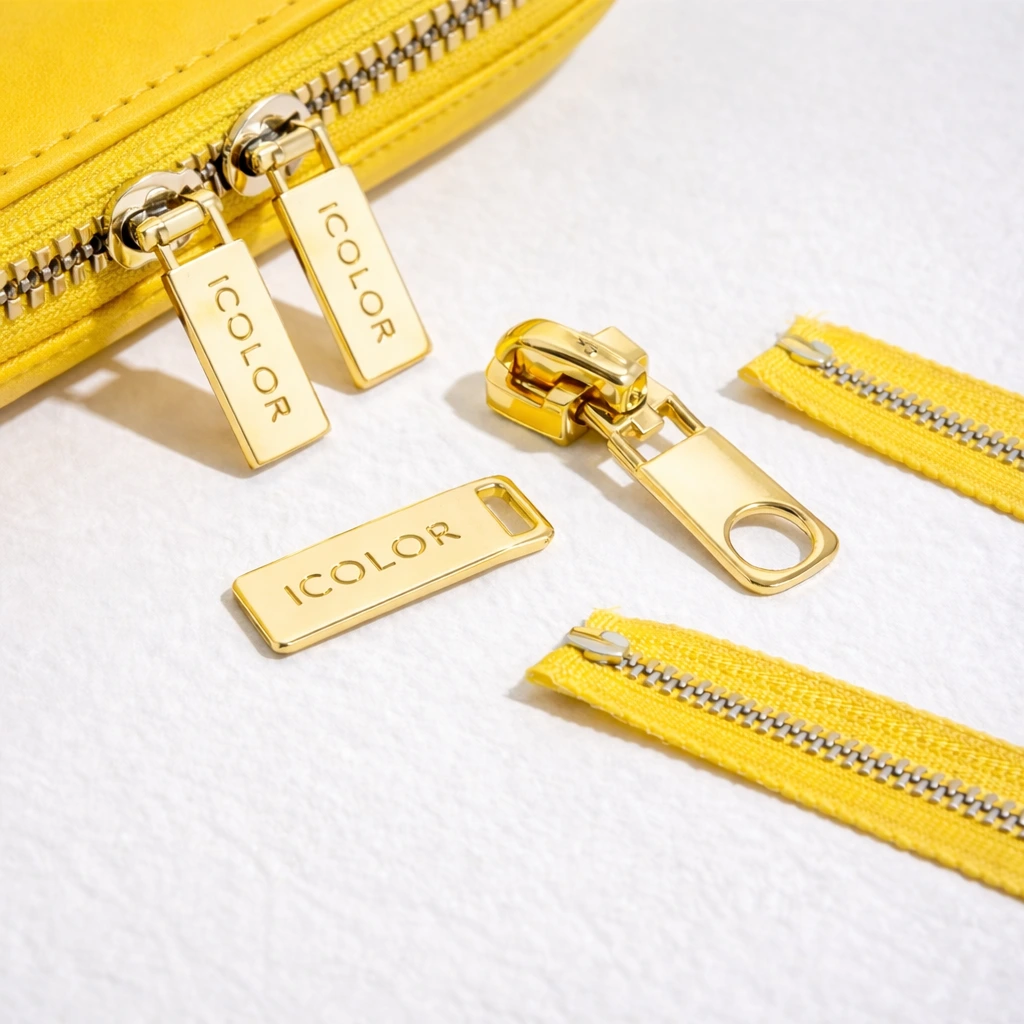
| Zipper | Stock tape, slider and puller. | Custom tape color, plating, branded slider or special length. | Hardware sample and smoothness test. |
| Puller | Standard puller from an existing range. | New molded branded puller requiring tooling. | 3D/artwork confirmation and physical puller. |
| Logo | Existing-size screen print or simple label. | Dense embroidery, foil, multiple positions or new woven label. | Strike-off or logo sample on final material. |
| Pattern | Existing construction adjusted to size. | New shape, multi-layer structure, complex pockets or frame. | Pattern prototype and fit test. |

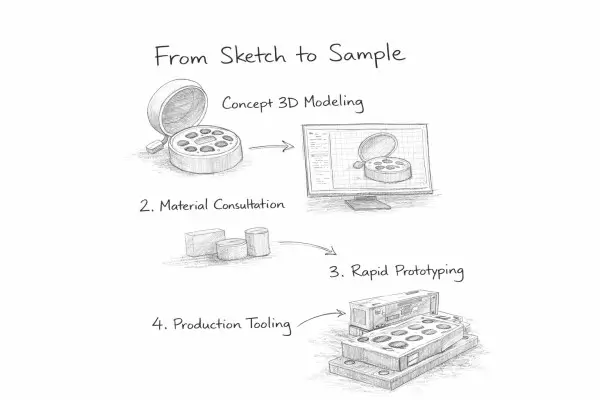
Four questions that determine the sample fee
Use Pantone Connect1 to communicate color targets, but sign off color on the actual fabric and zipper tape. YKK zipper products2 provides useful zipper-type context; the final component still needs to match the pouch construction and order specification.
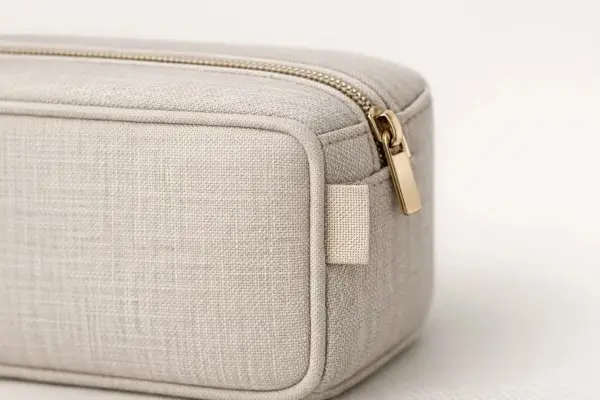
What the sample fee should include
- Pattern or structure development included in the quoted sample route.
- Material and component setup that is specifically required for the design.
- Logo strike-off, label, embroidery or print work included in the sample.
- Number of physical samples and whether freight is included or separate.
- Expected revision boundary: which buyer changes may require a new fee.
- Estimated bulk MOQ and whether custom components have separate minimums.
Best fit and less suitable sample requests
For textile material review, OEKO-TEX Standard 1003 may support selected materials where supplier records and project scope apply. Use the custom cosmetic bag manufacturer page to connect the sample route to a realistic bulk-production plan.
PREGUNTAS FRECUENTES
Why is there no single cosmetic bag sample fee?
Because fabric, dyeing, zipper, puller, lining, pattern, pockets, logo setup and sample quantity vary by design.
Does stock fabric reduce the sample fee?
It can reduce setup when the available fabric, color and performance fit the brief, but sewing and pattern work still apply.
Does a custom zipper pull require a mold?
A newly shaped branded puller may require tooling. A standard puller with existing geometry usually follows a simpler route.
Can the sample fee be refunded?
Refund or credit terms depend on the confirmed project and quotation. They should be agreed in writing before sampling.
About the Author

Vivi Lu supports Ecoicolor buyers with RFQ review, structure choices, material routes, sample approval and retail packing for beauty, fragrance, jewelry and sewn-pouch projects. Connect with Vivi Lu on LinkedIn.