Cosmetic bag campaign ROI should be planned through total program cost, not unit price alone. Material choice, components, branding method, sample rounds and retail pack-out all affect the final commercial result.
Use this guide to define cost drivers before sending a campaign RFQ.
Request a Cosmetic Bag RFQ View Cosmetic Bag Manufacturing
Quick Summary
Cosmetic bag campaign ROI should not be judged by unit price alone. Material choice, components, branding method, sample rounds and retail pack-out all affect total program cost and launch reliability.
For production support, Build a cosmetic bag project brief around total program cost.
Qué preparar antes de solicitar presupuestos
Prepare these details before asking for pricing:
- Project use: retail pouch, GWP, sample kit, influencer kit, travel set, subscription box or holiday bundle.
- Target quantity: MOQ 500, expected repeat order and color split.
- Size: outer dimensions, gusset depth and usable inner space.
- Product fit: bottles, jars, tubes, palettes, brushes, cards or mixed items.
- Material route: canvas, velvet, recycled PU, RPET fabric, washable kraft paper or mixed structure.
- Lining: no lining, polyester lining, wipe-clean lining or padded lining.
- Zipper: nylon zipper, metal-look zipper, custom puller or wider opening.
- Logo: embroidery, woven label, patch, screen print, heat transfer or metal plate.
- Packing: flat pack, shaped packing, individual bag, carton count and destination country.
If you are still choosing the pouch type, compare options on our cosmetic bag manufacturer page before locking the RFQ.
Cosmetic Bag RFQ Checklist
| RFQ Item | What to Specify | Por qué es importante |
|---|---|---|
| Use case | Retail, GWP, travel, influencer or gift set | Controls material, size and packing route |
| MOQ | 500 pieces by color, logo and design | Avoids unclear SKU splits |
| Size | Width, height, gusset and inner usable space | Keeps products from fitting too tightly |
| Material | Canvas, velvet, recycled PU, RPET fabric or mixed route | Affects hand feel, structure and logo method |
| Lining | Plain, wipe-clean, padded or no lining | Impacts use, cleaning and product protection |
| Zipper | Tape color, puller, opening direction and finish | Changes sample cost and user experience |
| Logo | Print, embroidery, label, patch, plate or heat transfer | Controls artwork setup and production timing |
| QC | Stitching, zipper, logo, lining, odor, packing and carton checks | Helps avoid launch surprises |
1. Define the Bag’s Role in the Brand Program
Before choosing a material, define what the cosmetic bag is supposed to do. A GWP pouch may need a visible logo and efficient packing. A retail cosmetic bag may need stronger structure and shelf appeal. A travel set may need more usable inner space and zipper testing. An influencer kit may need a visual finish that photographs well.
This role affects the sourcing brief. A bag that holds glass bottles needs a different fit test from a bag that holds sample sachets or makeup brushes. A launch kit may need more attention to logo placement, while a refill program may need a simpler repeatable construction.
2. Plan MOQ 500 Around SKU Count
MOQ 500 works best when the buyer separates quantity from variation. If 500 pieces include several colors, different logo methods or different packing routes, the quote becomes hard to compare.
A clean MOQ note should answer:
- Is MOQ 500 for one material, one size and one logo?
- Are there multiple colorways under the same structure?
- Does each color need the same zipper and lining?
- Is this a first launch, a seasonal program or a repeat order?
- Will the sample be used for retail approval, internal review or campaign photography?
When the design is still open, quote the base version first. Then ask for add-on pricing for extra colors, special pullers or premium logo methods.
3. Choose Material by Touch, Structure and Use
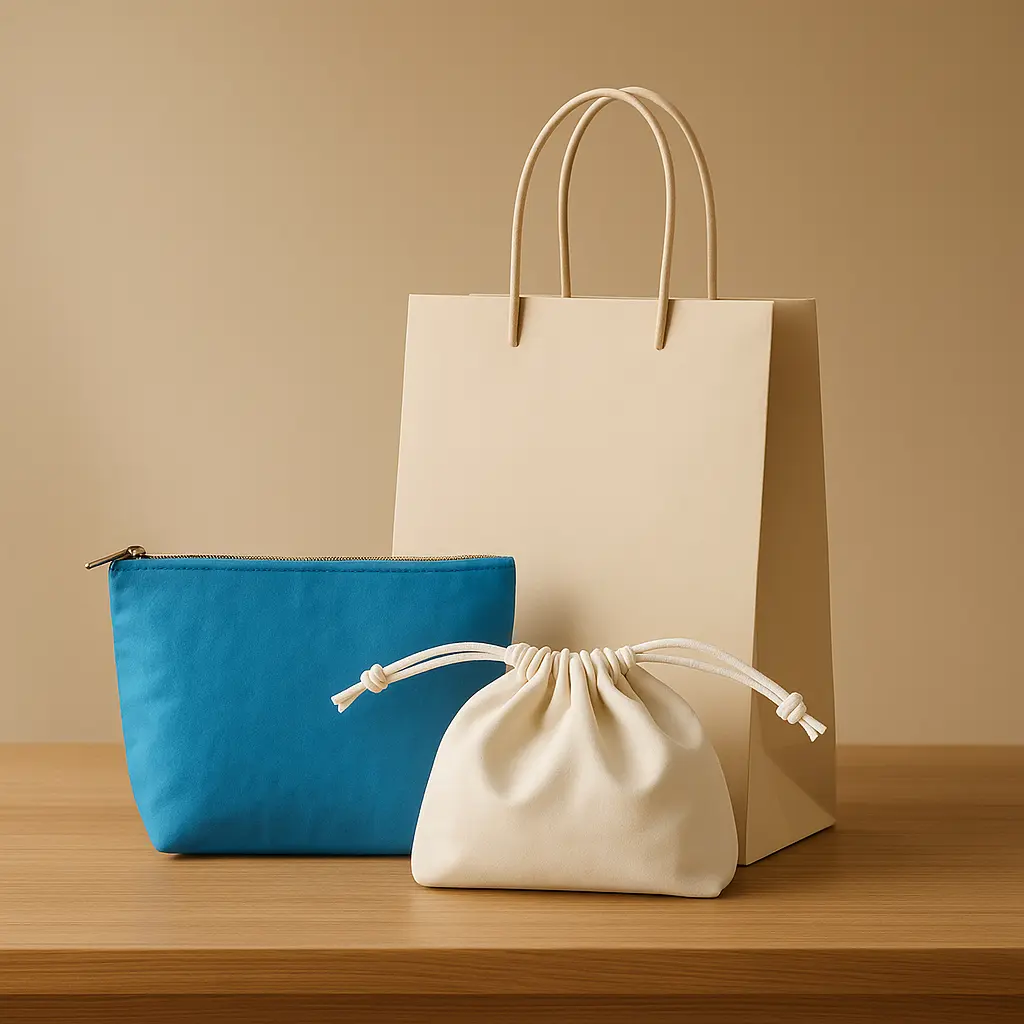
Material choice shapes how the cosmetic bag feels in the customer’s hand. Velvet can feel soft and giftable. Canvas can support a more natural product story. Recycled PU can offer a smooth surface and more defined structure. RPET fabric can work for lightweight pouches, travel sets and repeatable programs.
Ask material questions early:
- Does the bag need to stand, fold or remain soft?
- Will it hold liquid products or dry accessories?
- Should the inside be wipe-clean?
- Does the surface need embroidery, foil, screen print or a sewn label?
- Are material documents or claim boundaries needed for retailer review?
For material and print claim wording, use our materials and printing guide before finalizing copy.
4. Specify Zipper, Puller and Opening
Zipper details can change both cost and user experience. A cosmetic bag may look strong in a photo but feel weak if the zipper catches, the puller feels too small or the opening does not allow bottles to slide in easily.
Define:
- Zipper tape color and teeth color.
- Puller shape, material and logo option.
- Opening direction and opening width.
- Metal-look or tonal finish.
- Side gusset, boxed bottom or flat pouch structure.
- Whether the zipper will be tested with filled products inside.
If the bag will be used daily, request a sample that can be opened and closed repeatedly during approval. If it will be packed as a gift set, test the zipper after products are inserted.

5. Match Logo Method to Material Surface
The best logo method depends on the material. Embroidery can work well on some fabric pouches but may distort fine artwork. Screen print is efficient on many flat surfaces but needs ink and color testing. A woven label or patch can support repeat programs. A metal plate can raise perceived value but adds setup and weight.
Ask the supplier to confirm:
- Minimum logo line thickness.
- Logo size and placement tolerance.
- Color matching method.
- Whether the logo crosses a seam or curved area.
- Whether the sample will show the final logo method.
This step matters because a cosmetic bag often becomes the most visible branded item in a set. A clear logo sample prevents late artwork debates.
6. Approve Samples With Product Fit Testing
Do not approve a cosmetic bag sample only by exterior appearance. Put the real product group inside and check the fit, zipper movement, shape, logo position and packing look.
Sample review should include:
- Empty appearance.
- Filled appearance.
- Inner usable space.
- Stitching and corner shape.
- Lining behavior.
- Zipper smoothness.
- Logo alignment.
- Individual packing and carton packing.
If the bag is part of a larger launch set, photograph the full set during sample review. This makes it easier for marketing, retail and sourcing teams to align before production.
7. Add QC Points Before Production
Custom cosmetic bags need QC standards that match the project use. Basic checks include material color, fabric defects, stitching, loose threads, zipper movement, puller attachment, logo placement, lining cleanliness, odor, size tolerance, packing count and carton marks.
For higher-value launches, add an approved sample reference and photo standard. For GWP or retail promotions, define the acceptable packing count and carton labeling before production starts.
RFQ Template for Custom Cosmetic Bags
Copy this structure into your inquiry:
We are sourcing custom cosmetic bags for [brand/project]. Target quantity is [500+] pieces. Use case is [retail/GWP/travel/influencer/gift set]. Approximate size is [W x H x D]. The bag needs to hold [product list]. Preferred material is [canvas/velvet/recycled PU/RPET/other]. Lining request is [none/polyester/wipe-clean/padded]. Zipper request is [nylon/metal-look/custom puller/wide opening]. Logo method is [embroidery/label/patch/screen print/heat transfer/metal plate]. Please quote sample cost, sample lead time, bulk lead time, packing method and QC points.
If the cosmetic bag is part of a wider packaging program with cartons, inserts or launch kits, Ecoicolor can connect it with broader packaging through our coordinated beauty packaging service.
PREGUNTAS FRECUENTES
What should a custom cosmetic bag RFQ include?
It should include use case, MOQ, size, material, lining, zipper, logo method, sample route, QC checks and packing method.
Is MOQ 500 enough for custom cosmetic bags?
MOQ 500 can work when the design, material, color count and logo method are clear. Multiple colors or logo versions may need separate quotation lines.
Which material is best for cosmetic bags?
The best material depends on use case, product weight, desired hand feel, cleaning needs and logo method. Canvas, velvet, recycled PU and RPET fabric can all work in different programs.
Why should samples be tested with real products?
Real-product testing confirms usable space, zipper movement, filled shape, logo position and packing appearance before bulk production.
Ready to source cosmetic bags with clear RFQ details?
Send Ecoicolor your size target, product list, MOQ 500 plan, material direction, logo files and launch date. We will review the sample route, material options, zipper details, QC points and packing method for a useful quotation.