Start with jewelry type and retail use
A textured drawstring pouch supplier cannot quote accurately from a logo file alone. The buyer should first state whether the pouch is for rings, earrings, pendants, bracelets, eyewear accessories, travel sets or retail gift packaging. Jewelry size, surface sensitivity and presentation value decide whether velvet, suede, cotton, bamboo fiber, PU or RPET route should be reviewed.
For jewelry brands, the pouch also carries trust. If the brand has responsible sourcing or document requirements, align the pouch and box language with the wider jewelry program; the Responsible Jewellery Council standards1 overview is useful context for how jewelry buyers think about standards and supply-chain language.
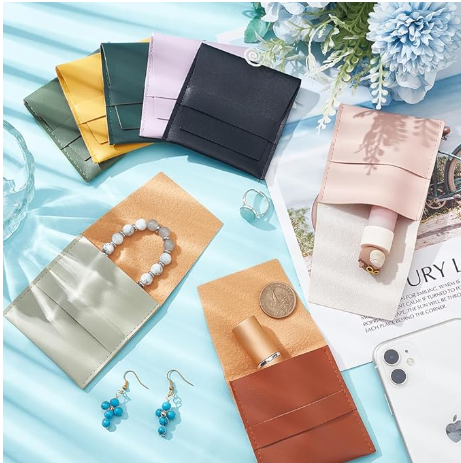
Jewelry pouches look simple, but small choices change the finished result. A ring pouch may need a softer interior and tighter drawstring. A bracelet pouch may need more width and less bulk at the mouth. A pendant pouch may need a card or anti-tangle direction. If the pouch is sold or gifted inside a paper box, the pouch thickness and cord knot must also fit the outer packaging.
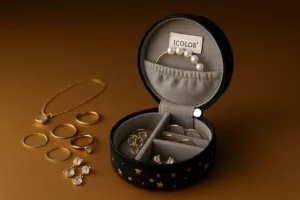

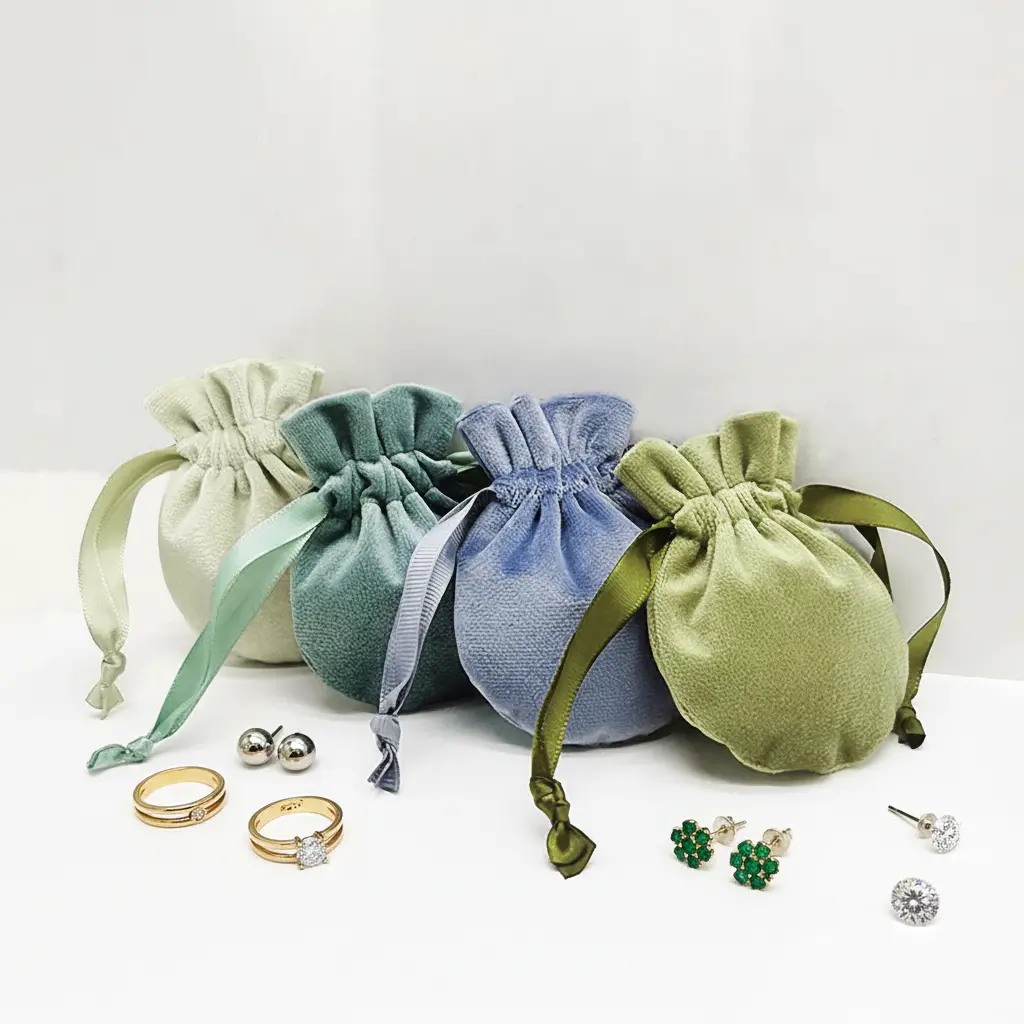
Surface and Construction Checks Before Sampling
Fabric handfeel
Ask for actual swatches for velvet, suede, cotton, bamboo fiber, PU or RPET routes. Photos cannot show pile direction, softness or thickness.
Logo method
Confirm silk screen, woven label, hot stamping, embroidery or ribbon branding. The best route depends on texture and logo detail.
Jewelry fit
Check pouch size, lining need, card fit, dust protection and whether metal parts scratch against fabric or cord ends.
Color proof
Fabric and paper rarely show color the same way. Use physical swatches and sample approval; Pantone color communication2 can support communication but not replace proofing.
Retail packing
Confirm hangtag, belly band, barcode label, paper box or master carton plan before bulk production. GS1 barcode planning3 may support barcode planning.
Compare material routes by buyer need
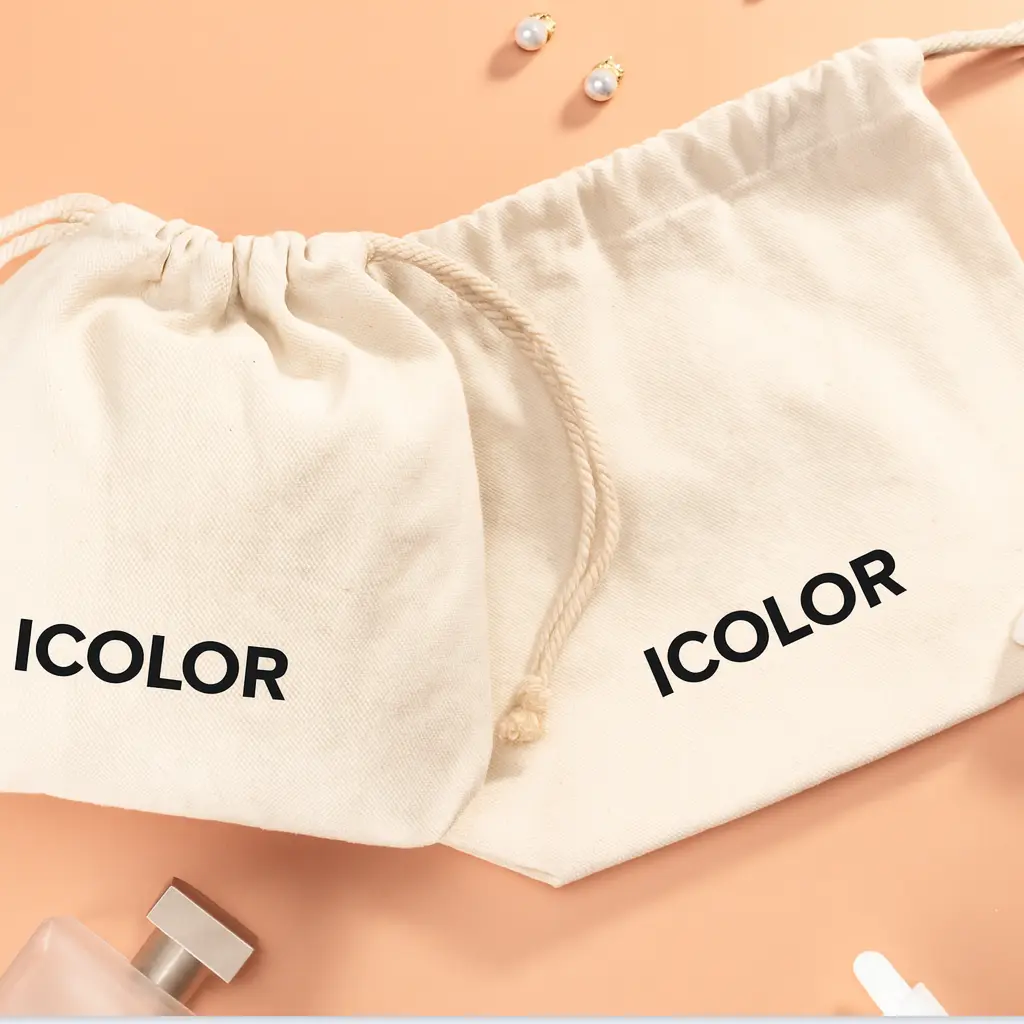
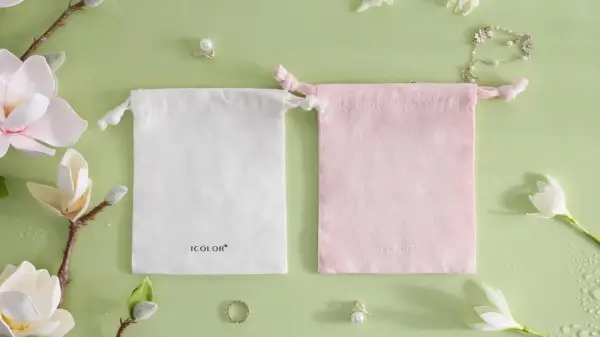
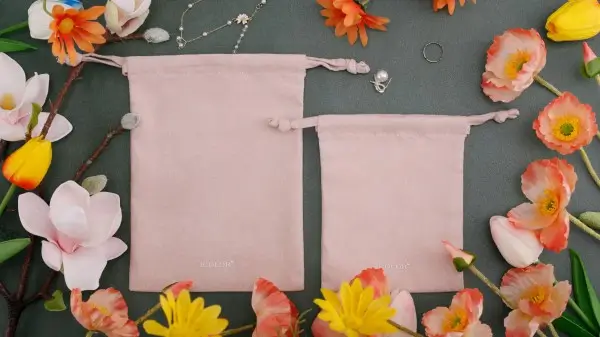
Approve Fabric and Paper as Separate Color Surfaces
Logo method should be chosen after fabric route, not before it. Silk screen can work on many pouch surfaces, but textured fabric may soften small text. Woven labels can look stable across colors, but they add a separate component and sewing position. Hot stamping can look premium on some PU or suede-like surfaces, but it needs sample testing for adhesion and edge clarity.
Color should also be checked by material. The same brand color can look different on velvet pile, cotton weave, PU texture and paper hangtags. If the jewelry launch includes both boxes and pouches, ask for the pouch swatch beside the box paper, card and ribbon. This prevents a launch kit where every component is technically correct but visually mismatched.
Suitable for texture, abrasion and logo clarity checks before sampling
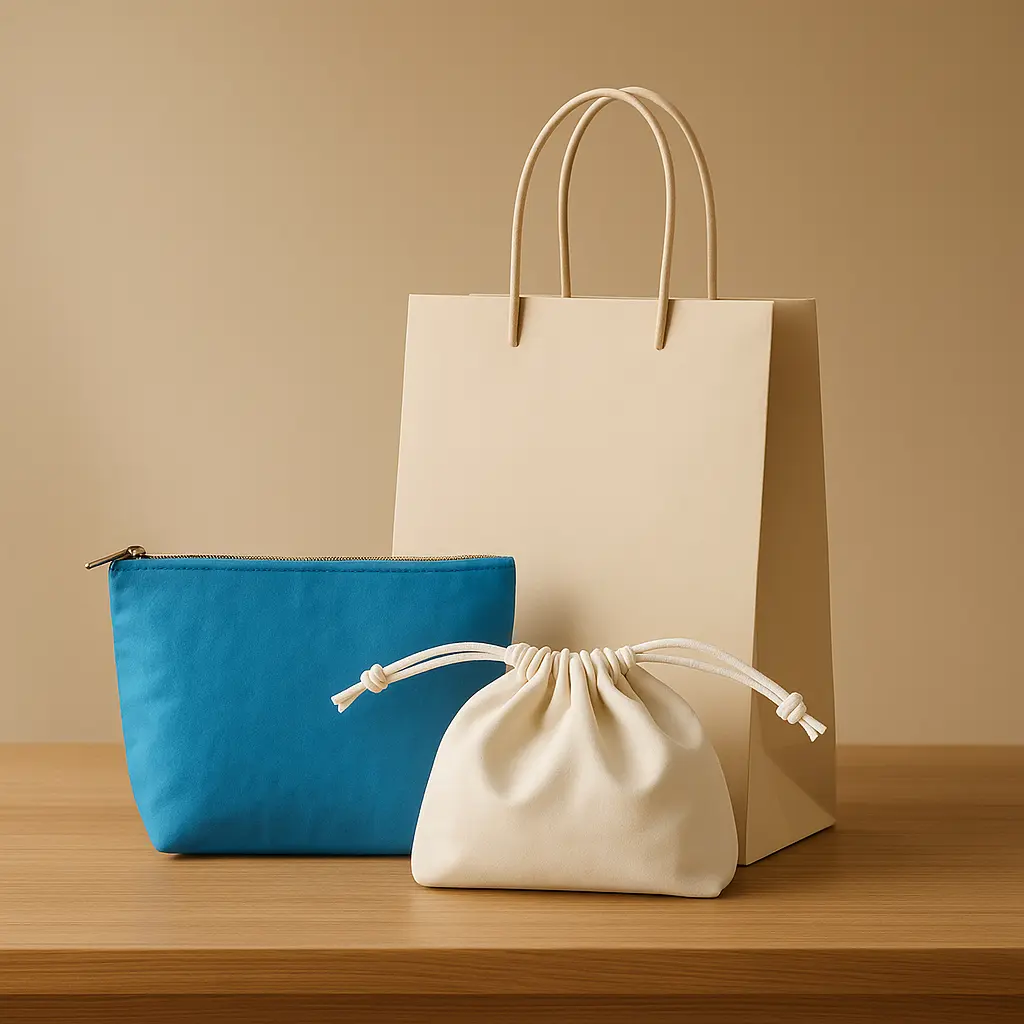
For fabric drawstring pouch projects, the first sample should confirm three details before the buyer locks bulk production: fabric hand feel, abrasion risk around the cord channel, and whether the logo remains clear on the selected texture. A pouch that looks acceptable in a flat artwork file can still change after fabric selection, drawcord tension, seam allowance and label position are confirmed.
Before RFQ, send the pouch size, target fabric, drawstring type, logo method, product weight and any retail packing requirement. Ecoicolor can use those details to recommend whether cotton, linen blend, velvet, satin or rPET fabric is the safer route for the brand’s packaging use.
Suitable and Less Suitable Projects
Suitable for buyers are jewelry or accessory brands with MOQ 500+, a clear jewelry type, target pouch size, logo method, packing route, delivery market and sample-first timeline. This is also a good route when the brand wants pouches to coordinate with jewelry boxes, cards, ribbons or launch kit packaging.
Less suitable buyers are one-piece personal gifts, no-brand orders, below-MOQ requests, or buyers who cannot decide the jewelry type and still expect a final unit price. A pouch for earrings and a pouch for a bracelet may use different size, lining, closure tension and packing method.
The project is also weaker when the buyer asks for the lowest fabric cost but expects a premium jewelry unboxing result. A pouch is a tactile product. Handfeel, logo clarity, drawstring pull, seam neatness and dust control are part of the value, so the sample should be judged like packaging, not like an accessory bought from stock.
Sample approval points
Check fabric handfeel, fabric thickness, inner lining, drawstring pull, cord end, seam strength, logo placement, color, dust transfer, jewelry fit and carton packing. If a bulk order needs formal inspection terms, define the visible checkpoints before production; ISO 2859-1 sampling5 can support sampling language where appropriate.
A useful first message should include jewelry type, pouch dimensions, material preference, logo method, quantity, target price, delivery country, packing route and launch window. If the same launch uses both jewelry boxes and pouches, send them together so color, ribbon and insert choices can be reviewed as one packaging system.
Before bulk production, ask for one sample that uses the intended material, intended logo method and intended drawstring or ribbon. A blank swatch is useful for early comparison, but it does not prove the final logo, seam and closure behavior. If the buyer plans to pack pouches into individual paper boxes or master cartons, the sample should also check whether the pouch wrinkles or compresses during packing.
よくあるご質問
What MOQ should buyers expect for custom drawstring jewelry pouches?
Sewn pouch projects should normally be planned from MOQ 500, depending on fabric route, size, logo method and packing requirements.
Which material is best for a textured jewelry pouch?
There is no universal best material. Velvet, suede, cotton, bamboo fiber, PU and RPET routes solve different handfeel, price, branding and document-support needs.
What logo methods work on textured pouches?
Common routes include silk screen, woven label, hot stamping, embroidery and branded ribbon. The right method depends on fabric texture and logo detail.
Should jewelry brands order pouch swatches before sampling?
Yes. Swatches help confirm handfeel, color, thickness and logo suitability before a full branded sample is made.
Who is not a good fit for this route?
Single-piece personal gift buyers, no-brand requests and below-MOQ projects are not a good fit for custom jewelry pouch manufacturing.
Sources
- Responsible Jewellery Council standards overview for jewelry supply-chain context. ↩
- Pantone Connect resources for color communication and review. ↩
- GS1 US barcode resources for retail packaging planning. ↩
- Textile Exchange Global Recycled Standard v4.0 document. ↩
- ISO 2859-1 sampling procedures for inspection by attributes. ↩