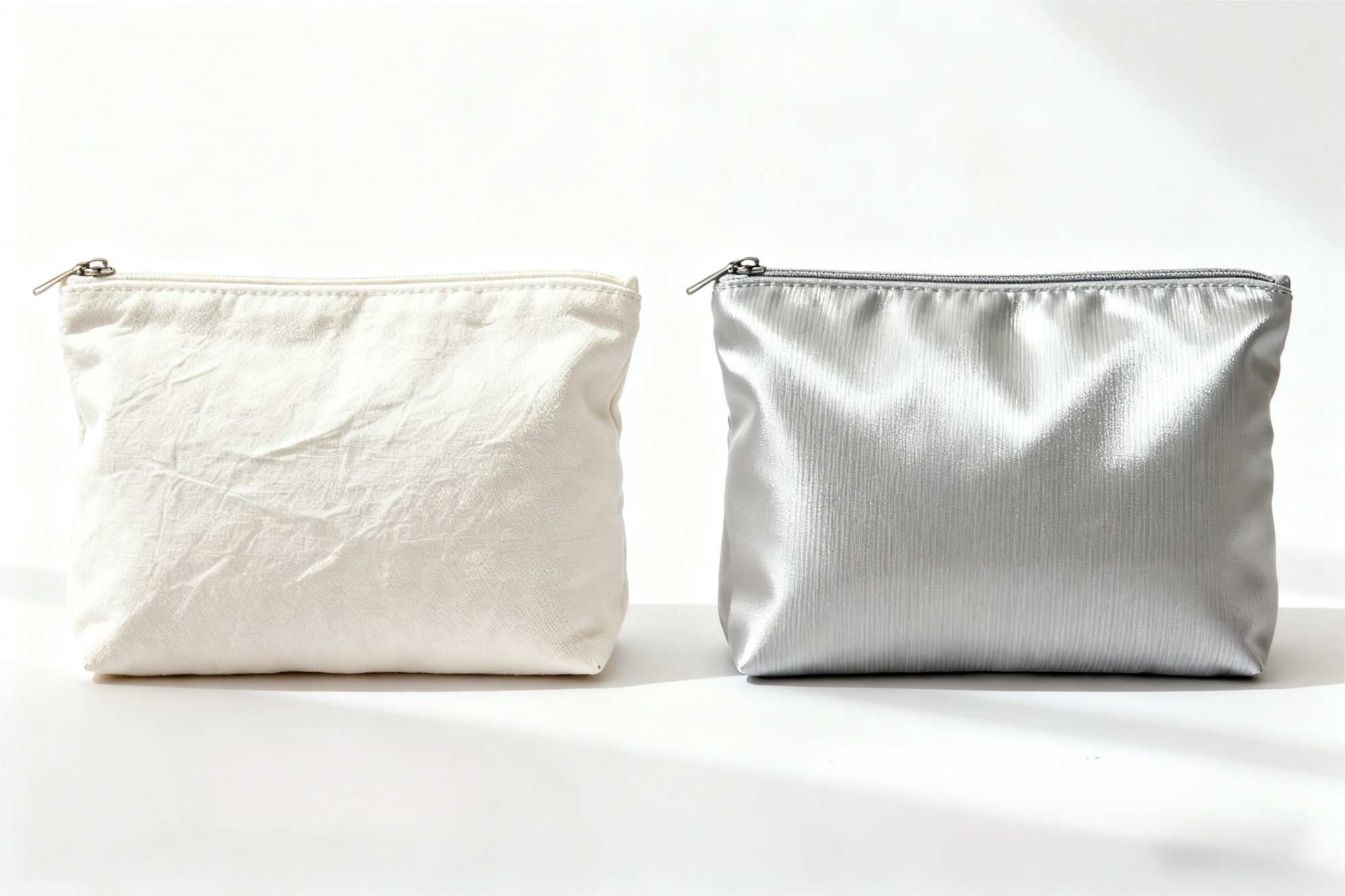
rPET and organic cotton can both work for custom makeup bags, but they solve different product and brand problems. The right route depends on structure stability, print result, hand feel, care expectations, document support and the approved sample.
Use this guide before an MOQ 500 RFQ so the material choice matches the bag function and launch plan.
Request a Cosmetic Bag RFQ View Cosmetic Bag Manufacturing
Quick Summary
rPET and organic cotton makeup bags suit different briefs. Compare structure stability, print results, hand feel, care requirements, document route and sample approval needs before sending an MOQ 500 RFQ.
For production support, Choose a material route before starting your makeup bag sample.
What to Prepare Before Requesting Quotes
A useful makeup bag RFQ should include:
- Product use: makeup pouch, brush bag, skincare pouch, travel organizer, gift set pouch, subscription box bag or retail accessory.
- Bag dimensions: length, width, height, gusset, handle, wrist strap or hanging loop.
- Product contents: brushes, palettes, tubes, bottles, jars, samples, mirror, sponge or accessories.
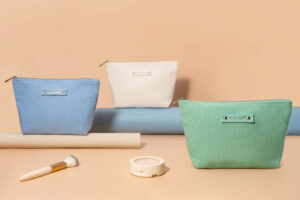
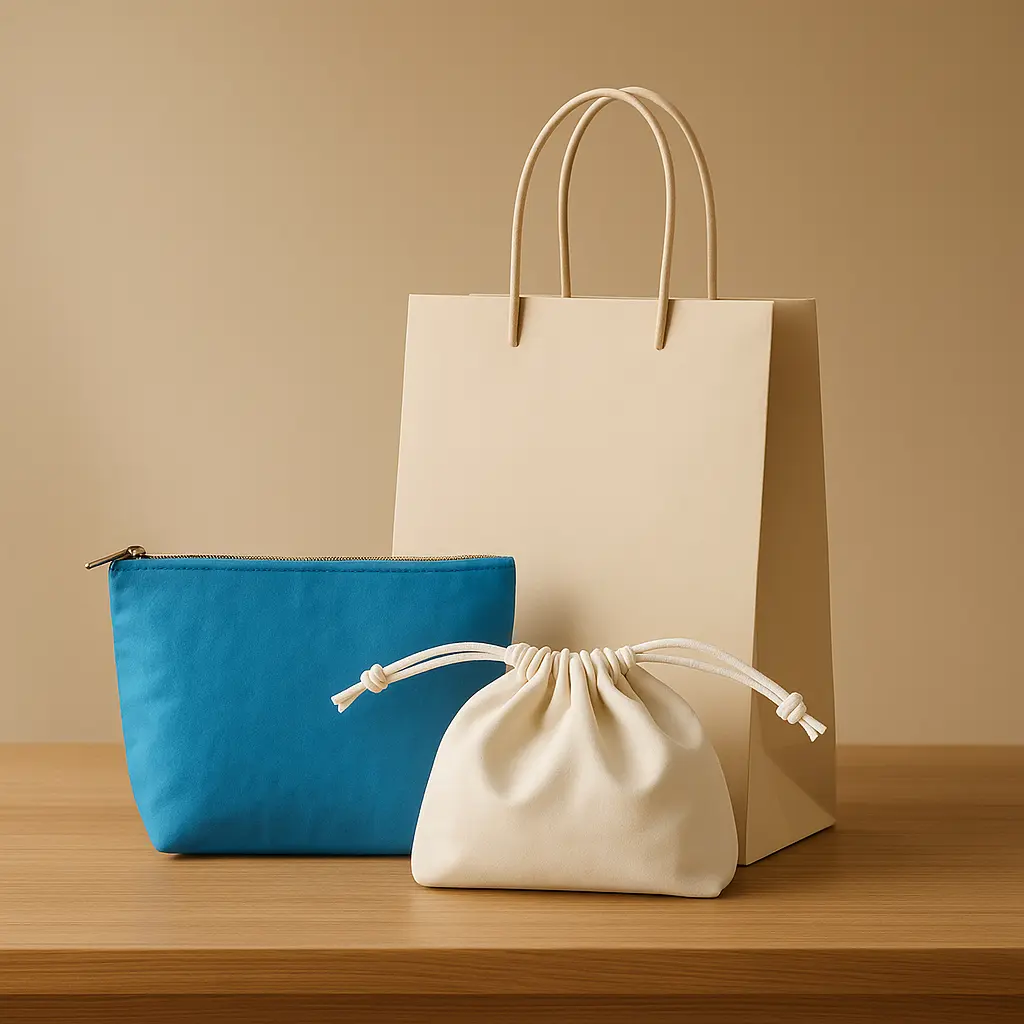
- Material route: rPET fabric, cotton route, canvas, PU route, satin, velvet, mesh, clear panel or mixed material.
- Lining route: plain lining, wipeable lining, padded lining, branded lining or no lining.
- Closure route: zipper, coil zipper, metal zipper, drawstring, snap, flap or magnetic option.
- Logo method, MOQ 500 target, sample deadline, bulk delivery date, ship-to country and packing method.
Makeup Bag RFQ Checklist
| RFQ Area | What to Confirm | Why It Matters |
|---|---|---|
| Use case | Retail product, GWP pouch, travel kit or brush bag | Function decides size, lining and closure. |
| MOQ | MOQ 500, colorways and SKU count | Quantity affects fabric sourcing and setup. |
| Material | Outer fabric, lining, padding and trim | Material affects sewing, logo result and daily use. |
| Zipper | Zipper type, puller, color and opening length | Zipper quality is visible in every use. |
| Logo | Artwork, method, placement and color | Logo must fit the fabric and seam layout. |
| Samples | Material swatch, proto and pre-production sample | Samples confirm structure before bulk sewing. |
| QC | Size, stitching, zipper, lining, logo and packing | Clear QC points reduce launch surprises. |
1. Define the Product Use Before Material
The same makeup bag can be used as a retail item, a gift-with-purchase pouch, a brush organizer or a travel kit. Each use changes the structure.
Clarify:
- Will the bag carry liquid makeup or powder products?
- Will brushes need separate slots or elastic loops?
- Does the bag need a flat base or soft collapsible shape?
- Should customers see the contents quickly?
- Does the inside need wipeable lining?
- Will the bag be shipped empty, filled or packed inside a gift set?
- Should the bag match rigid boxes, inserts or other launch packaging?
If the bag will hold a full kit, send the product list and dimensions. The supplier can check usable space and suggest lining or divider options.
2. Plan MOQ 500 Around Color and SKU Count
MOQ 500 can be a practical starting point for many custom makeup bag projects. The quote becomes easier when the buyer limits early complexity.
For a first production run, define:
- One target bag size.
- One or two material directions.
- One lining route.
- One zipper and puller style.
- One logo method.
- Limited colorways.
- A clear reorder estimate.
If you need multiple shades, ask whether the same body structure can be used across colorways. Shared structure can simplify sampling, QC and reorder management.
3. Choose the Material Route by Performance
Material choice should be linked to performance, logo method and buyer claim needs. Avoid choosing material only because it sounds good in a campaign line.
| Material Route | Best Fit | Buyer Checks |
|---|---|---|
| rPET fabric | Printed makeup bags and durable travel pouches | Check print method, handfeel, color and document needs. |
| Cotton route | Soft natural-looking pouches and simple makeup bags | Check fabric weight, shrinkage, logo clarity and lining need. |
| PU route | Sleek cosmetic cases and wipeable makeup bags | Check surface texture, edge finish and logo method. |
| Canvas | Everyday makeup bags and structured promotional pouches | Check thickness, stitching and print result. |
| Satin or velvet | Beauty gift sets and softer retail pouches | Check lint, wrinkle, color and logo contrast. |
| Mesh or clear panel | Travel organizers and quick-view bags | Check edge strength, seam finish and packing scratches. |
For material and logo planning, see sustainable materials and printing methods guide.
Check MOQ and Sample Route Compare Pouch Structures
4. Specify Lining and Internal Layout
Makeup bags often fail in the details buyers forgot to specify. Lining, pocket position and seam structure can affect daily use as much as the outer fabric.
Ask the supplier to review:
- Whether a wipeable lining is needed.
- Whether a padded body is needed for palettes or bottles.
- Whether brushes need elastic loops.
- Whether an inside pocket should hold small samples.
- Whether the lining color should match the outer fabric.
- Whether seams need binding, piping or turned construction.
- Whether the bag must stand on a counter.
For launch kits that include bottles or fragile items, consider whether a soft pouch should be paired with inserts or rigid packaging. For insert routes, see custom box inserts.
5. Match Zipper and Puller to Daily Use
The zipper is one of the most touched parts of a makeup bag. It should be chosen for function, not only appearance.
| Closure Detail | Common Options | Buyer Notes |
|---|---|---|
| Zipper type | Nylon, coil, metal or waterproof-style route | Choose based on weight, look and opening feel. |
| Puller | Metal, fabric, PU, ribbon or custom shape | Puller should be easy to hold and not scratch the bag. |
| Opening | Top opening, wraparound zipper or side opening | Opening affects product access and sewing difficulty. |
| Color | Matched, contrast, metallic or branded | Confirm with swatches before sample approval. |
| Reinforcement | Bar tack, seam reinforcement or end tabs | Useful for travel bags and heavier contents. |
Send zipper and puller references with the RFQ if your brand has a specific look.
6. Choose Logo Method With the Fabric
A logo method that works on canvas may not work the same way on satin, PU or rPET fabric. Confirm the logo route before sample approval.
Common options:
- Woven label for repeatable small branding.
- Screen print for simple solid graphics.
- Heat transfer for more detailed artwork on selected fabrics.
- Embroidery for textured fabrics and premium pouches.
- Debossed patch for PU routes.
- Metal plate for a more structured cosmetic case.
- Zipper pull branding for subtle identity.
Send vector artwork, Pantone reference, logo size and placement. If the logo sits near a seam or zipper, check spacing before the printed sample.
7. Approve Samples and QC With Real Contents
A makeup bag sample should be checked with the actual product set. Empty-bag approval misses many issues.
Sample and QC checks should include:
- External dimensions and internal usable space.
- Zipper opening and closing.
- Puller strength and comfort.
- Stitching consistency.
- Lining fit and wrinkle level.
- Logo position and color.
- Product insertion and removal.
- Carton packing and label requirements.
If the bag will be filled before shipping, test assembly time and carton protection. If it will ship empty, check whether the bag needs stuffing or flat packing.
RFQ Template for Custom Makeup Bags
Use this structure when sending your brief:
| RFQ Field | Details to Send |
|---|---|
| Product use | Makeup pouch, brush bag, travel kit, gift set pouch or retail accessory |
| Size | Length, width, height, gusset, strap and opening style |
| Contents | Brushes, palettes, bottles, tubes, jars, samples or accessories |
| Material | Outer fabric, lining, padding, trim and document needs |
| Closure | Zipper type, puller, color and reinforcement |
| Logo | Method, file, color, size and placement |
| Quantity | MOQ 500 target, SKU count and reorder estimate |
| Sample | Swatch, proto sample, pre-production sample and deadline |
| QC | Size, stitching, zipper, logo, lining and packing checks |
| Delivery | Launch date, ship-to country and carton packing |
For a broader beauty launch plan, see one-stop cosmetic packaging supplier for beauty brands.
FAQ
What should a custom makeup bag RFQ include?
It should include use case, bag size, product contents, material route, lining, zipper, puller, logo method, MOQ 500 target, sample deadline, delivery date, ship-to country and QC points.
Is MOQ 500 workable for custom makeup bags?
MOQ 500 can work for many custom makeup bag projects when the material, color, zipper, lining and logo method are clearly defined. More colorways or unusual trims may change the sampling route.
Should I choose rPET or cotton route for makeup bags?
Choose by function. rPET fabric can work for printed, durable travel pouches, while cotton routes can suit softer natural-looking bags. The final choice should also consider logo method, lining and QC expectations.
Why should samples be tested with real products?
Real products reveal internal space, zipper access, lining fit, product movement and packing issues that are not visible when checking an empty bag.
Ready to quote custom makeup bags at MOQ 500?
Send your bag size, product contents, material direction, zipper idea, logo file, sample deadline and launch date. Ecoicolor can review the sewing route, sample plan and QC points before final quotation.