Use this guide to brief brand buyer packaging and accessory projects as a practical RFQ: product use, material swatches, sample route, MOQ, logo method, launch window, ship-to country and QC checks.
Updated for beauty, fragrance, skincare, wellness, retail, gifting, accessory and DTC launch teams sourcing coordinated pouches, totes, soft cases, cosmetic bags and product packaging.
Send a Brand Buyer Brief View One-Stop Packaging Support
Buyer summary: A brand buyer RFQ should connect material choice to product use, target retail channel, logo method, MOQ, sample approval, launch window and packing route. This keeps the project focused on manufacturable packaging instead of a broad material trend list.
Quick Answer
For brand buyers, material selection should start with the product and channel. A soft pouch, cosmetic bag, tote, gift set insert or accessory case needs different structure, handfeel, logo method and QC checks. The best RFQ gives the supplier enough details to recommend a workable material route and sample plan.
For broader launch support, see one-stop cosmetic packaging supplier for beauty brands. For soft bag manufacturing options, see custom pouches and bags manufacturer.
What to Prepare Before Requesting Quotes
A useful brand buyer RFQ should include:
- Product use: cosmetic bag, gift pouch, tote bag, soft case, accessory bag, fragrance kit, skincare kit or retail launch set.
- Target channel: DTC, retailer, spa, travel retail, event, subscription box or influencer kit.
- Material route: canvas, cotton route, rPET fabric, PU route, recycled PU route, jute, satin, velvet, mesh or mixed material.
- Brand requirements: color direction, handfeel, logo method, trim style and document needs.
- Quantity plan: test quantity, MOQ target, color versions and reorder estimate.
- Sample route: material swatch, logo test, prototype, pre-production sample and approval deadline.
- Launch timing: target delivery date, ship-to country, packing method and carton label needs.
Brand Buyer RFQ Checklist
| RFQ Area | What to Confirm | Why It Matters |
|---|---|---|
| Product use | Pouch, tote, cosmetic bag, soft case or gift set | Structure and material should follow real use. |
| Channel | Retail, DTC, event, travel retail or subscription | Channel affects packing, labels and durability expectations. |
| Material | Outer fabric, lining, trim and swatches | Material choice controls handfeel, logo result and QC. |
| Logo | Method, placement, color and file format | Logo route must fit the material surface. |
| MOQ | Test quantity, bulk plan and color versions | Quantity affects sourcing, setup and sampling. |
| Sample | Swatch, logo test and pre-production sample | Samples help buyers approve before bulk production. |
| Launch | Ship-to country, delivery date and packing route | Timing and destination shape the production plan. |
1. Start With Product Use, Not Material Names
Material names are useful only after the product use is clear. A soft cosmetics pouch, large tote bag and fragrance gift set do not need the same material strength or finish.
Ask:
- What will the product hold?
- How heavy will the filled bag or kit be?
- Will the customer use it daily, seasonally or only for gifting?
- Does it need a wipeable lining, padded body or inner pocket?
- Should it fold flat or hold shape?
- Will it ship empty or filled?
- Does it need to coordinate with boxes, inserts, tissue, cards or labels?
When product use is clear, the supplier can narrow material choices instead of quoting a long list of unrelated options.
2. Match Material Route to Channel
Retail, DTC and event programs often need different material decisions. A soft event pouch can be simple, while a retail cosmetic case may need more structure, lining and logo consistency.
| Channel | Typical Buyer Priority | Material Notes |
|---|---|---|
| Retail launch | Repeatable finish and shelf presentation | Ask for color standard, logo test and carton packing. |
| DTC kit | Product protection and customer experience | Check lining, insert compatibility and shipping pack. |
| Event or GWP | Lead time, quantity and visual impact | Consider stock colors, simple logo and fast sampling. |
| Travel retail | Durability and compact packing | Review zipper, handle, weight and carton volume. |
| Subscription box | Flat packing and assembly speed | Check folded size and packing workflow. |
For tote-specific material comparisons, see canvas, Tyvek and jute tote bag RFQ guide.
3. Request Material Swatches Before Final Artwork
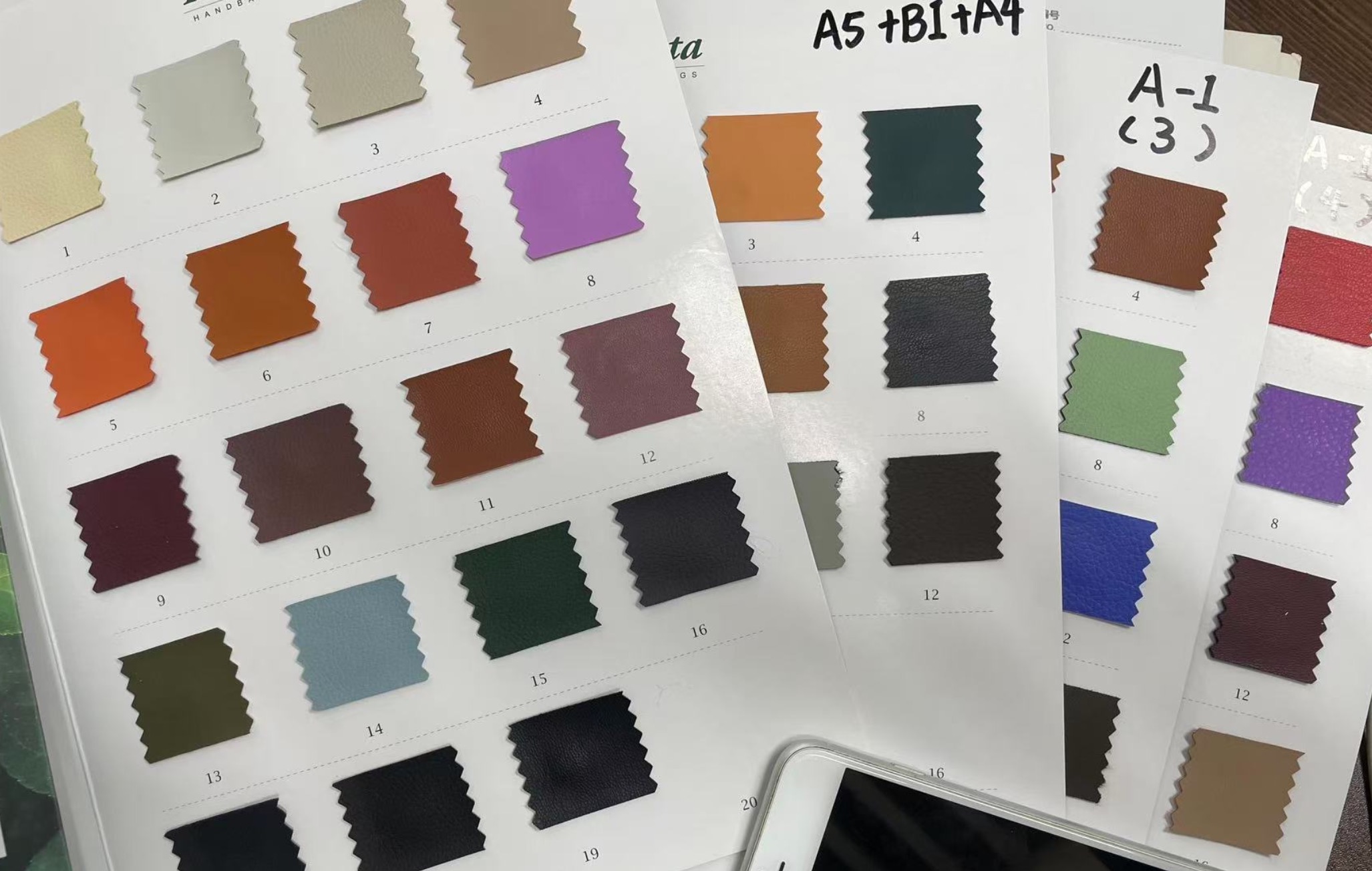
Material swatches should be reviewed before artwork is locked. Swatches show handfeel, surface texture, color behavior and logo suitability.
Review:
- Color under office light and natural light.
- Handfeel and surface texture.
- Thickness and structure.
- Lining compatibility.
- Whether the selected logo method works on the surface.
- Whether trims, zipper tape and labels match the brand direction.
- Whether documentation is needed for retailer submission.
Check MOQ and Sample Route Compare Materials and Printing
4. Choose Logo Method With the Supplier
A logo method should be chosen with the material, not after it. Some surfaces support crisp print, while others work better with labels, embroidery, patches or debossing.
| Logo Method | Best Fit | Buyer Checks |
|---|---|---|
| Screen print | Canvas, cotton route and some rPET routes | Check color density and artwork simplicity. |
| Heat transfer | Detailed graphics on selected fabric routes | Test adhesion and edge clarity. |
| Embroidery | Canvas, velvet and structured fabrics | Check stitch density and fabric puckering. |
| Woven label | Pouches, totes and cosmetic bags | Good for repeat programs and small branding. |
| Debossing | PU route, recycled PU route and patch labels | Check depth, texture and placement. |
| Metal plate | Premium soft cases and gift pouches | Check weight, sewing position and edge finish. |
For print planning, see sustainable materials and printing methods guide.
5. Build MOQ and Sample Route Together
MOQ depends on the material route, color versions, trim, logo method and whether the structure is stock-based or fully custom. Treat MOQ and sampling as one discussion.
Ask the supplier to clarify:
- MOQ by material and color.
- Whether stock material or stock base structures are available.
- Whether the same structure can support multiple SKUs.
- Whether a logo test can be done before a full sample.
- Which details are driving setup cost.
- Which details can be simplified for the first launch.
If the brand is testing a new channel, ask for one practical route for launch and one upgraded route for repeat orders.
6. Connect Soft Packaging to the Full Launch Set
Brand buyers often source several components at once: pouch, box, insert, card, label, tissue and outer carton. Each part should support the same launch story and packing workflow.
Confirm:
- Whether the pouch or tote goes inside a box.
- Whether the product needs an insert or divider.
- Whether the soft bag and rigid packaging share the same color family.
- Whether the same logo size can work across pouch, box and card.
- Whether assembly happens at the factory, brand warehouse or 3PL.
- Whether retailer packing requirements apply.
For coordinated beauty packaging support, see one-stop cosmetic packaging supplier for beauty brands.
7. Confirm QC Before Bulk Production
QC should be discussed before the pre-production sample is approved. This keeps the supplier and buyer aligned on what will be checked.
Include:
- Size tolerance and shape consistency.
- Material color and surface marks.
- Lining fit and stitch quality.
- Logo position, color and finish.
- Zipper, snap, handle or trim strength if used.
- Packing method, carton quantity and carton marks.
- Product-fit check if the bag or pouch will be filled before shipping.
If the project includes multiple packaging components, ask for a final packed sample before production starts.
RFQ Template for Brand Buyer Packaging
Use this structure when sending your brief:
| RFQ Field | Details to Send |
|---|---|
| Product use | Pouch, tote, cosmetic bag, soft case, accessory bag or gift set |
| Channel | Retail, DTC, event, travel retail, subscription or influencer kit |
| Material | Outer material, lining, trim, swatch request and document needs |
| Structure | Size, pocket, zipper, handle, strap, gusset or flat pack |
| Logo | Method, artwork file, color, size and placement |
| Quantity | MOQ target, color versions, SKU count and reorder estimate |
| Sample | Swatch, logo test, prototype, pre-production sample and deadline |
| Launch | Delivery date, ship-to country, packing method and carton marks |
| QC | Size, stitching, logo, trim, product fit and final packed sample |
FAQ
What should a brand buyer packaging RFQ include?
It should include product use, channel, material route, structure, logo method, MOQ target, sample route, launch date, ship-to country, packing method and QC points.
When should I request material swatches?
Request material swatches before final artwork and before approving the sample route. Swatches help check handfeel, color, texture, logo suitability and documentation needs.
How do I avoid over-specifying a first launch?
Separate must-have details from flexible details. Keep the product use, logo, size and launch timing clear, then ask the supplier which material or trim choices can simplify the first production run.
Why connect soft packaging with boxes and inserts?
Pouches, totes, boxes and inserts often ship and assemble together. Coordinating them early helps control color, packing flow, product fit and retailer presentation.
Ready to brief a brand buyer packaging project?
Send your product use, channel, material direction, MOQ target, logo file, sample deadline, launch window and ship-to country. Ecoicolor can review the material route, sample plan and packing workflow before final quotation.