Use this guide to choose premium cosmetic bag materials by RFQ fit: MOQ 500 feasibility, material hand feel, zipper route, logo method, sample approval, QC checkpoints and bulk packing.
Updated for beauty, skincare, fragrance, spa, travel retail and gift-with-purchase teams sourcing custom cosmetic bags, makeup pouches, toiletry bags and premium launch kits.
Send a Cosmetic Bag Brief View Cosmetic Bag Manufacturing
Buyer summary: A premium cosmetic bag is not defined by material name alone. The finished result depends on structure, zipper quality, lining, logo method, material shade, sample approval and packing. For many custom beauty pouch projects, MOQ 500 is a practical starting point for discussing available material routes and sample timing.
Quick Answer
For brand buyers, the best material for a premium cosmetic bag is the one that matches the product set, logo method, retail channel and launch schedule. PU, PVB, RPET fabric, RPET velvet, satin, TPU and mixed-material routes can all work, but each changes the sample process and QC checklist.
Ecoicolor is a practical fit when your team needs material swatches, MOQ discussion, logo testing, zipper options and sample approval before bulk production. For the main production category, start with Ecoicolor’s custom cosmetic bag manufacturing page.
What Makes a Cosmetic Bag Feel Premium?
Premium perception usually comes from several production details working together.
- Material hand feel and surface finish.
- Clean shape after packing and shipping.
- Smooth zipper run and suitable puller choice.
- Lining that sits flat and does not catch.
- Logo method that matches the material.
- Stitching alignment at corners and zipper ends.
- Color control between sample and bulk production.
- Packing method that protects the finished pouch.
Premium Material Routes for Cosmetic Bag RFQs
Use this table to compare material options before asking for samples.
| Material Route | Best Fit | Logo Methods to Test | RFQ Point to Check |
|---|---|---|---|
| PU | Structured cosmetic cases, premium makeup pouches and travel kits | Debossing, patch, metal charm, print | Check surface, backing, thickness and corner sewing |
| PVB | Smooth modern pouches and sleek beauty kits | Print, patch, woven label, puller branding | Confirm hand feel, color options and sample timing |
| RPET fabric | Lightweight pouches, GWP bags and retail programs | Screen print, heat transfer, woven label | Check fabric weight, lining and document scope if needed |
| RPET velvet | Soft-touch launch pouches and gift sets | Embroidery, woven label, patch, charm | Review pile direction, shade and packing pressure |
| Satin | Fragrance minis, spa sets and soft beauty pouches | Embroidery, woven label, heat transfer | Check snagging, logo clarity and lining choice |
| TPU window | Clear toiletry bags and product-visibility pouches | Label, puller, body print near panel | Confirm thickness, transparency and seam route |
| Mixed material | Premium pouch concepts with fabric plus clear or structured panels | Multi-position testing | Review panel joining and edge finish |
1. PU for Structured Cosmetic Bags
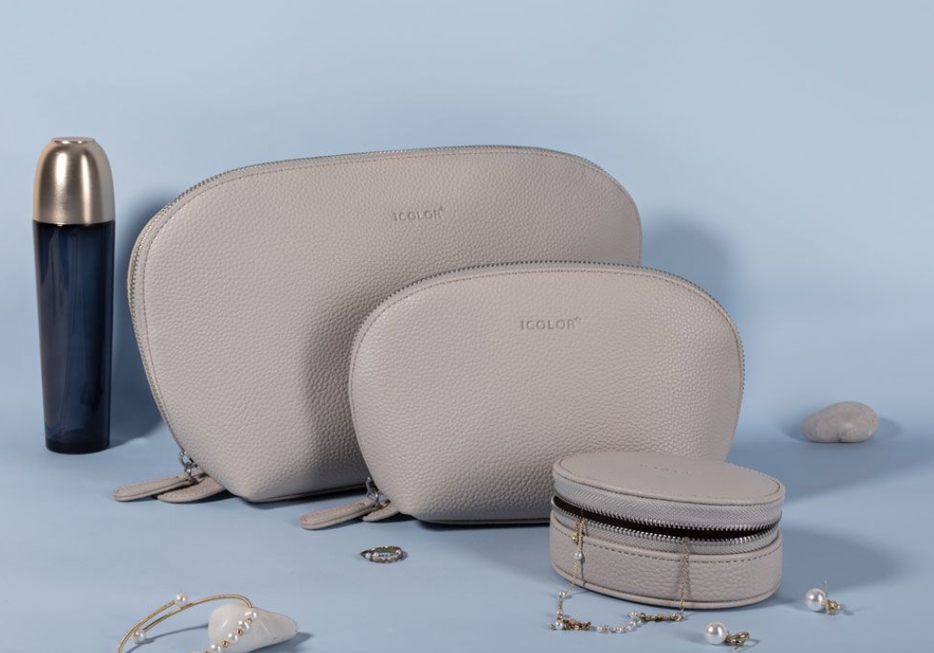
PU is often chosen when the brand wants a structured cosmetic case or a smooth premium pouch. It can support debossing, patch labels, metal details or printed logos depending on surface finish.
For RFQ, ask for thickness, backing, texture, color options and close-up photos of stitched corners. A premium look depends heavily on edge finish and zipper alignment.
2. PVB for Modern Beauty Pouches
PVB can support a sleek material direction for beauty and travel pouches. It is useful when the brand wants a smooth, modern surface and a more structured feel than soft fabric.
Ask for swatches, available colors, logo test options and sample timing. If the material is new to your team, approve the swatch before moving into a full sample.
3. RPET Fabric for Lightweight Programs
RPET fabric can suit lightweight cosmetic pouches, promotional beauty bags and retail programs. It can be paired with lining, zipper, print or woven labels depending on the project.
For sourcing, compare fabric weight, print clarity, zipper selection and MOQ. If your retailer asks for material documentation, confirm what applies to the exact fabric route.
4. RPET Velvet for Soft-Touch Launches
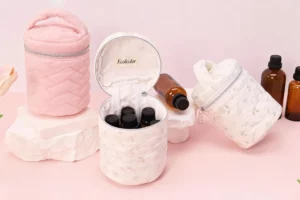
RPET velvet can work for soft-touch makeup pouches, holiday sets and fragrance mini kits. The key sourcing checks are pile direction, shade control, logo readability and packing method.
Ask the supplier to show swatches under neutral lighting and explain how the bags will be packed to reduce pressure marks.
5. Satin for Fragrance and Spa Sets
Satin can feel refined for fragrance minis, spa amenity kits and soft drawstring-style beauty pouches. It needs careful testing because smooth surfaces can show wrinkles, pulls or logo issues.
Ask for logo tests at actual size and review the lining choice. If the satin bag must hold bottles or jars, test the sample with real products before approval.
6. TPU Window for Product Visibility
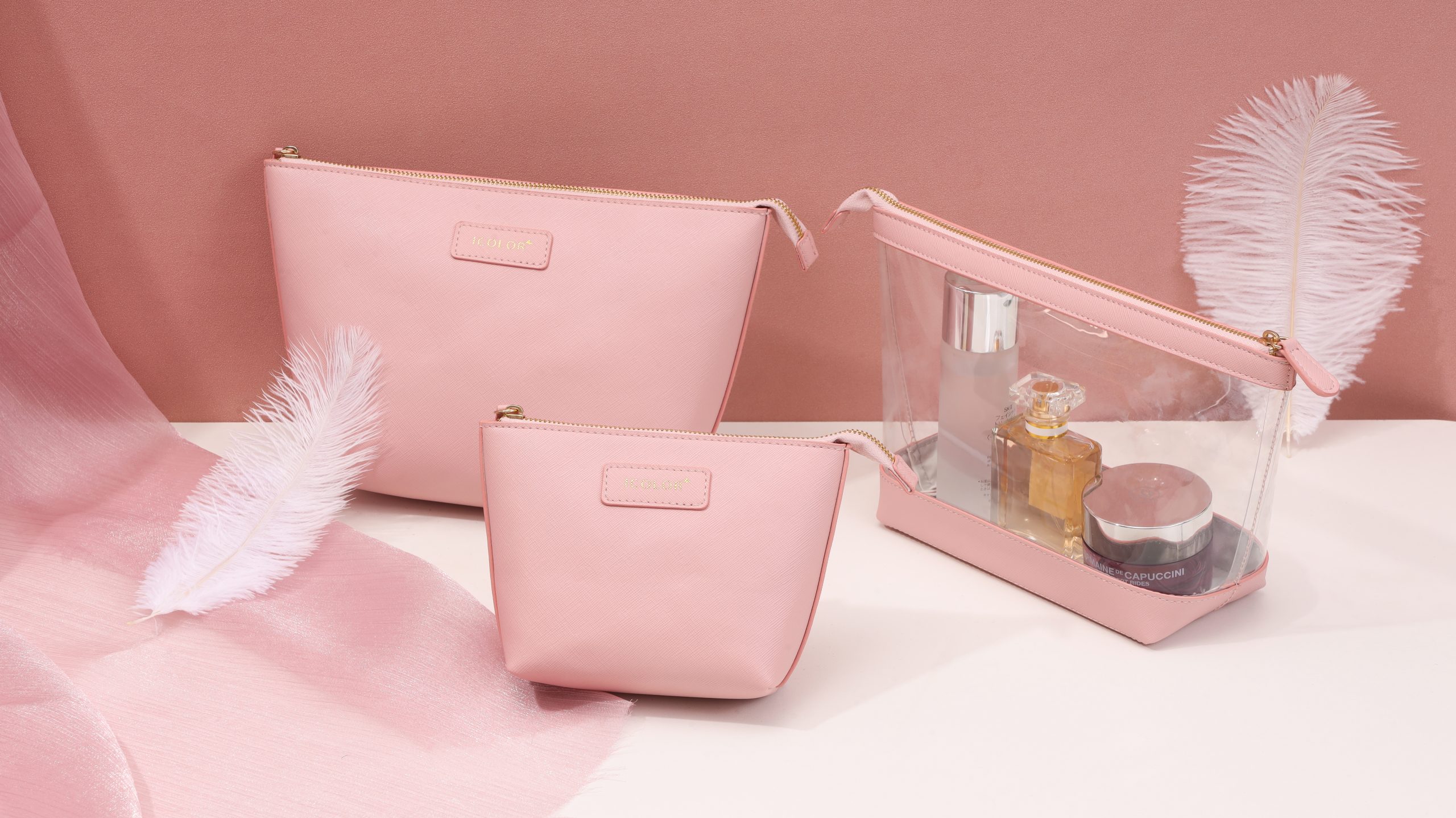
TPU is useful when the pouch needs a clear window or visible product presentation. It is common in toiletry bags, clear cosmetic pouches and mixed-material travel kits.
Ask for thickness, transparency, seam method and packing protection. For a deeper material comparison, see Ecoicolor’s TPU vs PVC window guide.
7. Mixed-Material Cosmetic Bags
Mixed-material designs can make a pouch feel more premium, but they add sampling complexity. A PU body with a TPU panel, fabric pouch with leather-alternative trim or velvet pouch with a metal charm all need extra review.
Ask for close-up sample photos of panel joins, zipper ends, corners and logo placement. These points decide whether the design can scale cleanly.
Request Premium Material Swatches Compare Makeup Bag Materials
MOQ 500 and Sample Route
MOQ 500 can be workable for selected cosmetic bag routes, especially when the supplier can use available materials, standard zipper options and practical logo methods. More complex choices may change MOQ or sample timing.
Ask for three quotation routes:
- Available material plus standard zipper and logo.
- Available material plus upgraded zipper or puller.
- Custom material direction plus final logo and packing method.
This helps your team see which choices affect cost, sample timing and bulk control.
QC Checklist for Premium Cosmetic Bags
Use the approved sample to define your bulk inspection points.
- Material shade matches the approved swatch.
- Zipper opens smoothly and does not catch the lining.
- Logo position, size and color match the approved artwork.
- Corners are symmetrical and stitching is straight.
- Lining sits flat and does not wrinkle at the zipper.
- Hardware, puller or charm is secure.
- Bag shape holds after packing.
- Carton packing protects the surface and structure.

Best Fit and Less Suitable Projects
Best fit for Ecoicolor
- Beauty brands sourcing premium cosmetic bags or makeup pouches.
- Fragrance, spa or travel retail teams planning launch kits.
- Buyers who need material swatches, logo testing and MOQ discussion.
- Teams that need sample review and QC checkpoints before bulk production.
- Programs with repeat order potential across several SKUs.
Less suitable
- One-piece personal shopping requests.
- Blank stock pouch orders with no artwork or sample review.
- Projects without quantity, size, material direction or launch timing.
- Orders where zipper, lining, logo and packing details do not need review.
Recommended RFQ Format
Send suppliers a brief like this:
- Bag type and target finished size.
- Product contents and approximate weight.
- Preferred material route and backup material route.
- Closure, zipper, lining and interior requirements.
- Logo file, logo method and placement.
- Quantity, sample deadline and bulk delivery target.
- Packing method, carton marks and destination market.
This keeps the discussion focused on production details rather than vague premium styling.
Check MOQ 500 Sample Route Compare Custom Pouches
FAQ
What material is best for a premium cosmetic bag?
There is no single best option. PU, PVB, RPET fabric, velvet, satin and TPU each suit different pouch structures. The right choice depends on product weight, brand look, logo method, MOQ and sample approval.
Can MOQ 500 work for premium cosmetic bags?
MOQ 500 can be possible for selected materials and practical constructions. Custom color, special zipper, metal hardware or complex mixed-material designs may require a different MOQ.
What should I check on a premium cosmetic bag sample?
Check material shade, zipper run, logo placement, lining, corner shape, stitching, hardware, smell, surface marks and packing method. Test the bag with real products before bulk approval.
Should I request material swatches before sampling?
Yes. Swatches help your team compare hand feel, color, thickness, logo compatibility and document scope before paying for a full sample.