Use this guide to turn toiletry bag durability testing into a practical RFQ and sample-approval checklist: zipper route, seam strength, fabric performance, logo method, MOQ 500 planning, packing and QC checkpoints.
Updated for beauty, skincare, fragrance, travel retail, hotel amenity and promotional teams sourcing custom toiletry bags, cosmetic pouches, clear-window bags and launch kits.
Send a Toiletry Bag Brief View Cosmetic Bag Manufacturing
Buyer summary: Durability should be discussed before the first sample, not after bulk production. For custom toiletry bags, the useful RFQ asks how the supplier will handle zipper selection, seam construction, fabric choice, clear panels, logo placement, filled-bag testing and carton packing.
Quick Answer
The most important durability checks for a bulk toiletry bag are zipper function, seam strength, fabric surface performance, handle or puller attachment, clear-panel joining, lining fit and packing shape. These checks should be tied to the exact product set the bag will hold.
Ecoicolor is a practical fit when your team needs custom toiletry bags or cosmetic pouches with sample review, material swatches, zipper options, logo testing and QC checkpoints before bulk production. For related production details, see Ecoicolor’s custom cosmetic bag manufacturing page.
What to Prepare Before Testing a Toiletry Bag Sample
Durability review becomes more useful when the supplier understands the real use case.
- Bag type: toiletry bag, cosmetic pouch, clear-window pouch, brush bag, travel kit or hotel amenity bag.
- Target finished size and filled weight.
- Product contents: bottles, tubes, jars, brushes, towels, cards or mixed sets.
- Material direction: PU, RPET fabric, nylon, canvas, TPU window, mesh, satin or mixed material.
- Closure: zipper, double zipper, snap, drawstring, flap or magnetic closure.
- Logo method and placement.
- MOQ target, sample deadline, bulk delivery target and destination market.
- Packing method and whether the bag ships empty, flat, filled or inside a larger kit.
Toiletry Bag Durability Checks for Brand RFQs
| Checkpoint | What to Review | RFQ Question |
|---|---|---|
| Zipper route | Smooth opening, puller strength, zipper tape and corner behavior | Which zipper type is used for this material and size? |
| Seam construction | Straight stitching, corner strength, seam allowance and lining control | How are high-stress seams reinforced? |
| Fabric performance | Surface marks, shade, abrasion, coating and hand feel | Can you provide swatches and similar sample photos? |
| Clear panel joining | TPU/PVC window thickness, edge finish and seam clarity | How is the clear panel joined to the body fabric? |
| Handle or puller attachment | Strap, loop, puller, charm or label connection | What attachment test is used before packing? |
| Logo durability | Print, embroidery, patch or label after handling | Can you test the logo at actual size? |
| Filled-bag review | Shape, zipper strain and product fit when loaded | Can the sample be tested with similar weight? |
| Packing protection | Shape retention, surface marks and carton count | How will bags be packed for export? |
1. Zipper Testing
The zipper is usually the first functional point a customer notices. For toiletry bags, it also carries stress when the bag is filled with bottles, jars or brushes.
Ask the supplier to explain zipper type, zipper tape, puller option and corner sewing. During sample review, open and close the bag repeatedly, then test it again with the actual product weight inside.

2. Seam Strength
Seams decide whether the bag holds its shape under use. Check straight stitching, corner alignment, seam allowance, thread trimming and how the lining is captured at zipper edges.
For RFQ, ask where the high-stress points are and how they are constructed. A larger toiletry bag may need different seam handling than a flat cosmetic pouch.
3. Fabric Performance
Fabric should be reviewed for the actual use case. A hotel amenity bag, retail pouch and travel kit may face different handling. Check surface marks, shade, coating, softness, stiffness and whether the material works with the selected logo method.
If your team is still choosing material, compare options through swatches first. For premium material comparison, see Ecoicolor’s premium cosmetic bag material guide.

4. Clear Panel and Window Testing
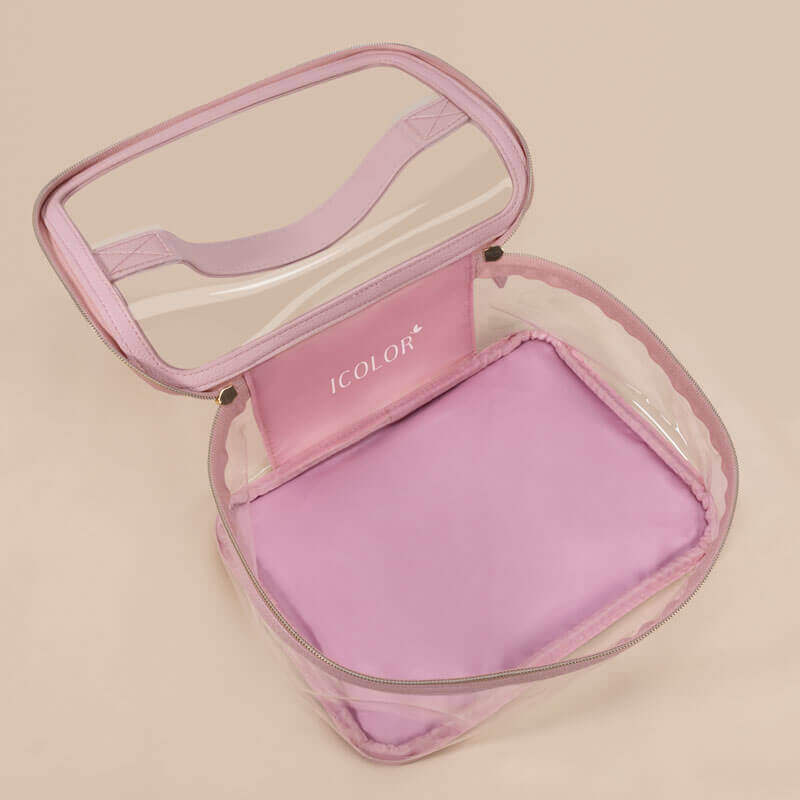
Clear-window toiletry bags need extra review. The buyer should check transparency, thickness, seam method, window alignment and whether the panel shows marks after packing.
Ask whether the clear panel is TPU, PVC or another material route, and request sample photos of corners and zipper ends. For a deeper comparison, see Ecoicolor’s TPU vs PVC toiletry bag window guide.
5. Logo and Trim Testing
Logo durability depends on the material and method. Embroidery, screen print, heat transfer, woven labels, patches, pullers and charms all behave differently.
Ask the supplier to test the logo at actual size. If the logo sits near a zipper, seam or clear window, review the placement on a physical sample before approving bulk production.
6. MOQ 500 and Sample Approval
MOQ 500 can be possible for selected toiletry bag routes, especially when available materials and practical zipper options are used. Complex structures, custom colors, special hardware or mixed materials may require a different route.
Ask for three quotation paths:
- Available material plus standard zipper and logo.
- Available material plus upgraded zipper, puller or lining.
- Final material route plus approved logo, packing and QC requirements.
Check MOQ 500 Sample Route Compare Custom Pouches
7. Filled-Bag Testing
An empty pouch can look fine while a filled bag exposes zipper strain, seam stress or shape problems. Test with real products or equivalent weight before approval.
Check whether the bag stands, folds, zips, opens and packs correctly when loaded. If the bag is part of a launch kit, test it with the other packaging components.
8. Packing QC
Packing affects the final condition. Clear panels can show marks. PU can show pressure. Fabric bags can crease. Structured bags can lose shape if packed too tightly.
Ask for packing method, carton count, carton size, individual bagging, tissue, shape support and carton marks. These details belong in the RFQ, not only in the final shipping discussion.

Best Fit and Less Suitable Projects
Best fit for Ecoicolor
- Beauty and travel retail teams sourcing custom toiletry bags.
- Hotel, spa or amenity programs needing pouch durability checks.
- Buyers planning MOQ 500 or larger custom cosmetic pouch projects.
- Teams that need zipper, material, logo, sample and packing review before production.
- Programs where filled-bag performance matters.
Less suitable
- One-piece personal toiletry bag requests.
- Blank stock pouches with no sample or material discussion.
- Projects without product size, quantity, filled weight or launch timing.
- Orders where zipper, seam, logo and packing checks are not needed.
Recommended RFQ Format
Send suppliers a brief like this:
- Bag type and target finished size.
- Product contents and approximate filled weight.
- Material route, lining and clear-panel requirements.
- Zipper type, puller and closure preference.
- Logo file, logo method and placement.
- Quantity, sample deadline and bulk delivery target.
- QC checkpoints and filled-bag test expectations.
- Packing method, carton marks and destination market.
This format helps the supplier quote a production route and QC plan, not just a product style.
Request Material Swatches Compare TPU Window Routes
FAQ
What durability checks matter most for custom toiletry bags?
The key checks are zipper function, seam strength, fabric surface performance, clear-panel joining, logo durability, filled-bag shape and packing protection.
Should I test a toiletry bag sample with real products?
Yes. Filled-bag testing helps reveal zipper strain, seam stress, shape issues and packing problems that may not appear when the pouch is empty.
Can MOQ 500 work for custom toiletry bags?
MOQ 500 can be possible for selected materials, zipper routes and practical structures. Custom colors, special hardware, complex windows or unusual trims may require a different MOQ.
What should I include in a toiletry bag QC checklist?
Include zipper smoothness, seam alignment, corner strength, material shade, logo placement, lining fit, filled-bag shape, clear-panel condition and carton packing requirements.