Buyer Summary
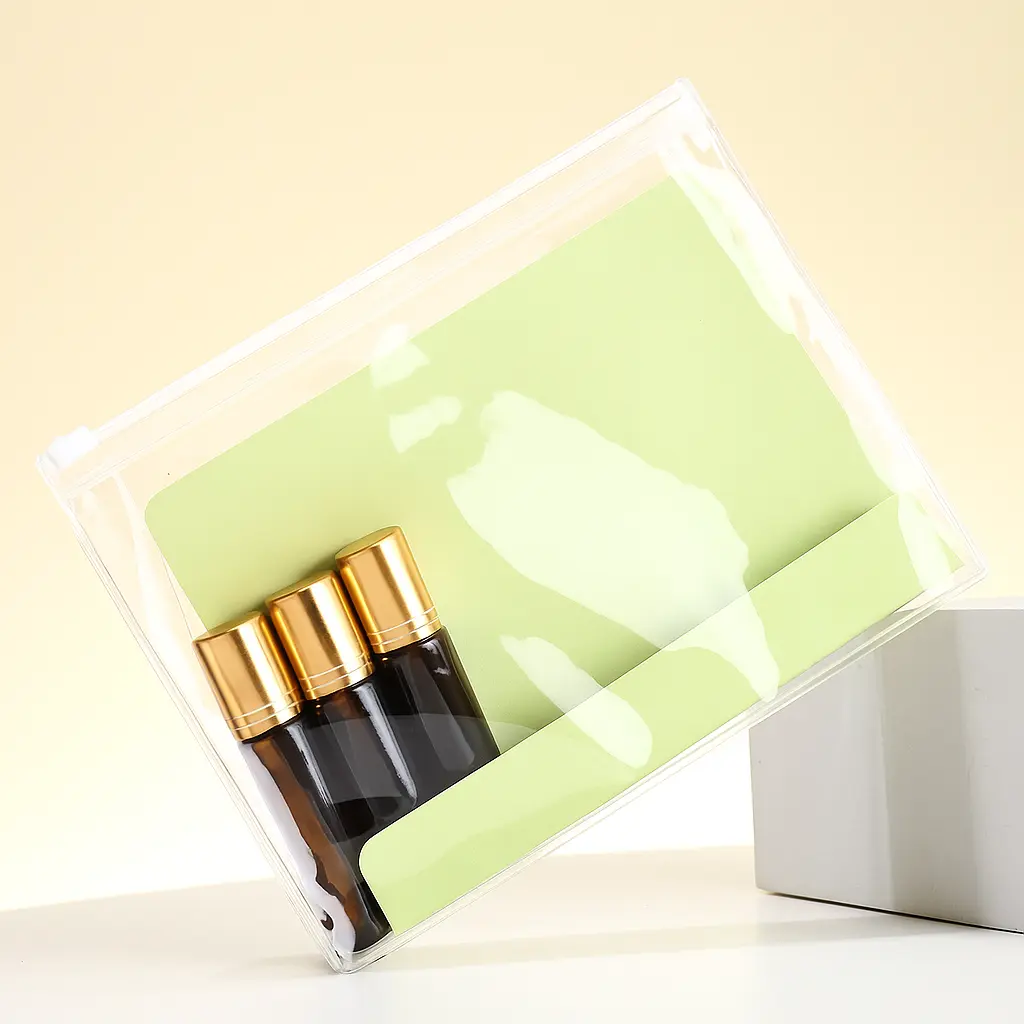
For a clear travel-kit pouch, material disclosure and product fit are separate approval tasks. In this verified US project, the buyer planned tens of thousands of units and repeatedly asked about the TPU material. Ecoicolor supplied the available material information, requested physical bottle samples and developed a paper card to keep the bottles upright. The project moved from sample to bulk production and later reorder.
Verified project snapshot
| Confirmed fact | Project record |
|---|---|
| Buyer and use | An anonymized US travel-kit buyer sourcing a clear triangular pouch |
| Quantity | 30,000-50,000 units; project MOQ reference 1,000 units |
| Initial gap | Pouch dimensions and material route were not confirmed at the start |
| Buyer question | The buyer repeatedly requested information about TPU composition and degradability |
| Fit requirement | A paper card was needed to keep the bottles upright |
| Supplier action | Ecoicolor provided material information and requested physical bottle samples for fit testing |
| Verified outcome | Sample approval, bulk production and later reorder |
Customer identity, artwork, pricing, exact shipment date and branded product photos remain private. The quantity is shown as a range, and no unsupported environmental claim is added.
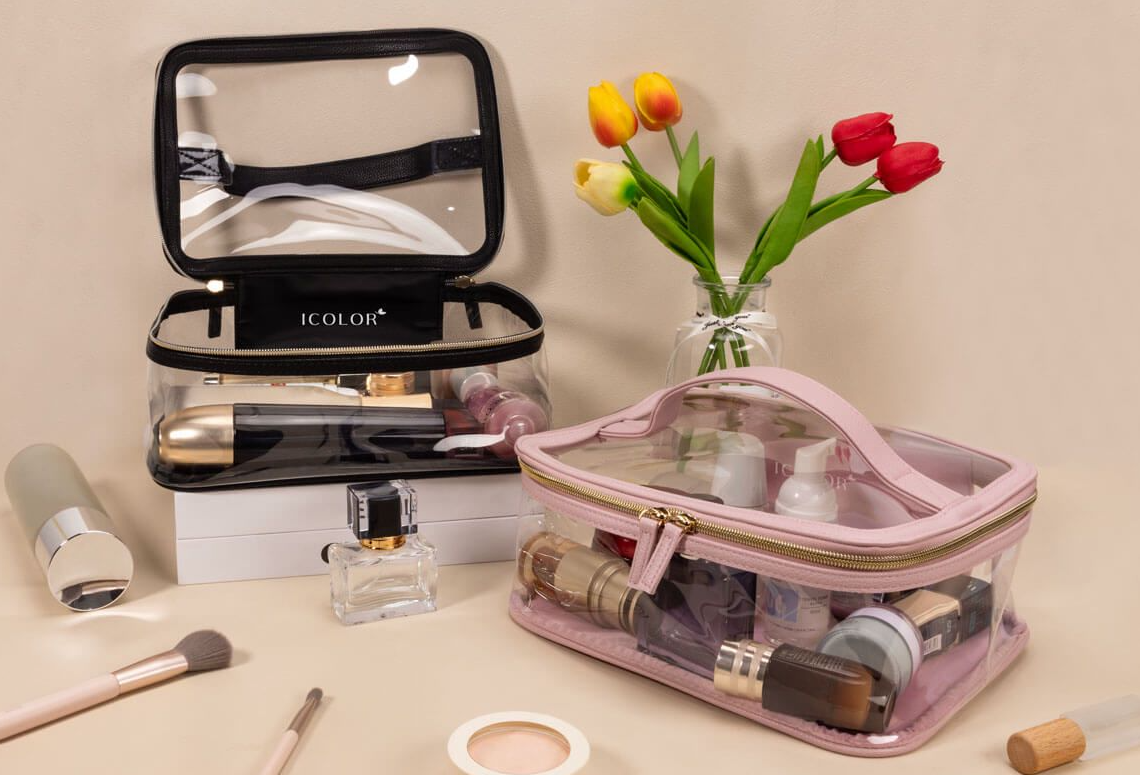
Material disclosure must stay specific
A buyer asking whether TPU is degradable is not asking for a slogan. The useful answer separates the selected film specification, supplier documentation, the intended claim and the market where the finished product will be sold. The FTC Green Guides1 is a useful reminder that broad environmental wording needs qualification. For this project, Ecoicolor answered with available material information rather than turning the question into a guarantee.
Material name
Identify the film route and supplier specification used for the sample instead of using clear plastic as the only description.
Document scope
List which data sheets, declarations or test reports are available for the selected route and which are not.
Claim boundary
Do not convert a material discussion into an unqualified biodegradable, recyclable or eco-friendly claim.
Approval record
Keep the accepted material sample and document revision tied to the purchase specification.
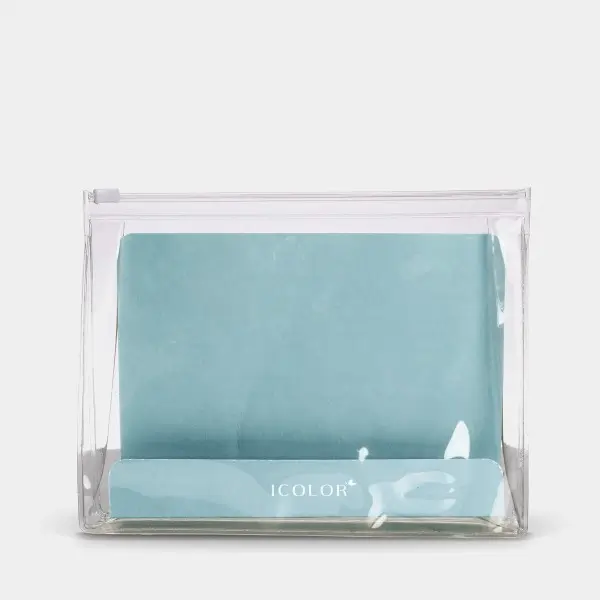
The physical bottles changed the approval quality
The buyer had not confirmed the final pouch dimensions at the start. A flat drawing could show the triangular outline, but it could not prove how several bottles would stand, whether they would lean into the zipper or whether the clear panel would carry visible pressure marks.
Ecoicolor asked for the actual bottles. This changed the discussion from an estimated bag size to a real product map: bottle diameter, height, cap shape, filled weight, preferred orientation and the order in which the set would be packed.

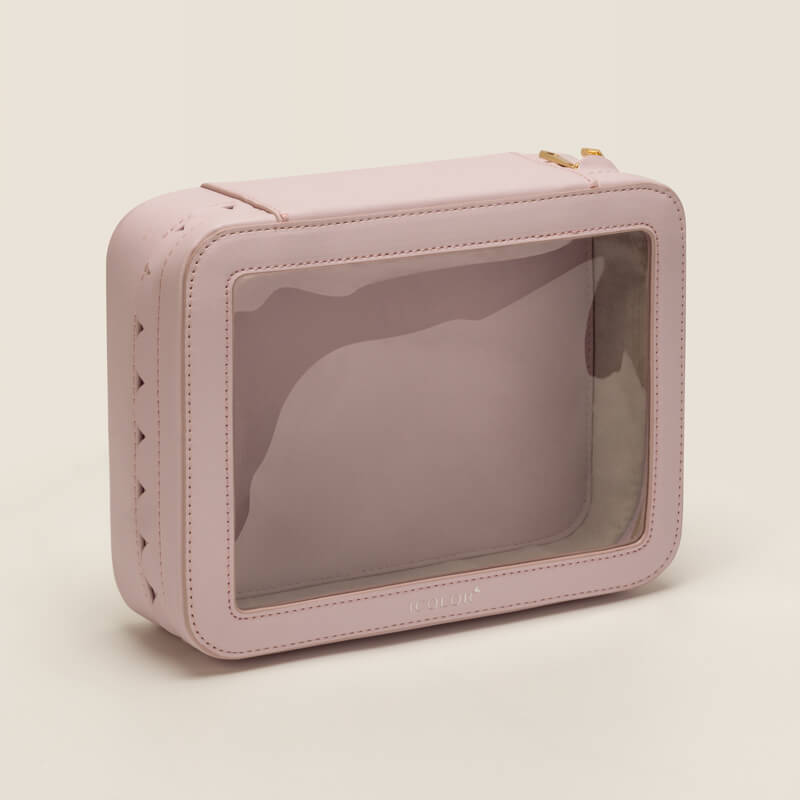
Why the paper card was part of the structure
The paper card was not only a branding insert. It helped keep the bottles upright and controlled how the set appeared through the clear pouch. Its height, folds and contact points therefore had to be reviewed with the bottles inside the sample.
| Card decision | What the sample should prove |
|---|---|
| Height and fold line | Supports the bottles without pushing into the zipper or distorting the pouch |
| Bottle openings | Hold each item in the intended orientation without excessive movement |
| Printed face | Presents the set clearly and leaves required retail information readable |
| Removal route | Allows packers and end users to remove products without tearing the card |
| Carton pack-out | Keeps the pouch stable when multiple finished units are packed for shipment |
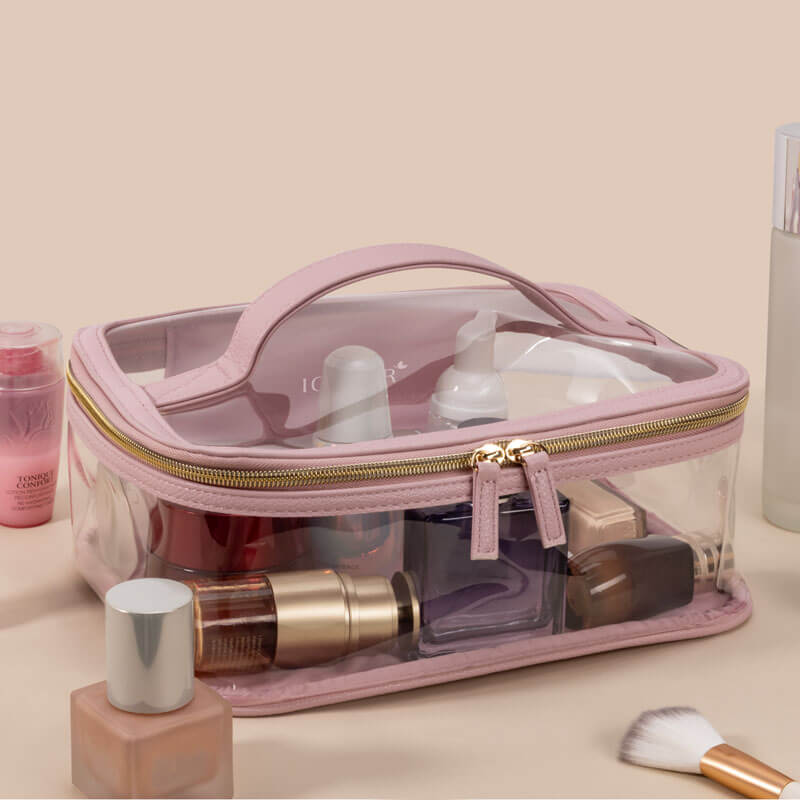
Sample approval before a five-figure bulk run
A 30,000-50,000 unit project magnifies a small approval gap. The signed sample should therefore lock the pouch size, clear-panel appearance, trim, zipper, card, product map, logo method and packing route before bulk release.
Bulk inspection can then use an agreed sampling plan such as ISO 2859-12 together with project-specific workmanship criteria. The standard supports sampling terminology; it does not replace a clear defect list or the signed sample.
Before sampling
Send bottle samples, artwork, quantity range, destination market and required material information.
At sample review
Pack the real bottles and inspect standing stability, zipper clearance, panel flatness, card fit and visual presentation.
Before bulk
Sign one revision and define inspection points, packing method and any retail identification requirements.
What the reorder tells us
The verified sequence was sample, bulk production and reorder. That does not prove every TPU project will repeat. It does show that material questions and physical fit can be resolved inside one controlled approval path when the buyer supplies the real products and both sides keep the approved specification consistent.
Best fit and less suitable inquiries
| Best fit | Less suitable |
|---|---|
| Established travel-kit, beauty or wellness brands planning a clear pouch program with product samples, quantity range and retail packing requirements | Single-piece personal orders, projects that refuse physical fit review, or buyers asking for an environmental guarantee without defining a material and market |
| Teams willing to approve material information, product map, card structure and packed sample before bulk | Urgent bulk requests that want the factory to guess bottle dimensions or approve a pouch from a reference photo only |
What to send in the first RFQ
- Expected quantity and destination country.
- Pouch size target and whether it is fixed or open to product-fit adjustment.
- Actual bottles or accurate dummies, with dimensions and filled weight.
- Requested TPU material information and the exact claim or compliance question to be reviewed.
- Logo artwork, trim color, zipper route and handle details.
- Paper card purpose, printed information and required product orientation.
- Retail barcode or identification needs; GS1 barcode standards3 can support barcode planning.
- Packing method, launch window and sample approval contacts.
Related procurement guides
FAQ
Can Ecoicolor quote a clear TPU pouch without the products?
A preliminary review may be possible from dimensions and photos, but a packed sample with the actual products or accurate dummies is recommended before bulk approval.
Does Ecoicolor guarantee that TPU is biodegradable?
No. Material information and claim wording depend on the selected TPU specification, available supplier documentation and the destination-market requirement. Broad environmental guarantees are not appropriate.
Why did this project need a paper card?
The card helped keep bottles upright and organized the visible presentation inside the clear pouch. Its structure was therefore approved with the products, not added after pouch approval.
What quantity was involved in this project?
The verified range was 30,000-50,000 units, with a project MOQ reference of 1,000 units. Customer name, exact order value and dates remain private.
What was the verified outcome?
The record confirms sample approval, bulk production and a later reorder. It does not imply that every project will follow the same commercial result.
About the Author

Vivi Lu supports Ecoicolor buyers with RFQ review, structure choices, material routes, sample approval and retail packing for beauty, fragrance, jewelry and sewn-pouch projects. Connect with Vivi Lu on LinkedIn.