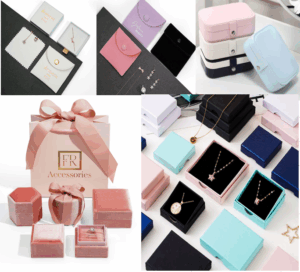
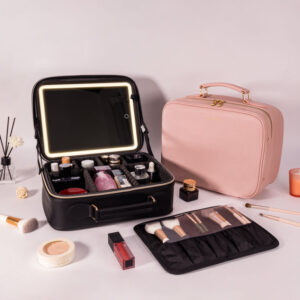
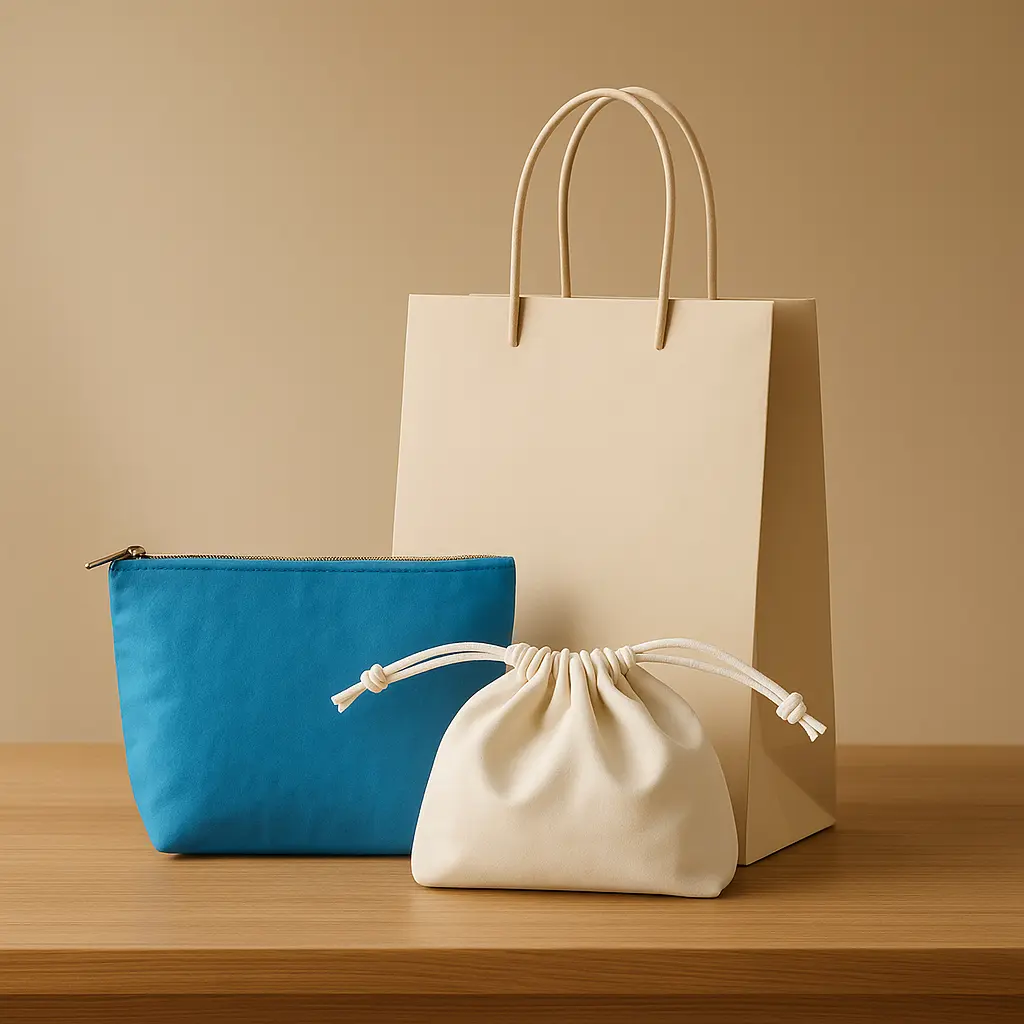
Use this guide to turn cosmetic packaging design trends into practical sourcing decisions: material route, certificate scope, claim wording, swatch approval, sample testing and retailer ESG submission support.
Updated for beauty, skincare, fragrance and retail teams comparing custom cosmetic bags, pouches, inserts, boxes and launch kits with material documentation needs.
Send a Packaging Brief View Cosmetic Bag Manufacturing
Buyer summary: Material language is only useful when it can be supported by the actual product route. Before a brand uses a material claim in retail packaging, ask the supplier what certificate covers, which component it applies to, what documents can be shared, and whether the approved sample matches the quoted material.
Quick Answer
The useful packaging question for 2025 and 2026 is not “Which trend looks best?” It is “Which material route can our brand approve, document, sample and repeat?” A cosmetic pouch, paper box, insert, sleeve or clear-window bag may involve several components, and each component may have a different documentation status.
Ecoicolor can help buyers compare material swatches, sample routes, logo methods and document expectations before quotation. For sewn beauty pouch projects, start with Ecoicolor’s custom cosmetic bag manufacturing page. For recycled-content documentation basics, see this GRS and rPET packaging guide.
What to Confirm Before Using a Material Claim
Before your team approves wording for product pages, retailer forms or packaging inserts, confirm the boundary of the claim.
- Which component is covered: outer fabric, lining, zipper tape, puller, thread, insert, paper sleeve or carton.
- Which document is available: certificate, transaction document, supplier declaration, test report or material specification.
- Whether the document covers the same product route as the approved sample.
- Whether the claim is about content, sourcing, manufacturing, reuse, refill, mono-material design or reduced component count.
- Whether the retailer requires a specific file format, expiry date or supplier signature.
- Whether the final bulk order will use the same material, color, thickness and supplier as the approved sample.
10 Cosmetic Packaging Design Decisions for Brand Buyers
Use these points as a practical checklist when reviewing cosmetic packaging trends with your supplier.
| # | Decision Area | What It Means for RFQ | Document or Sample Check |
|---|---|---|---|
| 1 | Recycled fabrics such as RPET velvet and satin | Useful for pouches, drawstring bags and soft launch packaging | Ask which component the document covers |
| 2 | Recycled PU | Useful for structured cosmetic bags and premium-feel pouches | Confirm surface, backing, thickness and logo method |
| 3 | New bio-based material exploration | Useful for concept projects and limited launch tests | Request swatches and clear material specifications |
| 4 | Natural textiles | Useful for cotton, canvas and linen-look pouch programs | Check fabric weight, shrinkage and print performance |
| 5 | Refill-support packaging | Useful when the bag or case supports repeated product use | Clarify structure, cleaning expectations and replacement parts |
| 6 | Fewer single-use components | Useful when simplifying inserts, sleeves or accessories | Confirm what is removed and what still protects the product |
| 7 | Clear TPU windows | Useful for travel pouches and product visibility | Check thickness, transparency and seam method |
| 8 | QR codes and digital product files | Useful for retailer information and consumer education | Confirm landing page, batch data and update responsibility |
| 9 | Packaging as a kept product | Useful for cosmetic bags, toiletry pouches and organizer cases | Test zipper, lining, seams and long-use feel |
| 10 | Textile-first design | Useful when the pouch is the main brand packaging asset | Review swatches, logo method and repeat color control |
1. Recycled Fabrics: RPET Velvet and Satin
Recycled-content fabrics can be useful for cosmetic pouches, gift-with-purchase bags, drawstring bags and soft packaging sets. The buyer should not treat the material name as the full claim. Ask which component is covered and whether the supplier can provide document support for the quoted route.
For RFQ, request fabric weight, color options, lining recommendation, logo method and sample lead time. If the pouch includes zipper tape, thread, lining and a label, clarify which parts are included in the material statement.
2. Recycled PU
Recycled PU can work for structured cosmetic bags and premium-feel pouches where the brand wants a smoother surface. It can support debossing, patch labels or printed logos depending on texture.
Ask for thickness, backing, surface finish, logo test and edge sewing photos. If a document is required, confirm whether it applies to the PU surface material only or to the finished bag route.

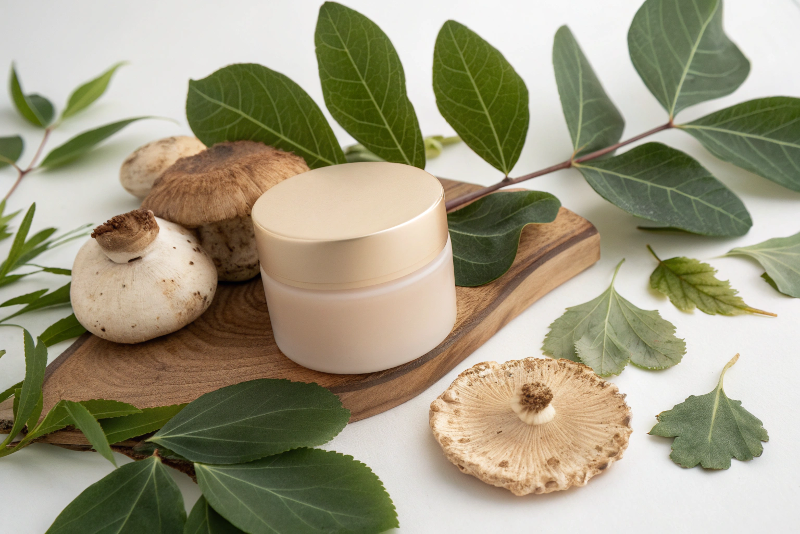
3. New Bio-Based Material Exploration
Materials such as mushroom-based, seaweed-based or other experimental surfaces may be useful for concept presentations, limited retail projects or design exploration. They should be handled carefully in sourcing because availability, MOQ and production consistency may vary.
For buyer review, ask for swatches, written material descriptions, sample timing and a clear statement of what the supplier can repeat in bulk.
4. Natural Textiles
Cotton, canvas and linen-look fabrics can be practical for pouches, drawstring bags and casual cosmetic kits. The main sourcing checks are fabric weight, shrinkage, color, print performance and sewing stability.
If your brand needs documentation, confirm what can be provided for the fabric and whether the document applies to the exact color and finish selected for the final sample.
5. Packaging Designed for Refills
Refill-support packaging should be evaluated as a structure, not only as a concept. A pouch or case may need stronger seams, a better zipper, washable lining or a removable insert if the customer is expected to keep using it.
Ask the supplier to quote the material, closure, lining and sample route together. The more often the bag will be handled, the more important zipper and seam testing becomes.
6. Fewer Single-Use Components
Reducing components can make a packaging program simpler, but it should not create product protection problems. If you remove a plastic sleeve, insert, ribbon or extra wrap, ask what still keeps the product in place during shipping and retail handling.
For cosmetic bags and launch kits, compare a simple route against a protected route. A cleaner design is useful only if it still works for the product and channel.
7. Clear TPU Windows
TPU windows are useful for travel pouches, product visibility and retail sets where the contents should remain visible. Buyers should check transparency, thickness, seam construction and logo compatibility.
If the clear panel is combined with fabric, PU or PVB, ask for a sample that shows the exact joining method. Mixed materials often need closer review at corners and zipper ends.
8. QR Codes and Digital Product Files
QR codes can support product information, material notes, batch references or retailer forms. The key is governance: who owns the landing page, who updates it, and what information is tied to each batch.
For RFQ, ask whether the supplier can support QR printing, label placement or product file coordination. Your team should still approve the content and claim wording before printing.
9. Packaging as a Kept Product
Cosmetic bags, toiletry pouches and organizer cases can become part of the product experience after purchase. This requires stronger attention to zipper smoothness, lining, stitching, hand feel and cleaning expectations.
Ask for a sample that holds the real products and survives normal handling tests. A kept pouch should feel consistent with the brand, not just look good in a flat product photo.
10. Textile-First Design
Textile-first design means the pouch, wrap or bag becomes the central packaging asset. This can work well for beauty launches, spa sets, fragrance minis and seasonal kits.
The RFQ should include swatch approval, logo method, zipper and drawstring options, lining, carton packing and repeat color control. If the brand expects repeat orders, ask how the supplier will control the material route over time.
Request Material Swatches Review GRS Documentation Basics
Retailer ESG Submission Checklist
When a retailer asks for packaging information, prepare a file set that is specific to the product route.
- Final product name and SKU.
- Packaging component list.
- Material specification by component.
- Certificate or supplier document, if available for that component.
- Claim wording approved by the brand team.
- Product photos or sample approval photos.
- Bulk order quantity and production batch reference.
- Supplier contact and document expiry date, if applicable.
Best Fit and Less Suitable Projects
Best fit for Ecoicolor
- Beauty brands comparing pouch, box, insert and sleeve material routes.
- Retail teams preparing material files or ESG submission support.
- Buyers who need swatches, samples and document scope checked before quotation.
- Brands planning repeat cosmetic bag or launch-kit programs.
- Teams that want claim wording to match actual material coverage.
Less suitable
- Projects that only need generic trend copy.
- Orders with no material, quantity, SKU or launch details.
- Personal-use packaging requests.
- Claims that have already been finalized before supplier documents are reviewed.
Check Sample and MOQ Route Compare Custom Pouches

FAQ
What should a beauty brand check before using a material claim?
Check which component the claim applies to, what document supports it, whether the document matches the approved sample, and whether the same material route will be used in bulk production.
Do all cosmetic packaging components share the same certificate?
No. A pouch may include outer fabric, lining, zipper tape, thread, label and packing materials. Each component can have a different document status, so the claim boundary should be confirmed before approval.
What should be included in a retailer ESG packaging file?
Include the SKU, component list, material specifications, available certificates or supplier documents, approved claim wording, sample photos, order details and document expiry information where applicable.
Why are material swatches important before sampling?
Swatches help the buyer review texture, color, thickness, print compatibility and document scope before paying for a full sample. They also reduce confusion when several material routes look similar in photos.