Buyer Summary
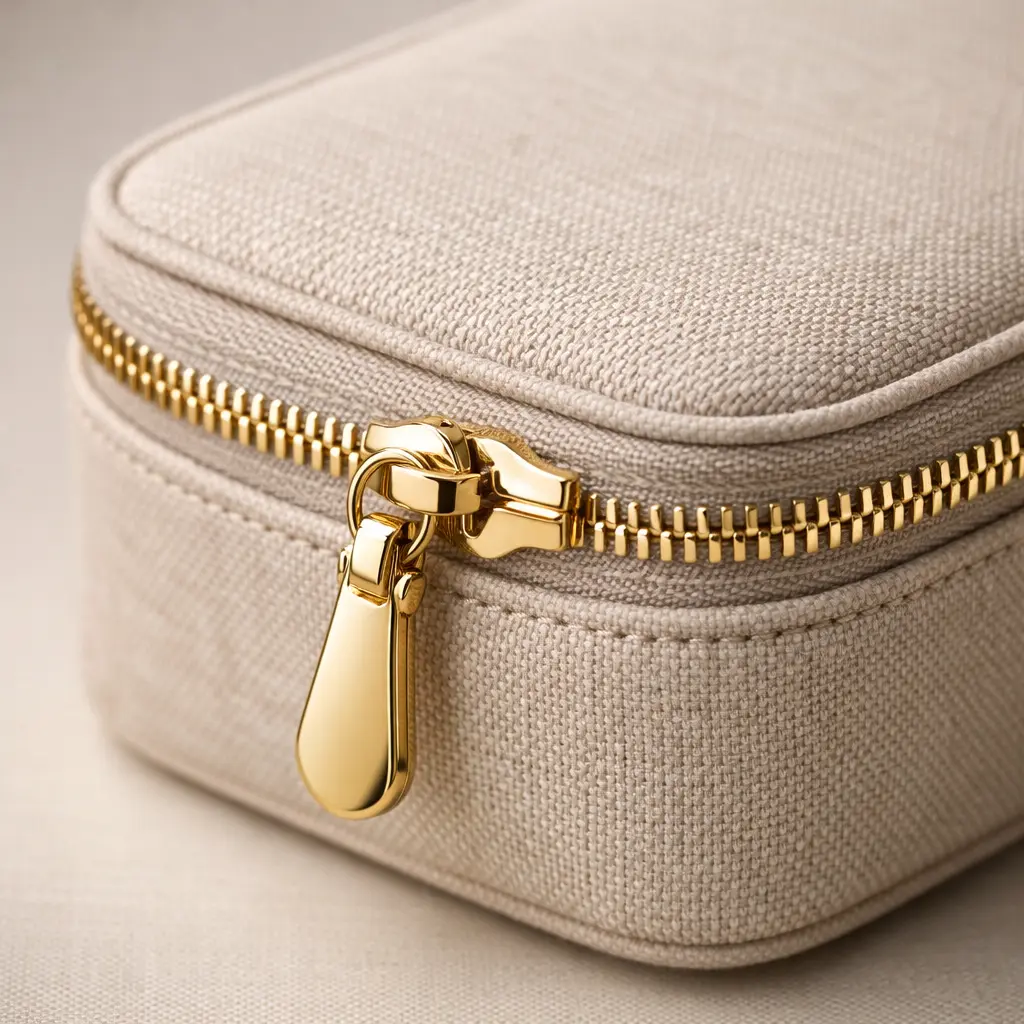
Use this checklist for a compact cosmetic pouch with two zipper pulls. Test smoothness with the pouch loaded, especially around corners and near the meeting point of the pulls. Confirm product fit with actual items or accurate dummies, because a sample can match the requested outer size and still fail internal access or closure clearance.
Buyer insight: the sample can match the drawing and still be wrong
A recurring risk appears when the buyer fixes the pouch dimensions but does not provide the products that must fit inside. The sample maker can follow the requested size, yet the loaded pouch may feel too tight, the internal pocket may push against the products, or the double zipper may resist at the corners.
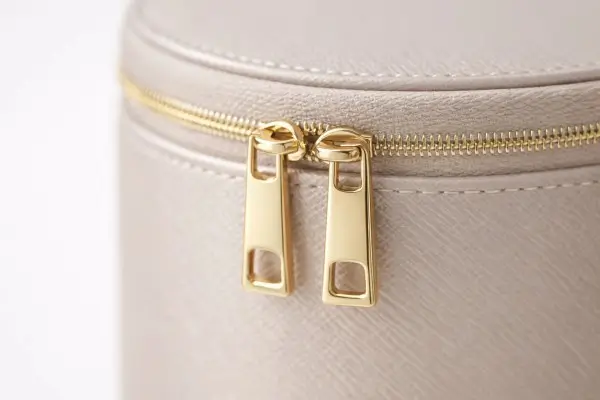
Double-pull metal zippers add another control point: both sliders must move consistently, meet neatly and remain easy to operate after the pouch is filled. If this is discovered only after sample testing, the pattern or zipper route may need rework.
- Check empty movement
Run both pulls through the full opening and note resistance, alignment, corner behavior and the meeting position. - Load the intended products
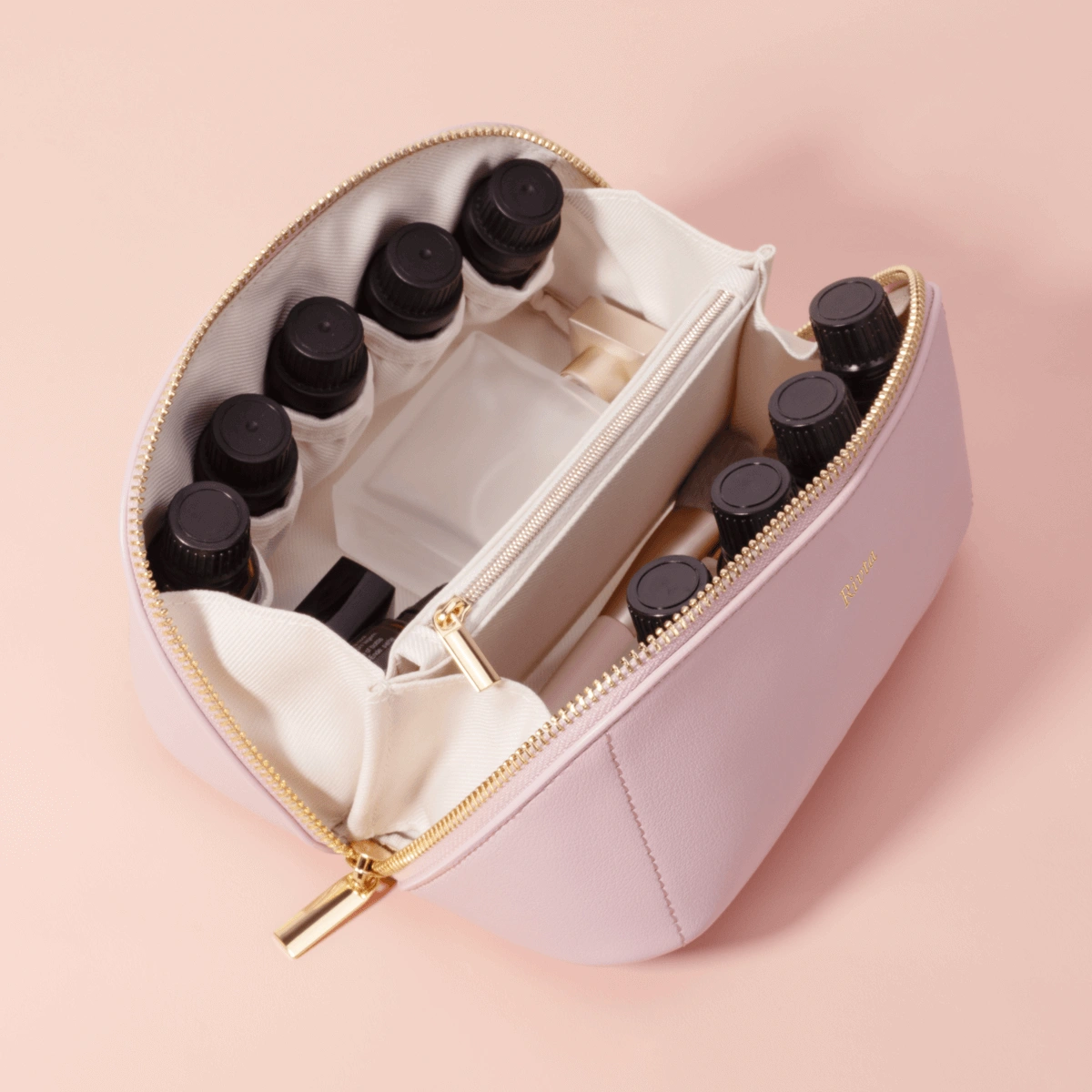
Use actual products or accurate dummies, fill pockets and elastic loops, then close the pouch without forcing it. - Repeat the use cycle
Open, close and reposition the pulls repeatedly; inspect tape, teeth, slider, seams and pull attachment.
Double-zipper functional check
| Check point | Pass condition | Warning sign |
|---|---|---|
| Slider movement | Both pulls move with similar effort on straight and curved sections. | One pull sticks, jumps, twists or requires force. |
| Meeting point | Pulls meet neatly without a visible gap or tape distortion. | The pulls overlap, stop unevenly or leave the opening exposed. |
| Corner radius | The selected zipper and pattern move around corners without sharp resistance. | Teeth bunch, tape wrinkles or the bag deforms at the corner. |
| Loaded closure | The pouch closes with intended products and pockets filled. | Products press against the zipper path or reduce usable opening. |
| Pull attachment | Pullers remain secure and aligned after repeated use. | Loose rings, plating damage, twisting or puller contact with the bag surface. |
| Lining clearance | Lining stays away from the slider and teeth. | Loose lining catches in the zipper or creates internal drag. |
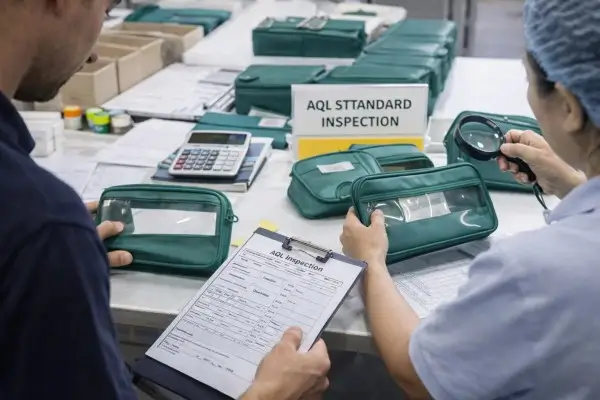
Use YKK zipper products1 for zipper-type context, then define pass-or-fail checks for the exact selected component. For bulk inspection terminology, ISO 2859-1 sampling2 can support the sampling-plan discussion, but the approved physical sample remains the visible construction reference.
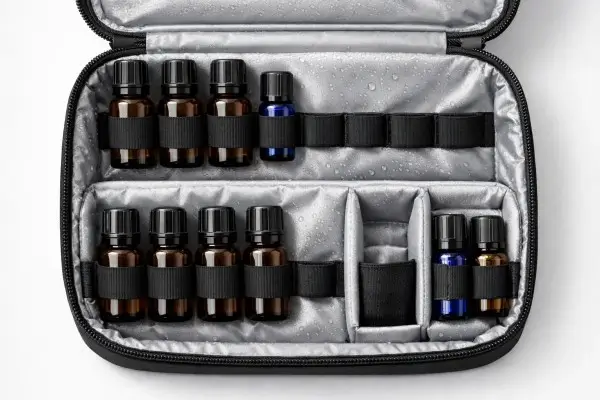
Product fit must include the pocket load
Do not test only the main compartment. An internal zip pocket, mesh panel or elastic storage area changes the available volume when it is filled. Product height, cap shape and removal direction can also create pressure near the zipper path.
- Send product dimensions, weights and photos, or provide physical products for the fit sample.
- Identify which items go in the main compartment and which go in pockets or loops.
- Check the opening width needed to remove the largest product without damaging labels or caps.
- Measure usable internal space after lining, padding and seam allowance, not only the outer bag size.
- Approve the fully loaded sample before locking the production pattern.
Best fit and less suitable projects
Where textile material documentation matters, OEKO-TEX Standard 1003 can support selected materials when the actual supplier records and scope apply. It does not replace zipper, fit or construction testing.
FAQ
Why can a double zipper feel uneven?
Corner radius, zipper type, tape tension, slider consistency, seam alignment and product load can all change the movement.
Should the sample be tested empty or loaded?
Both. Empty testing isolates the zipper route; loaded testing shows whether products and pockets reduce clearance.
Does the buyer need to provide actual products?
Actual products are strongly preferred. Accurate dimensions and dummies are the minimum alternative for fit-sensitive designs.
What if the requested size does not fit the products?
The pattern, gusset, pocket map or product orientation should be revised before bulk production, with the buyer approving the change.
Can a custom metal puller be used?
Yes, subject to geometry, tooling or stock route, plating, attachment method, component minimums and physical sample approval.
What should bulk QC compare against?
Compare zipper movement, meeting position, lining clearance, product-fit dimensions, sewing and appearance against the signed sample and written checklist.
About the Author

Vivi Lu supports Ecoicolor buyers with RFQ review, structure choices, material routes, sample approval and retail packing for beauty, fragrance, jewelry and sewn-pouch projects. Connect with Vivi Lu on LinkedIn.