Buyer Summary
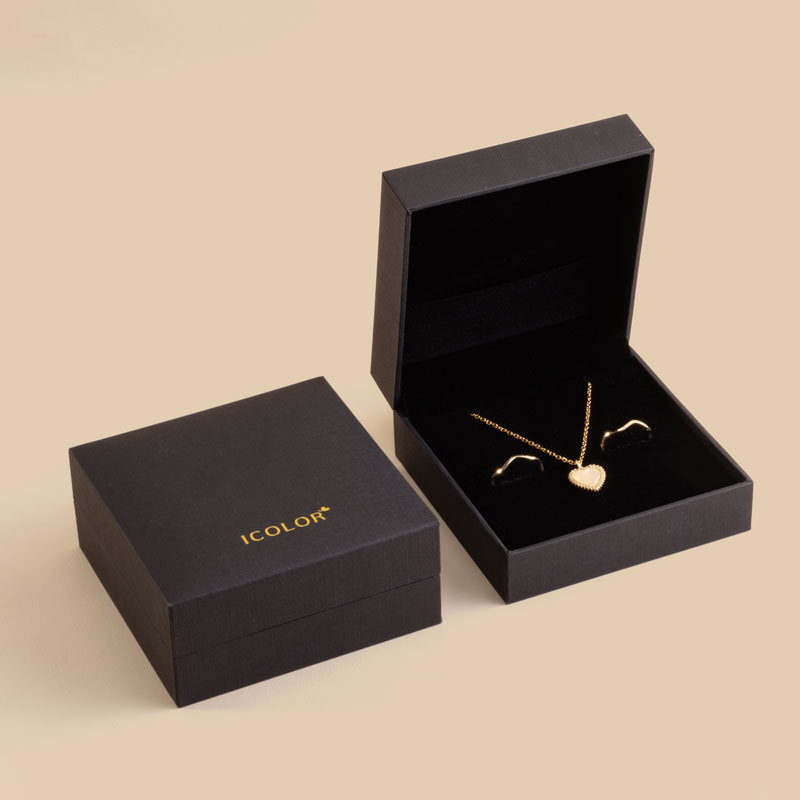
This anonymized project became a confirmed order for 20,000-80,000 hinged jewelry boxes. The structure used 120 gsm linen-texture paper and a velvet pocket lining over foam. At the sample stage, three issues were visible: the screen-printed velvet logo looked unclear, the paper wrap showed bubbles and wrinkles, and the pocket was too loose. Ecoicolor changed the logo route to debossing, improved the wrapping process and tightened the pocket. The revised sample looked more premium and the project moved into a bulk order. This article does not claim shipment, reorder or retail-sales results.
Verified project scope and privacy boundary
| Confirmed fact | Project record |
|---|---|
| Produit | Hinged paper jewelry box with a velvet pocket lining over foam |
| Outer wrap | 120 gsm linen-texture paper |
| Confirmed order range | 20,000-80,000 units; the exact quantity remains private |
| Product information | The buyer supplied jewelry dimensions but did not provide physical jewelry |
| Stage reviewed | Physical sample stage |
| Issues found | Poor velvet screen-print result, paper-wrap bubbles and wrinkles, and a loose pocket |
| Changes made | Debossed logo, improved paper-wrapping process and tighter pocket construction |
| Verified result | The revised sample presented a cleaner, more premium appearance and the project became a confirmed bulk order |
The customer name, brand artwork, exact dimensions, pricing, order reference and carton markings remain private. The supplied photos containing customer or shipping information are not used on the public page.
Issue one: surface ink did not suit the velvet
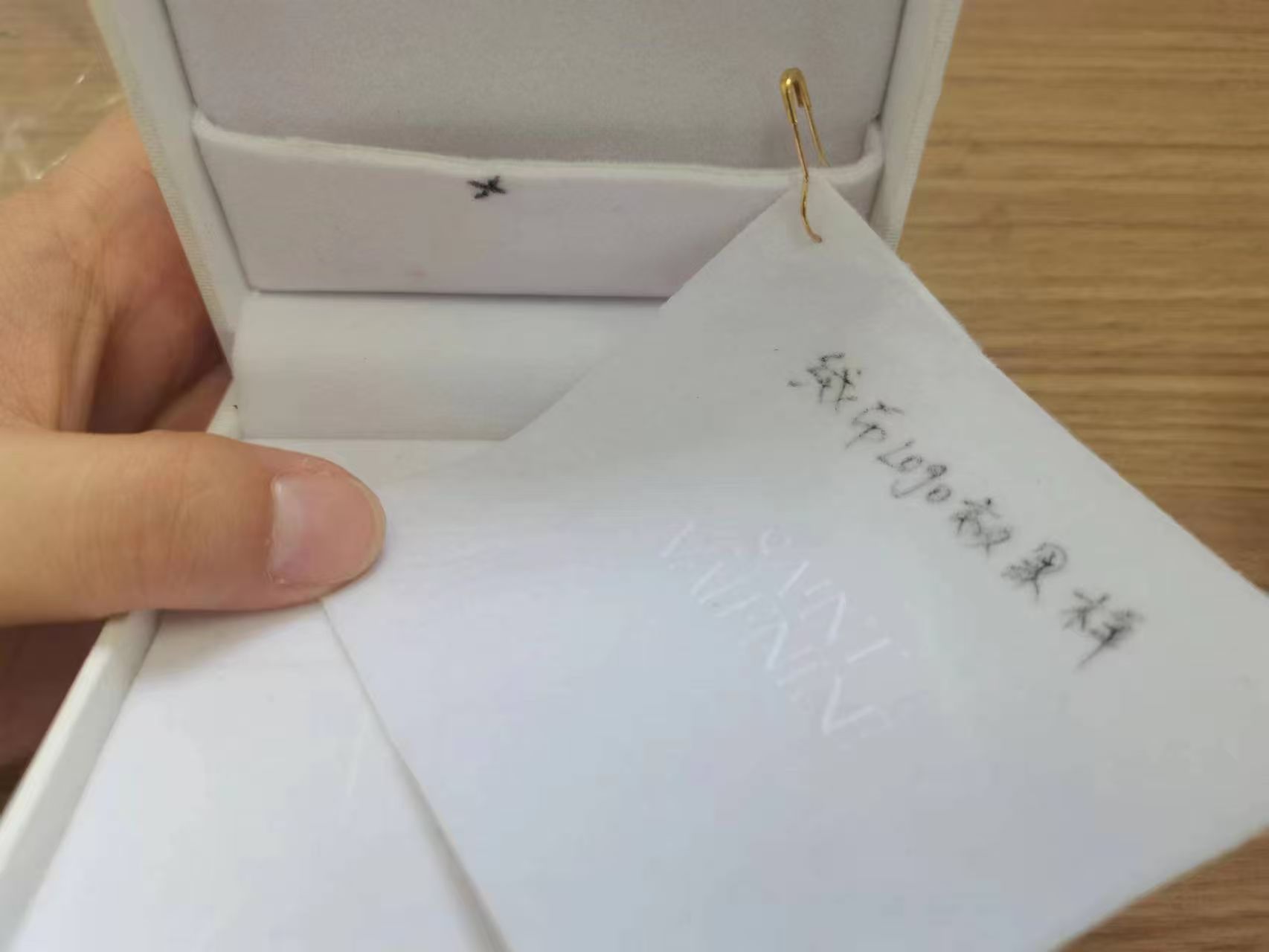
The first sample used screen printing on the velvet lining. The result did not look clean, and rubbing showed that the surface mark could transfer. The problem was found before bulk approval, when changing the decoration route was still practical.
Velvet has a raised pile rather than a flat printing surface. Ink can sit unevenly across the fibers, and the final edge can look less controlled than the same artwork on paper or a smooth coated material. A logo method that works on the outer wrap should therefore not be assumed to work on the lining.
What the sample showed
The printed mark looked weak on the velvet and did not meet the expected premium appearance.
Why it mattered
A visible interior logo is part of the first opening experience, so poor definition would reduce perceived quality.
What changed
The surface print was replaced with a debossed logo route on the velvet component.
What remained
The velvet lining and foam support were retained; only the unsuitable logo process was changed.
Debossing gave the interior a quieter premium finish
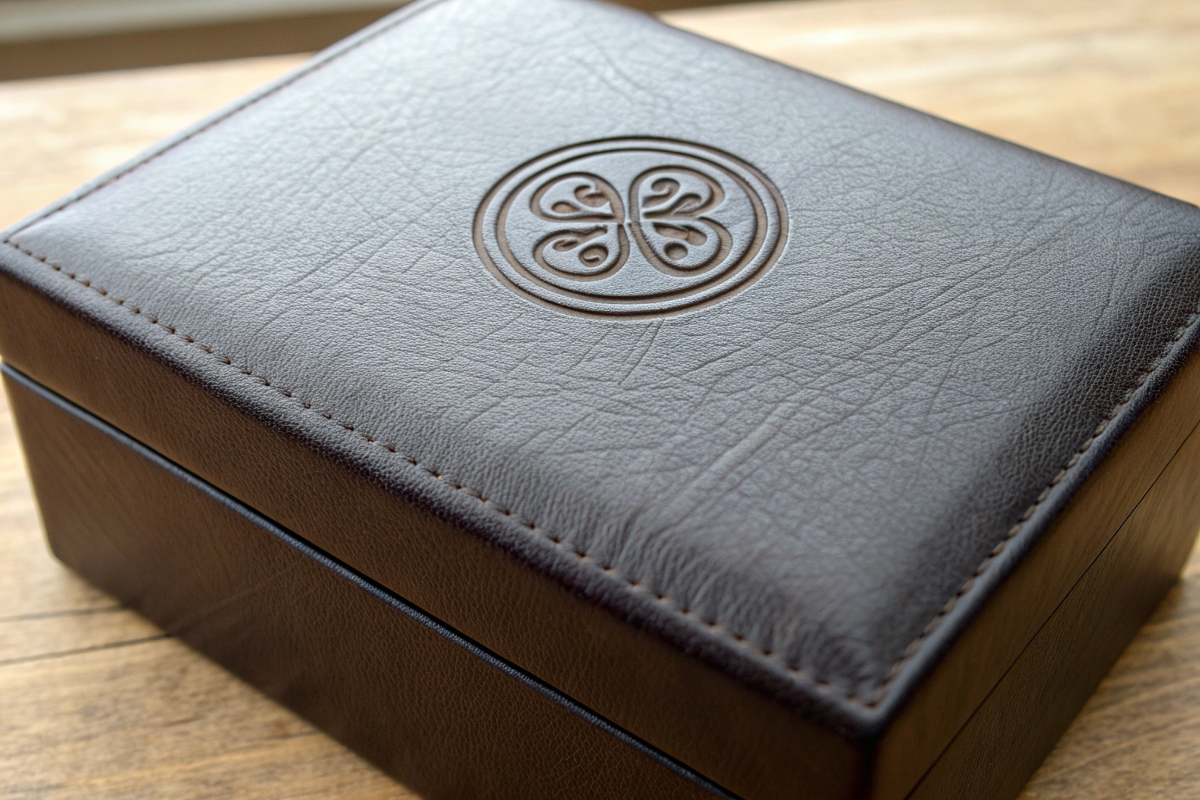
The revised route used a recessed mark instead of adding ink to the velvet surface. This reduced the visual conflict between the logo and the pile and produced a more controlled premium effect. The decision was based on the physical sample, not a digital rendering.
The debossed reference image below is illustrative and is not the customer’s product. A production logo still needs its own approval for depth, edge definition, artwork size and location on the actual selected velvet.
Issue two: the linen paper wrap bubbled and wrinkled
The sample also showed bubbles and wrinkles in the paper wrap. The selected 120 gsm linen-texture paper added tactile value, but its texture and forming behavior required more control during gluing and wrapping.
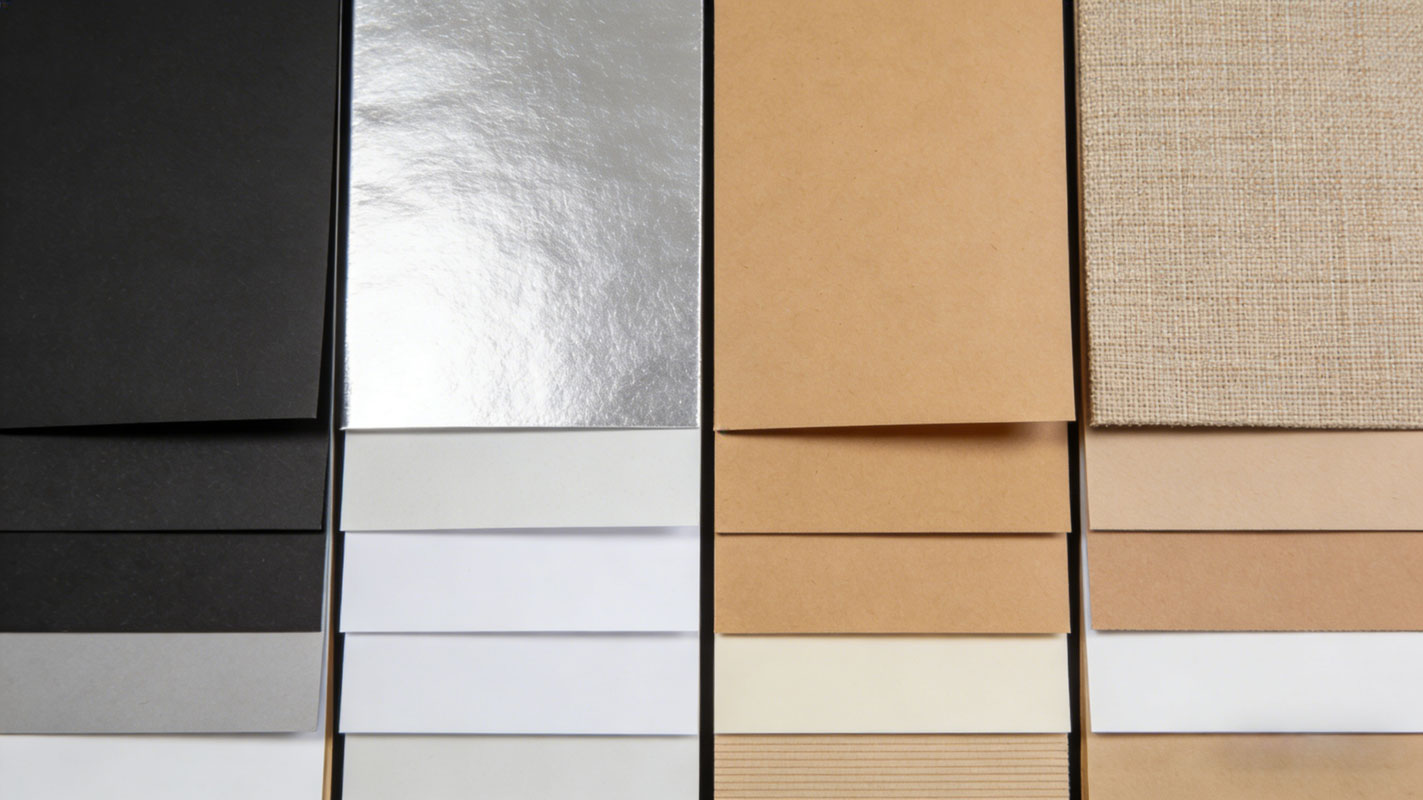
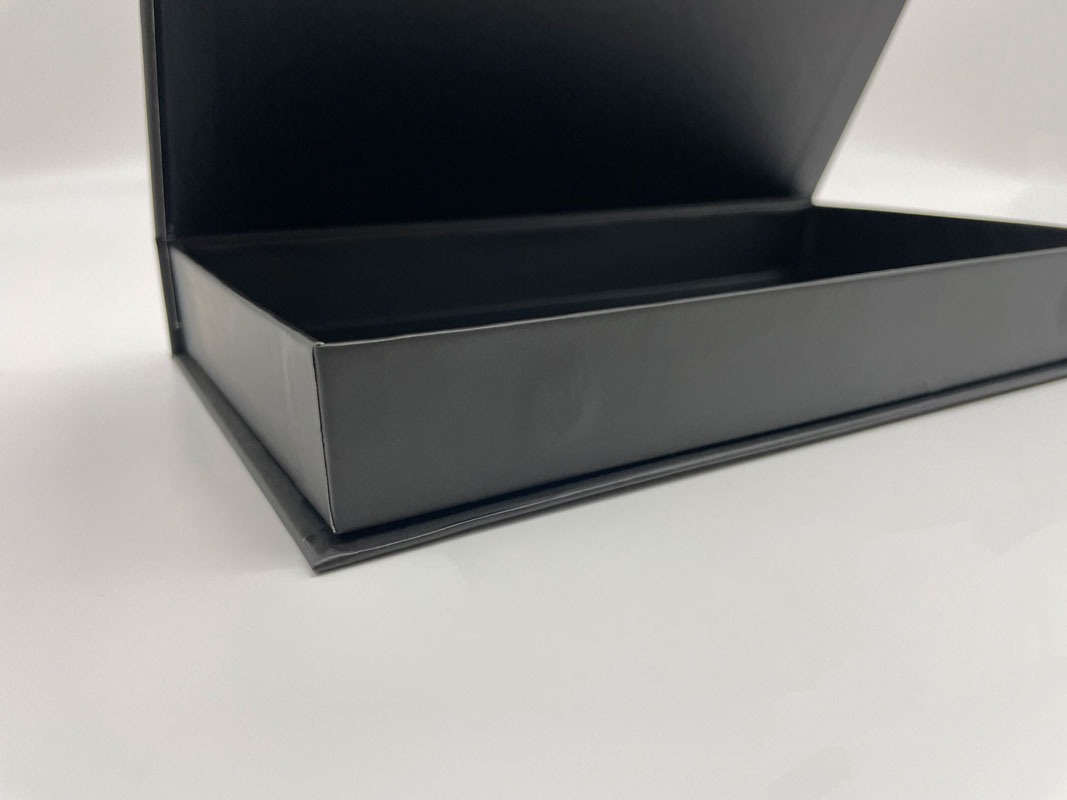
Ecoicolor kept the linen-texture route and improved the wrapping process. The revised work focused on adhesive coverage, paper tension, corner forming, edge turnover and the sequence used to wrap the hinged shell. The goal was to remove visible bubbles and reduce creasing without changing the intended outer material.
| Wrap checkpoint | What the physical sample should confirm |
|---|---|
| Adhesive coverage | No dry areas, trapped air or visible glue marks under the linen-texture paper |
| Paper tension | The surface lies flat without pulling the hinge or creating diagonal wrinkles |
| Corners and edges | Turnovers stay neat and consistent, with no lifted fibers or bulky corner build-up |
| Hinge movement | Opening and closing do not pull the wrap or expose unfinished board |
| Surface appearance | The approved texture and shade remain consistent across the shell |
Issue three: the velvet pocket was too loose
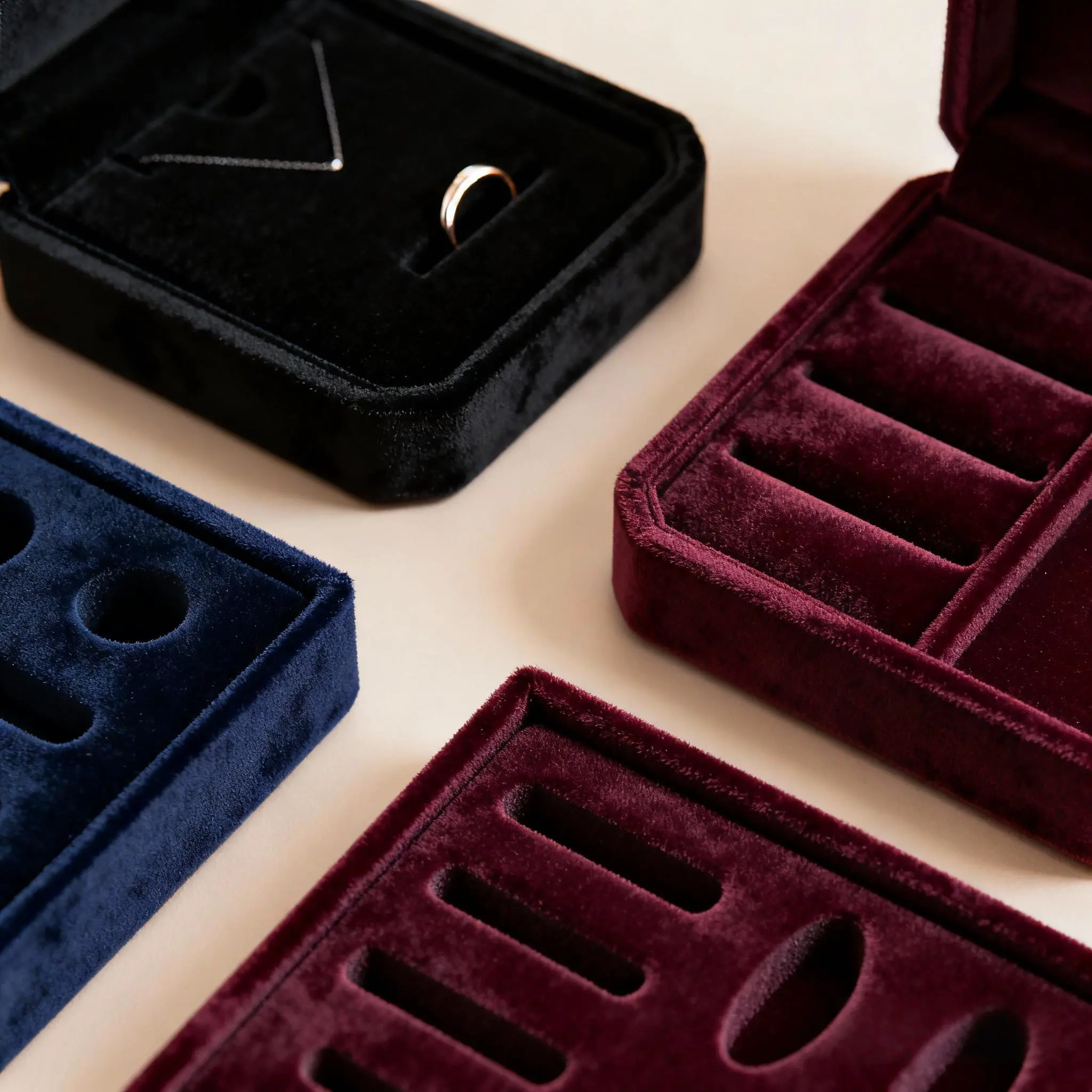
The lining included a velvet pocket over foam. In the first sample, the pocket did not hold its intended tension. A loose pocket can make the presentation look unfinished and may allow a jewelry item or card to move during handling.
The pocket was tightened while the velvet lining and foam route were retained. The approval point was not simply whether the pocket existed; it was whether the opening, tension, seam position and removal route worked together without distorting the lining.
Dimensions helped, but they did not prove final jewelry fit
The buyer supplied jewelry dimensions but did not provide the physical jewelry. Dimensions were enough to develop a sample and review the visible construction, but they could not fully prove fit. Chains, clasps, earring posts, pendant thickness and the way a piece is removed can create issues that a length-by-width measurement does not show.
For final fit approval, Ecoicolor recommends the actual jewelry, an accurate dummy or a complete product map with the critical three-dimensional details. This is especially important when the project has a five-figure order range, because a small fit assumption can be repeated across every finished box.
Earrings
Provide post length, backing type, drop length and the intended display position.
Necklaces
Provide pendant dimensions, chain length, clasp size and the route used to secure excess chain.
Rings
Provide ring size range, shank width and whether one insert must serve several sizes.
Cards or certificates
Provide final card thickness, dimensions and the order in which the buyer removes each component.
The revised sample supported a confirmed bulk order
After changing the velvet logo to debossing, improving the wrap process and tightening the pocket, the revised sample looked cleaner and more premium. The project then became a confirmed bulk order in the 20,000-80,000 unit range. The record provided for this article does not confirm shipment, reorder or retail-sales performance, so none of those later outcomes is claimed.
Best fit and less suitable inquiries
| Best fit | Less suitable |
|---|---|
| Established jewelry brands, retail groups and packaging teams planning 20,000+ hinged boxes with a defined product range and sample-approval contact | Single-piece requests, personal gifts or buyers asking the factory to release bulk without approving the physical box |
| Projects willing to review outer wrap, logo method, velvet pocket, foam, product fit and packing as one system | Projects that provide only a logo and box dimensions but refuse to supply jewelry details, accurate dummies or a fit-review route |
| Buyers who can identify the destination market, target launch, quantity range and acceptable document scope | Lowest-price-only requests that do not define the material, finish, inspection or approval standard |
What to send before the first hinged-box sample
- Expected quantity range, target launch window and destination market.
- Box dimensions, hinge direction and the intended opening experience.
- Physical jewelry, accurate dummies or a complete product map with critical dimensions.
- Selected wrap paper, color reference and any paper-sourcing document requirement; FSC chain of custody2 can support project-specific chain-of-custody discussions where relevant.
- Velvet, foam and pocket requirements, including what the pocket must hold and how the item is removed.
- Logo artwork and the decoration methods the buyer is willing to compare on the real material.
- Retail cards, labels or product-description requirements. For US jewelry descriptions, the buyer can review FTC Jewelry Guides1.
- Any textile testing or restricted-substance requirement for the selected lining; OEKO-TEX STANDARD 1003 is relevant only when the chosen material and project scope support that route.
- Packing method, carton requirements, inspection points and the person authorized to approve the sample.
Related procurement guides
FAQ
Why was screen printing changed to debossing?
The screen-printed logo did not look clean on the selected velvet and showed rubbing transfer. Debossing created a quieter recessed mark on the revised sample.
Did the buyer provide the actual jewelry?
No. The buyer provided dimensions but no physical jewelry. The sample could be reviewed for visible construction, but final product fit still required the actual item, an accurate dummy or a more complete three-dimensional product map.
What caused the paper bubbles and wrinkles?
The physical sample indicated that the linen-texture paper and wrapping process needed better control. Ecoicolor kept the paper route and improved adhesive coverage, tension, corner forming and wrap sequence.
Did this project become a bulk order?
Yes. After the sample-stage corrections, the project became a confirmed bulk order in the 20,000-80,000 unit range. The exact quantity and customer identity remain private.
What was the confirmed result?
The revised sample used a debossed velvet logo, improved wrapping and a tighter pocket, producing a cleaner and more premium appearance before the confirmed bulk order.
Can a jewelry box be approved from dimensions alone?
Dimensions support early development, but they may miss chain behavior, clasp thickness, earring posts, ring fit and product-removal details. Physical items or accurate dummies are recommended before final bulk approval.
About the Author

Vivi Lu supports Ecoicolor buyers with RFQ review, structure choices, material routes, sample approval and retail packing for beauty, fragrance, jewelry and sewn-pouch projects. Connect with Vivi Lu on LinkedIn.
Sources
- The US FTC Jewelry Guides for truthful descriptions of jewelry products and materials. ↩
- FSC chain-of-custody information for project-specific paper sourcing records. ↩
- OEKO-TEX information about testing textiles for harmful substances when that document route is relevant to the selected material. ↩