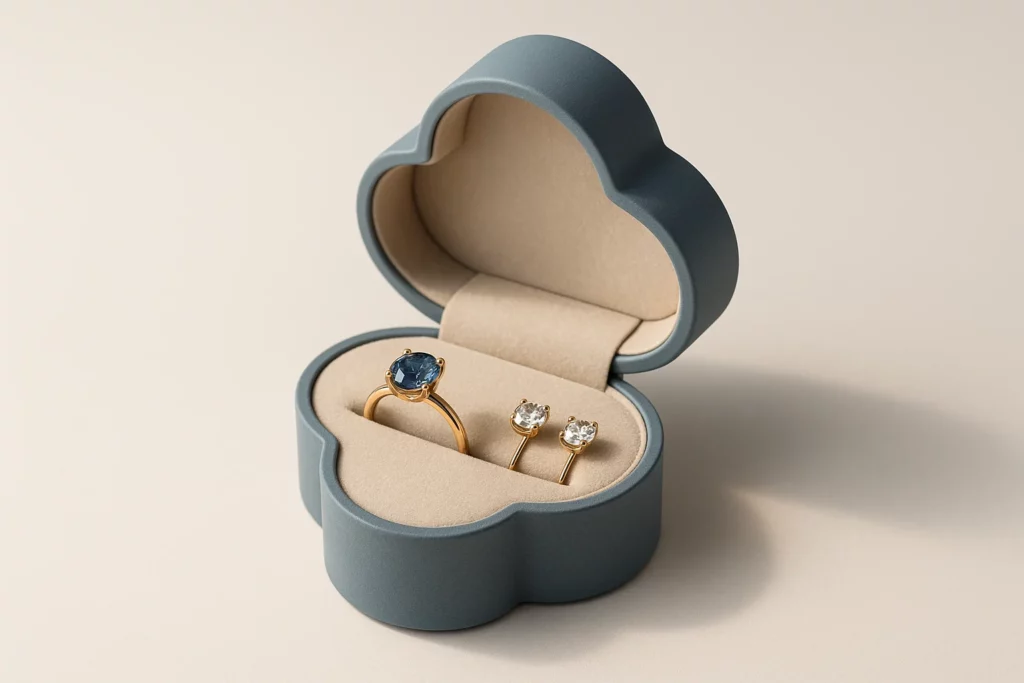
Buyer Summary
Use this guide when a jewelry brand needs a custom shaped box before dieline approval. The useful RFQ is not only the outside shape: it should include jewelry type, clearance, insert route, opening angle, edge finish, quantity, target market and sample timing. Plan paper rigid box projects from MOQ 1000.
Treat the dieline as a jewelry fit map
A shaped jewelry box can create strong shelf memory, but it also makes the dieline less forgiving. Rings, earrings, bracelets and necklaces need different insert heights, notch positions and lid clearance. The dieline should show how the product sits, how the customer removes it, and how the outer shape protects the insert.
The safest first step is a structural sample before final surface decoration. If paper-route document support is relevant, FSC chain-of-custody documentation1 can support the discussion, while the final claim depends on the selected material and supplier record.
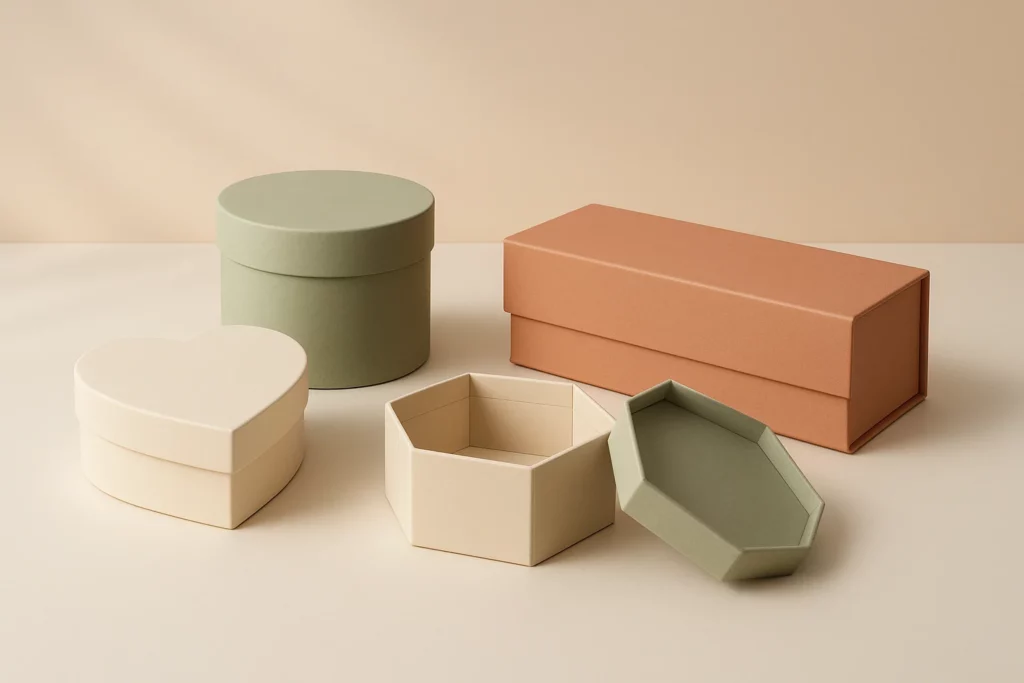
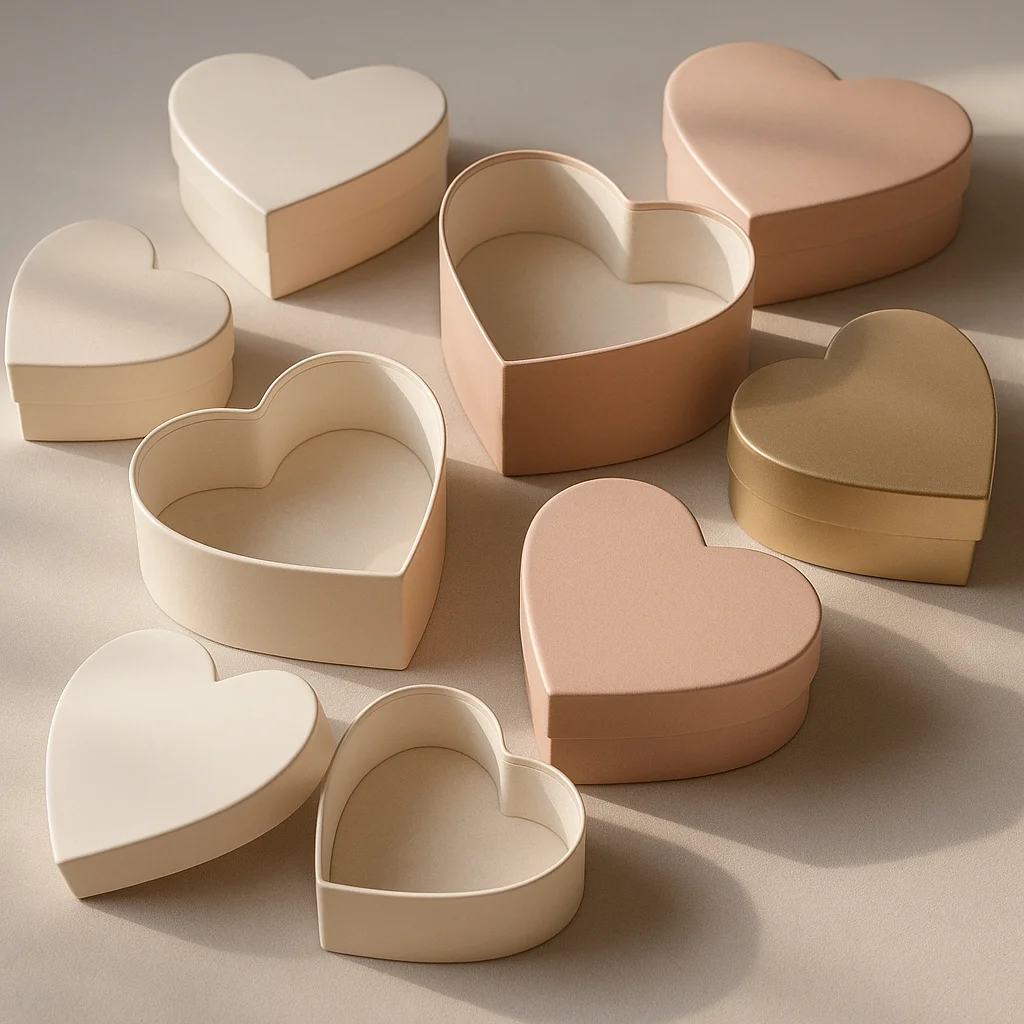
Five dieline decisions to confirm before sampling
- Jewelry type: Ring, earring, bracelet and necklace boxes need different support points. Do not approve the outside shape before the product hold is clear.
- Opening clearance: Heart, oval, hexagon or novelty shapes can reduce hinge or lid clearance. Test the opening with the insert installed.
- Insert material: Velvet, foam, paperboard or mixed inserts change thickness, cut tolerance and user feel.
- Finish route: Foil, embossing, debossing and color matching should be checked on the actual surface route. Pantone color workflow2 can support color communication.
- Retail details: Barcode, label, QR card and packing method should be planned early. GS1 barcode planning3 can support barcode planning.
RFQ checklist for shaped jewelry boxes

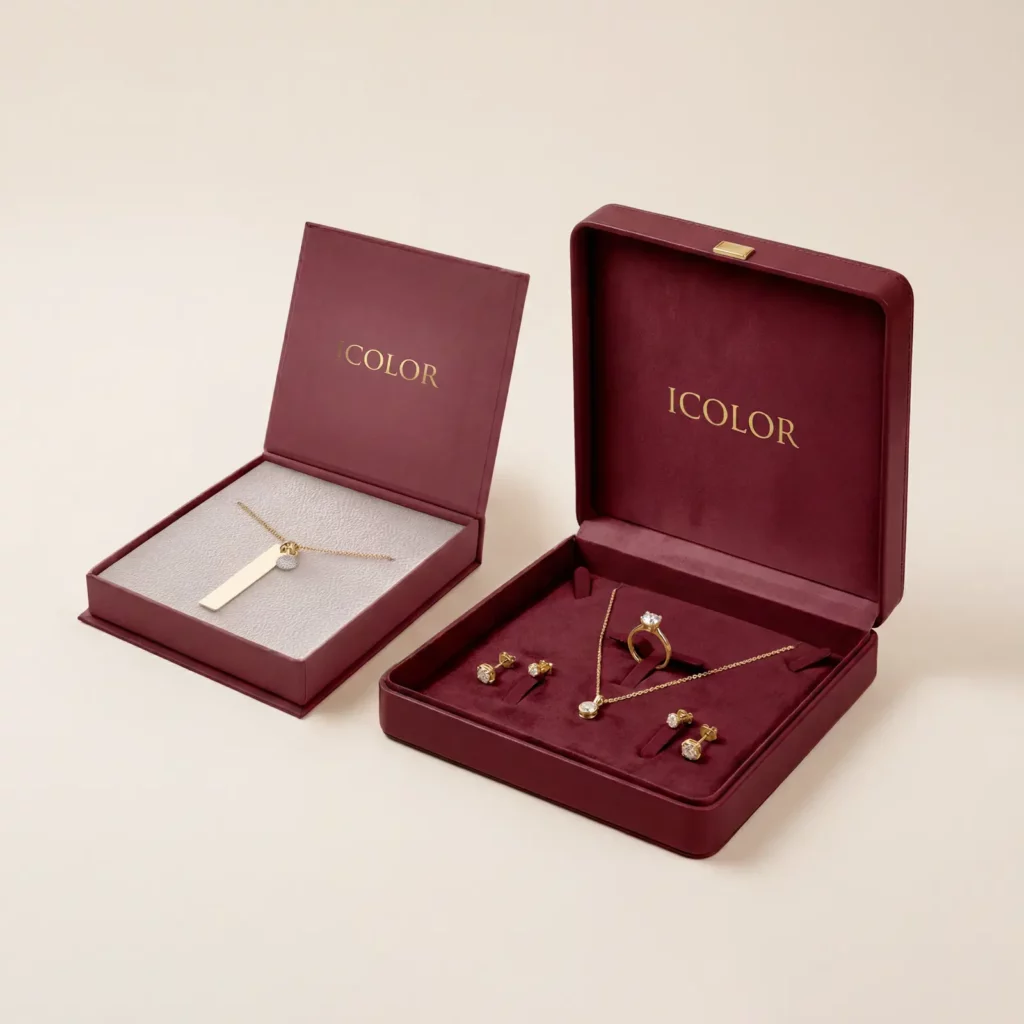
Common dieline revisions after the first jewelry sample
The first shaped box sample often reveals issues that are hard to see on a flat dieline. A heart curve may reduce the usable insert width. A rounded lid may touch a ring setting. A necklace card may need a deeper cavity than the original drawing allowed. These changes are normal, but they should happen before final artwork and finish approval.
Jewelry buyers should also check how the product is removed. If the insert is too tight, the customer may pull on the product instead of the tab or notch. If the insert is too loose, the item may shift during display or shipment. A small finger notch, ribbon lift or changed insert angle can solve the issue before bulk production.
For branded retail packaging, do not approve the dieline without confirming where the logo, barcode, product label and care card will sit. Shaped surfaces give less room for correction than a standard rectangle.
Best fit, less suitable and sample route
Custom shaped boxes are strongest when the buyer has a real jewelry product, brand artwork, target retail channel and sample-first mindset. They are weaker for one-off gifts, unclear products, lowest-price-only comparison or projects where the buyer only wants a shape before confirming the jewelry type.
Best fit
Jewelry brands planning ring, earring, bracelet or necklace packaging with MOQ 1000+, clear product dimensions and enough time for a structural sample.
Less suitable
No-brand requests, single boxes, no jewelry dimensions, urgent stock packaging, or buyers who only compare flat unit price without dieline details.
Sample gate
Approve blank structure first, then confirm insert, finish, logo placement, barcode or card position and packing method.
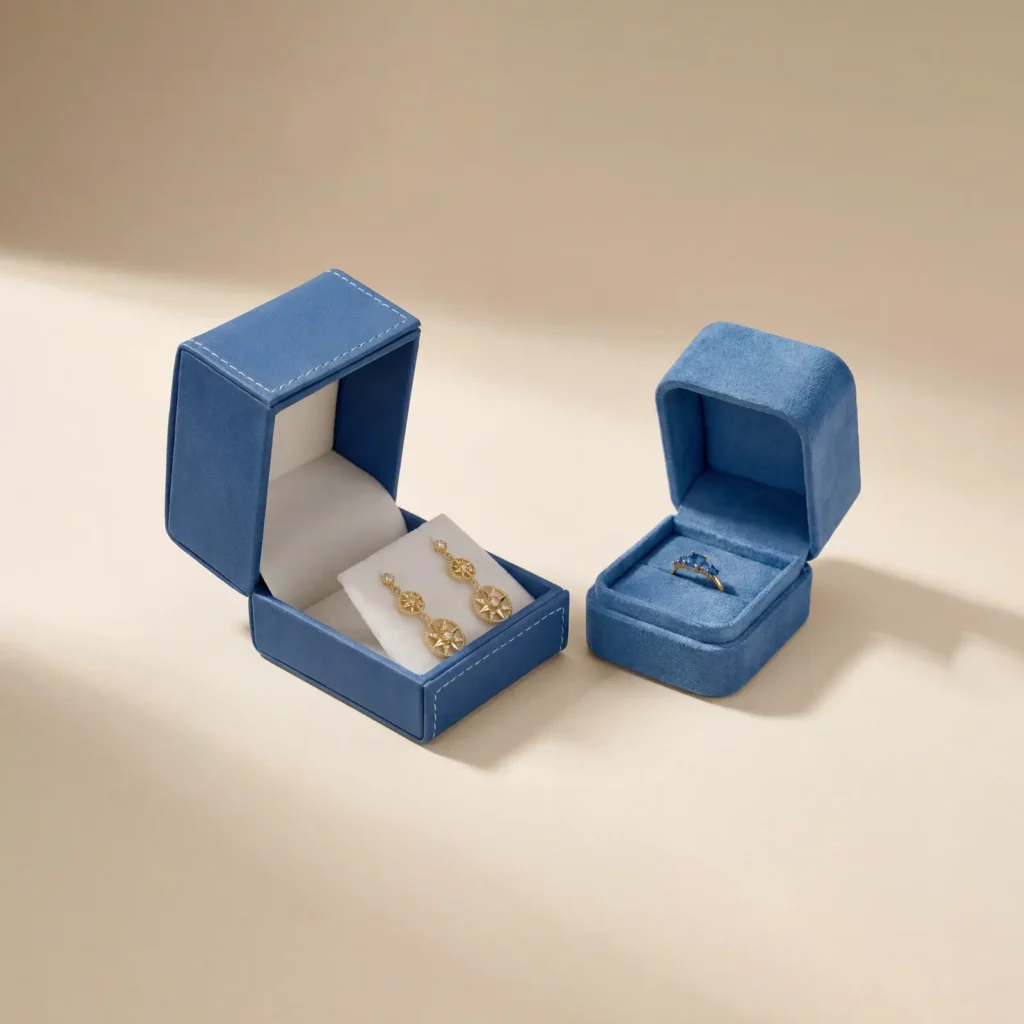

If the box will ship through e-commerce, distribution testing language may also be useful; ISTA transit-test procedures5 provides transport-test procedure context.
Internal route for shaped box RFQs
Start from Ecoicolor’s custom shaped boxes page when the outside shape is the core requirement. For product-hold decisions, connect the request with jewelry packaging et custom box inserts.
The first RFQ should include product photos or dimensions, desired shape, insert preference, logo route, quantity, destination country, target launch window and sample review timing.
FAQ
What MOQ should jewelry brands expect for custom shaped boxes?
Custom paper rigid shaped boxes should normally be planned from MOQ 1000 because tooling, structure, insert fit and sample review are involved.
What should a jewelry shaped box RFQ include?
Include product type, dimensions, desired shape, insert route, surface finish, artwork stage, quantity, target country and sample approval timeline.
Should the dieline be approved before the insert?
No. The dieline and insert should be checked together because product clearance and opening angle affect the final structure.
Can one shaped box fit several jewelry products?
Sometimes, but a shared insert can weaken fit. State SKU variation early so the sample can test the most difficult product.
Who is less suitable for custom shaped box production?
Single-piece, personal gift, no-brand, no dimensions or lowest-price-only requests are usually less suitable for custom shaped rigid boxes.
Sources
- FSC chain-of-custody information for paper packaging document support. ↩
- Pantone Connect information for color communication across materials. ↩
- GS1 US guidance on UPCs, barcodes and company prefixes for retail planning. ↩
- ISO 2859-1 sampling procedures for inspection by attributes. ↩
- ISTA packaging test procedure resources for transport and distribution checks. ↩