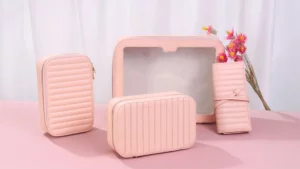
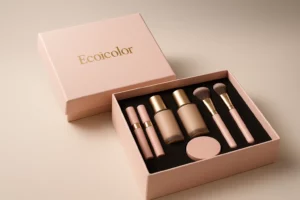
Use this guide to compare rPET velvet, standard velvet and neoprene for custom cosmetic bags, pouches and retail packaging projects. The useful question is not which material sounds more marketable, but which one fits your product use, certificate scope, claim boundary, sample route, MOQ and retailer ESG submission needs.
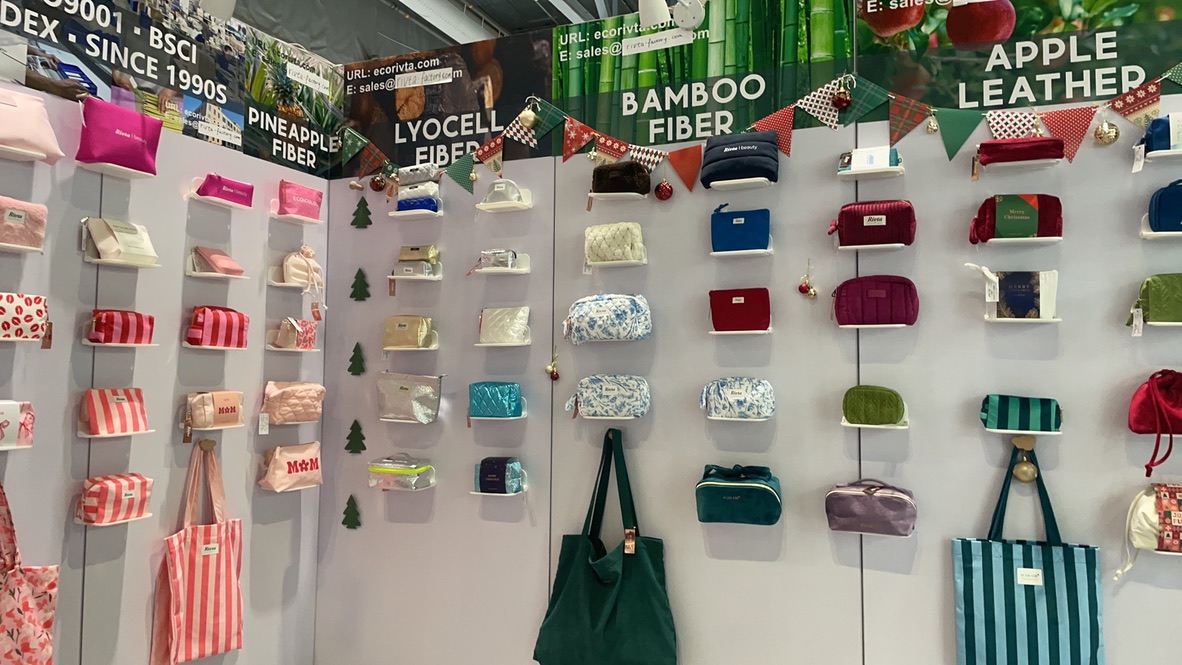
Beauty and fragrance buyers often compare these materials when planning seasonal kits, makeup bags, jewelry pouches, gift-with-purchase items and travel packaging. Each material can work well, but the right choice depends on how the finished item will be used, what documentation your retailer expects, and what wording your brand can support with supplier files.
Need a material shortlist before quotation?
Send Ecoicolor your product use, target market, claim wording and sample deadline. We will help compare rPET velvet, velvet and neoprene routes.
Envoyer un dossier d'emballage Voir Fabrication de sacs à cosmétiquesRéponse rapide
rPET velvet is often chosen when a buyer wants a soft premium hand feel with recycled-content documentation. Standard velvet is useful when color depth, softness and gift presentation are the main drivers. Neoprene works well for cushioned pouches, travel kits and structured cosmetic bags. Before selecting any material, confirm certificate scope, claim boundary, MOQ, color split, sample route, logo method and retailer file requirements.
What Buyers Should Compare First
Start with the project requirements, then choose the material:
- Product use: makeup bag, skincare pouch, fragrance sleeve, jewelry pouch, travel kit or gift-with-purchase item.
- Structure: soft pouch, padded case, structured bag, drawstring pouch or insert cover.
- Hand feel: plush, smooth, cushioned, flexible or structured.
- Certificate scope: material-level, finished-product, factory audit or supplier declaration.
- Claim boundary: what the brand can say about the material and which component the claim applies to.
- Sample route: swatch, logo test, blank structural sample and finished sample.
- Retailer ESG files: certificates, declarations, test reports and vendor submission support.
For broader material planning, review Ecoicolor’s sustainable materials and printing methods guide et sustainable packaging materials.
Material Comparison Table
| Matériau | Strong fit | Check before approval |
|---|---|---|
| rPET velvet | Cosmetic pouches, jewelry bags, gift sets and premium-feel launch kits | Certificate scope, pile direction, color consistency, lining choice and logo method |
| Standard velvet | Soft drawstring pouches, holiday packaging and jewelry presentation | Color depth, lint control, drawstring movement, embroidery or hot-stamp compatibility |
| Neoprene | Makeup bags, travel kits, padded pouches and structured cases | Thickness, odor review, edge finish, zipper behavior and print durability |
1. Choose by Product Use, Not by Material Name
A material can look attractive in a swatch book and still be wrong for the finished packaging. A fragrance discovery set needs different handling than a makeup brush bag. A jewelry pouch needs a different closure feel than a travel case. A retail gift-with-purchase bag needs to be attractive, easy to pack and consistent across a quantity run.
Use product-use notes like these:
- What product will sit inside the bag or pouch?
- Does the pack need padding, softness, shelf presence or repeated-use durability?
- Will the customer carry it, store it or use it only as a gift wrap?
- Does the logo need to be embroidered, printed, patched, embossed or woven?
- Does the material need to match a rigid box, paper sleeve or other set component?
If your project includes both soft bags and paper packaging, pairing material swatches with box or insert samples helps the team judge the full set, not just one component.
2. Confirm Certificate Scope Before Claim Wording
Certificate scope is the most important part of the material decision. A document may apply to the yarn, fabric roll, raw material supplier, finished product factory or social compliance audit. Those are not interchangeable.
Ask the supplier:
- Which material or component does the document cover?
- Does the certificate apply to the exact fabric, color and production route proposed?
- Is the certificate still valid during the project timeline?
- Can the supplier provide a declaration that matches the retailer’s form?
- Does the claim apply to the outer fabric only, the lining, the full pouch or a single component?
This is especially important for rPET velvet. A buyer should not assume that a material claim covers zippers, thread, lining, labels, trim or the finished bag unless the documentation says so.
3. Set Claim Boundaries for Retail and PDP Copy
Claim boundaries protect the brand from saying more than the available files can support. They also help sales, merchandising and compliance teams use the same language.
Practical examples:
- “Outer fabric made with rPET velvet” is more precise than a claim about the entire finished pouch when the lining and zipper are different materials.
- “Velvet cosmetic pouch with certified material option available” may be better when documentation is still under review.
- “Neoprene travel pouch” should be supported with a material specification sheet and any retailer-required test reports.
Before artwork approval, align the claim wording across hangtags, PDP copy, retailer upload fields, sales sheets and internal SKU records.
4. Use Samples to Test Hand Feel and Logo Method
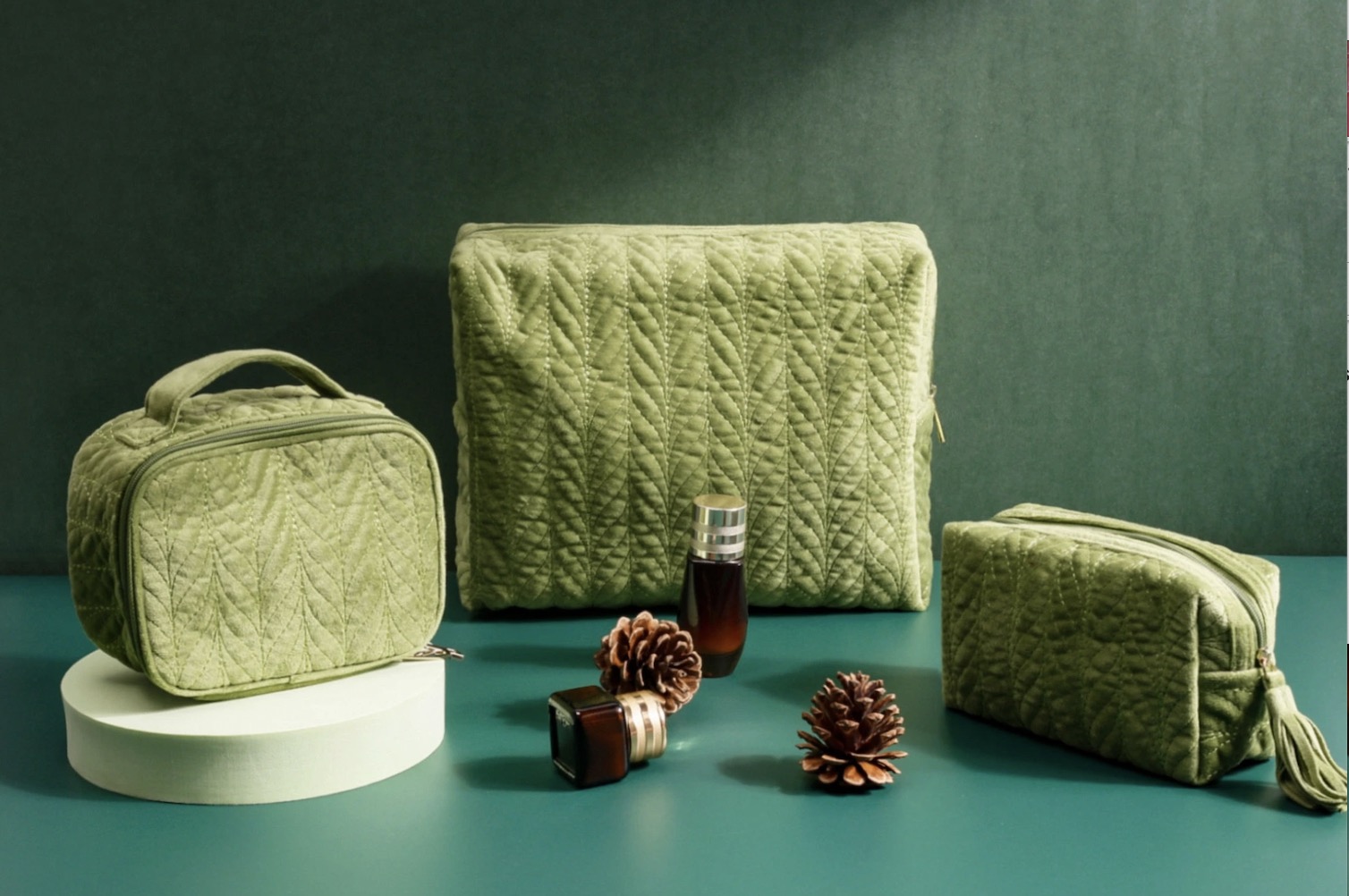
Material swatches are useful, but they do not answer every production question. A finished sample is still needed when structure, lining, zipper, puller, logo method and packing are part of the buyer decision.
For rPET velvet and velvet, check:
- Pile direction and shading under light.
- Color consistency across panels.
- Lint control and surface marks.
- Embroidery, woven label, patch or foil behavior.
- Drawstring movement or zipper compatibility.
For neoprene, check:
- Thickness and cushioning.
- Edge finishing.
- Odor review after packing.
- Logo print durability.
- How the material sits after folding or compression.
Need to test MOQ, samples and logo method?
Ask for a sample route that checks material, structure and logo before bulk approval.
Vérifier le MOQ et l'itinéraire de l'échantillon Voir les pochettes et sacs personnalisés5. Compare MOQ and Color Split Early
MOQ can change when a buyer splits the order across materials, colors, sizes or logo routes. A 5,000-piece order in one rPET velvet color is not the same production plan as a 5,000-piece order split across three colors, two sizes and two logo methods.
Ask for a quotation that separates:
- MOQ by material and color.
- Quantity by SKU, size and color.
- Logo setup for each method.
- Sample cost and sample lead time.
- Whether material can be shared across several SKUs.
- Whether the same lining, zipper and trim can be standardized.
This helps the brand compare actual launch feasibility, not only unit price.
6. Prepare Retailer ESG Files at RFQ Stage
Retailer ESG submissions can slow a project if documentation is requested after sample approval. Bring the file requirements into the RFQ stage.
Ask whether the supplier can support:
- Material specification sheet.
- Certificate or scope document.
- Déclaration du fournisseur.
- Factory audit or social compliance document.
- Test report if the retailer requests one.
- Product photos and sample approval record.
- Carton and packing details for vendor setup.
If the retailer has a template, send it with the RFQ. The supplier can identify which fields are supported by the proposed material and which may need a different route.
7. When Each Material Makes Sense
Choose rPET velvet when the project needs a soft premium surface, a documented recycled-content route and a gift-ready look. It is well suited for beauty pouches, jewelry bags and seasonal launch kits.
Choose standard velvet when softness, color depth and tactile presentation are more important than recycled-content documentation. It can work well for drawstring pouches, jewelry packaging and holiday gift sets.
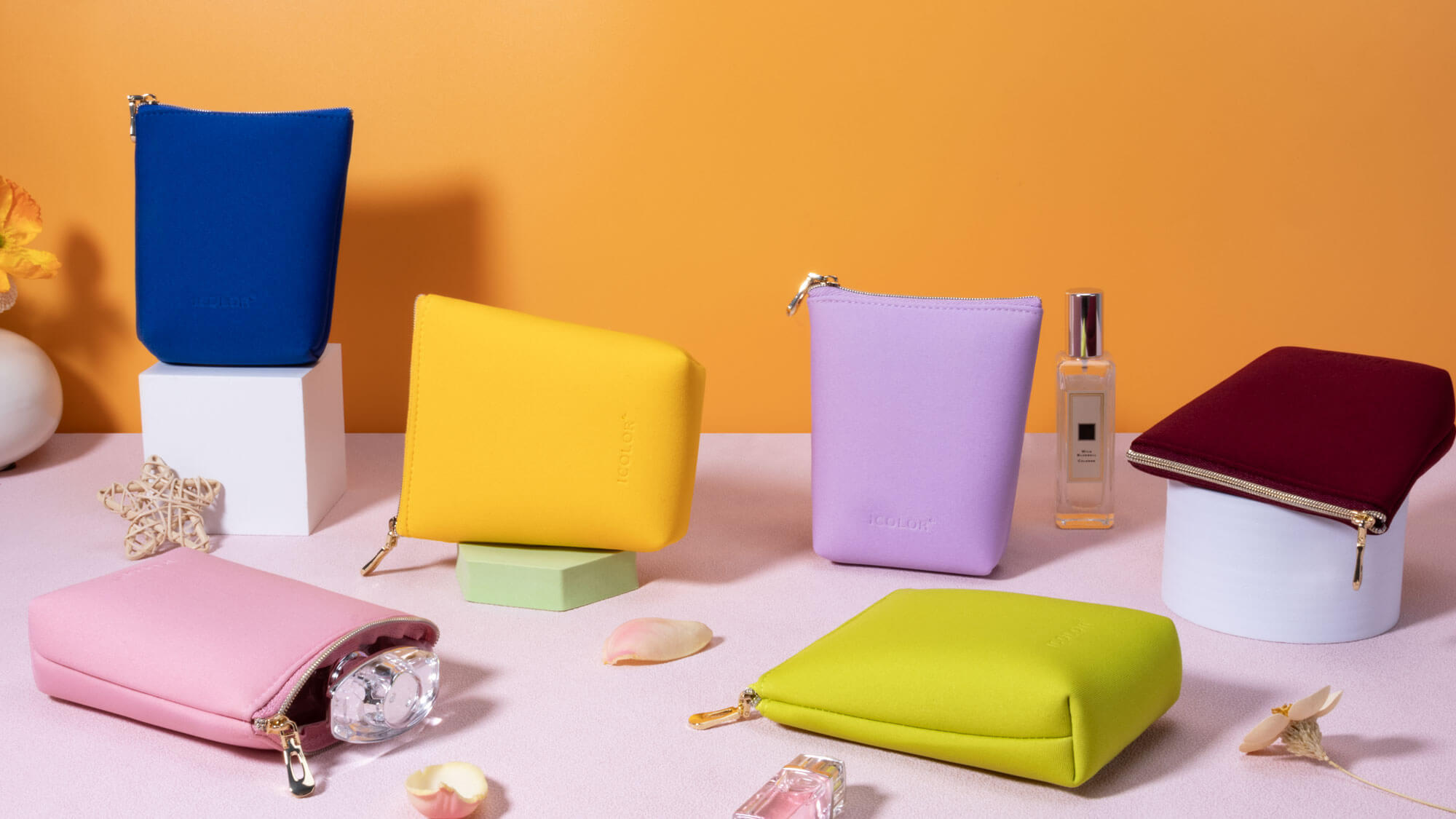
Choose neoprene when the item needs cushion, structure and travel-friendly handling. It is often used for makeup bags, organizer pouches, bottle sleeves and protective cases.
Buyer Checklist Before Final Approval
Before confirming bulk production, check:
- Material swatch approved by color and texture.
- Certificate scope reviewed against the intended claim.
- Retailer ESG files available or in progress.
- Sample route confirmed with decision dates.
- Logo method approved on the actual material.
- MOQ, SKU split and color split confirmed.
- Packing method and carton labels aligned with destination needs.
FAQ
Is rPET velvet suitable for cosmetic bags?
Yes, rPET velvet can be suitable for cosmetic bags when the buyer needs a soft hand feel, retail-ready appearance and documentation that matches the intended material claim.
Is neoprene better than velvet for travel packaging?
Neoprene is often stronger for cushioned travel pouches and structured cases. Velvet is usually chosen for a softer gift presentation. The better choice depends on product use, sample testing and claim needs.
What should I ask for before using a material claim?
Ask for certificate scope, material specification, supplier declaration and any retailer-required files. Then confirm whether the claim applies to the outer fabric, one component or the finished item.
Why do material swatches matter before finished samples?
Swatches let buyers compare color, texture, hand feel, thickness and logo compatibility before paying for a finished sample.
Can one supplier compare rPET velvet, velvet and neoprene?
Yes, if the supplier has access to the relevant material routes and can explain MOQ, sample timing, logo methods and documentation for each option.
Ready to compare material swatches?
Tell Ecoicolor your material direction, claim wording, retailer file needs and launch window. We can help prepare a cleaner material comparison.
Demande d'échantillons de matériaux Review Material and Claim Options