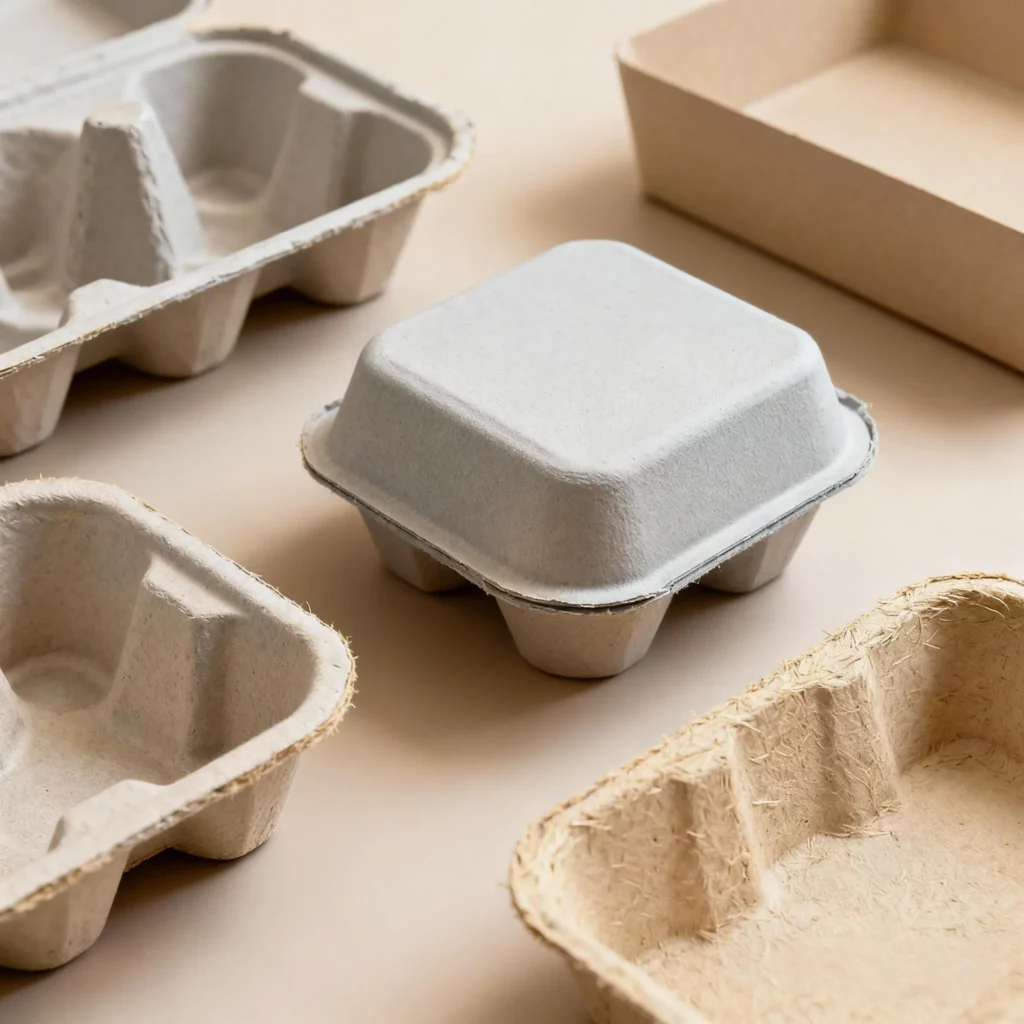
Use molded fiber when the product shape is already clear
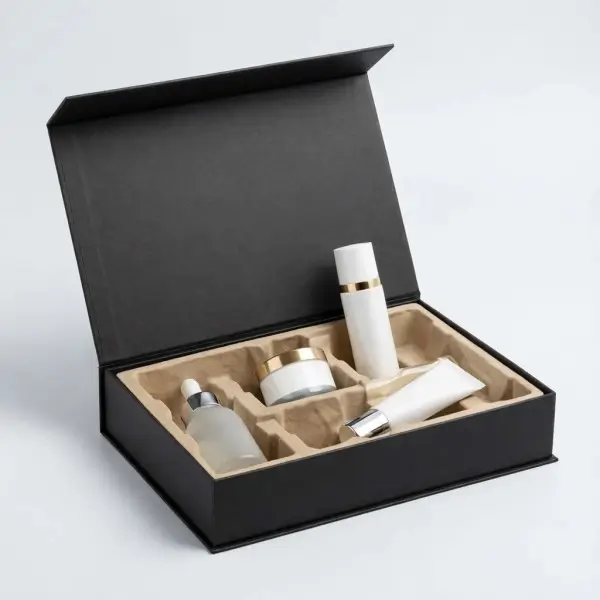
Molded fiber is strongest when the buyer can provide real product dimensions or samples. It can create a clean cavity for jars, bottles, refill packs, essential oil bottles or small skincare sets, but the supplier needs the product length, width, height, weight, cap direction, fragile points and display angle before quoting. If the project requires paper document support, mention FSC chain-of-custody documentation1 at the RFQ stage so the material route can be checked early.
The common mistake is choosing molded fiber because it sounds more sustainable, then discovering that the product is too small, too glossy, too heavy, or too hard to remove from the cavity. A good molded fiber RFQ starts with fit, removal feel and surface tolerance before color or finish discussion.
For a beauty gift set, the insert also decides how the buyer reads the set at first opening. A serum bottle may need label-forward display, a jar may need finger clearance, and a refill pouch may need a different cavity depth from the hero product. If the buyer wants the same insert to serve several SKUs, the supplier should know that before tool discussion, because one universal cavity can easily become too loose for the smallest item and too tight for the largest one.
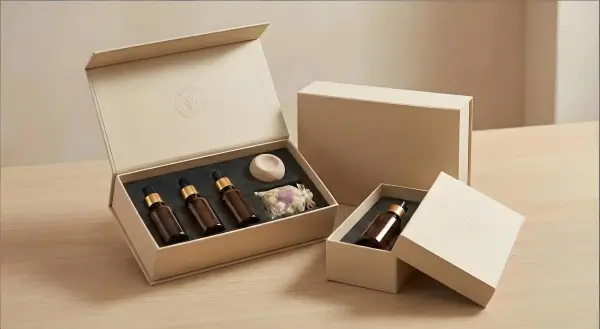
RFQ checklist for a molded fiber insert
- ✓ Product dimensions for every item in the set, including caps, pumps, cards or accessories.
- ✓ Outer box route: rigid box, drawer box, folding carton, paper tube, mailer or gift set tray.
- ✓ Cavity layout: product upright, lying flat, angled display, nested set or multi-layer pack-out.
- ✓ Surface tolerance: whether light texture is acceptable against bottles, caps or printed cartons.
- ✓ Document needs: paper route, project-scope certificate support and destination-market notes.
- ✓ Sample standard: how to approve tightness, removal feel, color, edge dust and carton packing.
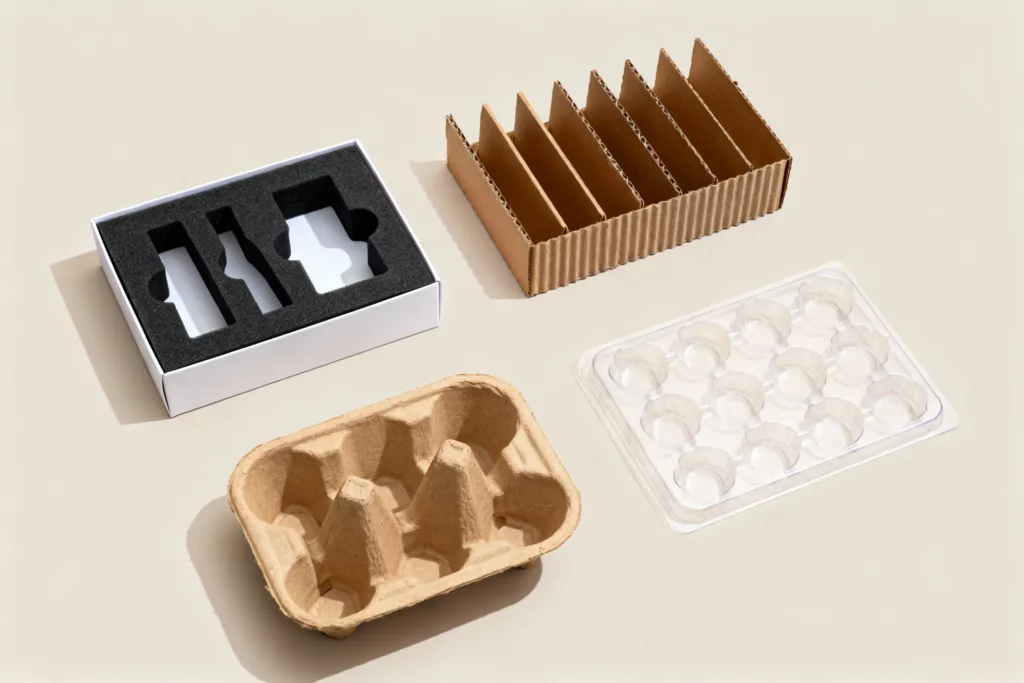
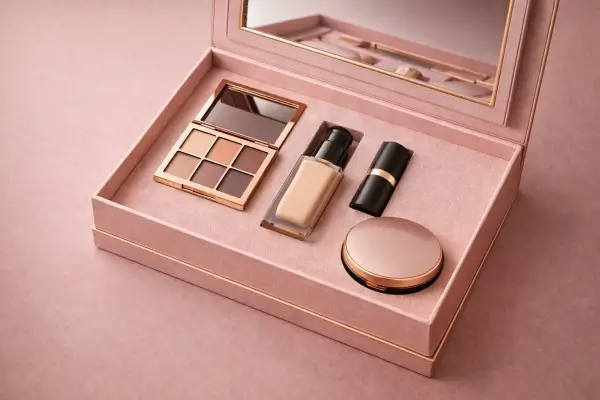
Molded fiber versus other insert routes
How to avoid sample revisions
A molded fiber sample should be judged as a product-fit sample, not only a material sample. Check whether bottles rotate, jars rub against the wall, a card bends, the product is hard to remove, or the cavity hides the hero label. If the finished gift box will ship through courier or retail distribution, discuss transport expectations with the supplier; ISTA transit-test procedures2 can support packaging test language where needed.
For color, molded fiber usually behaves differently from coated paper, velvet, plastic trays or printed cartons. Use physical samples for final color judgment. Tools such as Pantone color communication3 can help communication, but the actual molded material still needs proofing under the buyer’s lighting and brand standard.
The easiest way to reduce sample revisions is to separate three approvals: first cavity fit, then box fit, then full pack-out. If all three decisions are pushed into one final sample, the buyer may approve the cavity and then discover that the outer box is too shallow, the paper wrap color does not match the insert tone, or the carton packing compresses the set. The quote should name which sample stage is being reviewed.
A practical sample note can be short: product stays in place when the box is tilted, product can be removed without bending the insert, label remains visible, edge dust is acceptable, and the insert does not scratch the primary pack. This gives the supplier clear QC language and avoids vague comments such as ‘make it look better’ after the mold has already been adjusted.
Confirm Every Product Cavity Before Tooling
Send exact dimensions, cap heights, label-facing direction, outer-box inner size, finger-hole needs and every card or accessory position. If the outer box is not fixed, treat the request as a route comparison rather than a final production quote. Approve cavity depth and removal feel with real products or accurate dummies, then approve the packed sample.
Best fit and less suitable buyers
Best fit buyers are skincare, beauty, fragrance or essential oil brands with MOQ 1000+, clear product dimensions, a gift box route, sample approval time and a real launch or retail program. This route is especially useful when the buyer wants a paper-based insert feel and can accept molded texture as part of the presentation.
Less suitable buyers include one-piece gifts, below-MOQ tests, projects with no final product size, or teams that need a perfectly smooth glossy insert surface. Molded fiber can look premium in the right box, but it should not be forced into projects where the product surface, removal feel or brand finish standard points to another insert material.
A buyer is also less suitable when the product is still changing every week. Molded fiber needs stable product dimensions. If the brand is still deciding bottle shape, cap size or jar diameter, it is better to wait or use a temporary paperboard mockup before paying for a more product-specific insert sample.
FAQ
What MOQ should buyers expect for molded fiber gift box inserts?
Molded fiber and other custom insert projects should normally be planned from MOQ 1000 because tooling, fit review and sample approval are required.
What information is needed before quoting a molded fiber insert?
Send product dimensions, product weight, outer box type, quantity, delivery country, target price, document needs and launch timing.
Can molded fiber inserts be used for cosmetic bottles?
Yes, if the bottle shape, cap direction, product weight and removal feel can be checked with a sample before bulk production.
Is molded fiber always better than foam or paperboard?
No. The best insert depends on product protection, surface contact, display angle, cost target, material acceptance and sample results.
What should be checked on the first sample?
Check cavity tightness, product movement, removal feel, surface marks, paper dust, box fit, color and carton packing.