Comparing cosmetic packaging quotes is difficult when each supplier uses a different scope. A low total may exclude tooling, printed samples, inserts, retail packing or delivery assumptions, while a higher total may include them. Use this guide after you have sent the same packaging brief to shortlisted suppliers and need to compare their replies on a like-for-like basis.
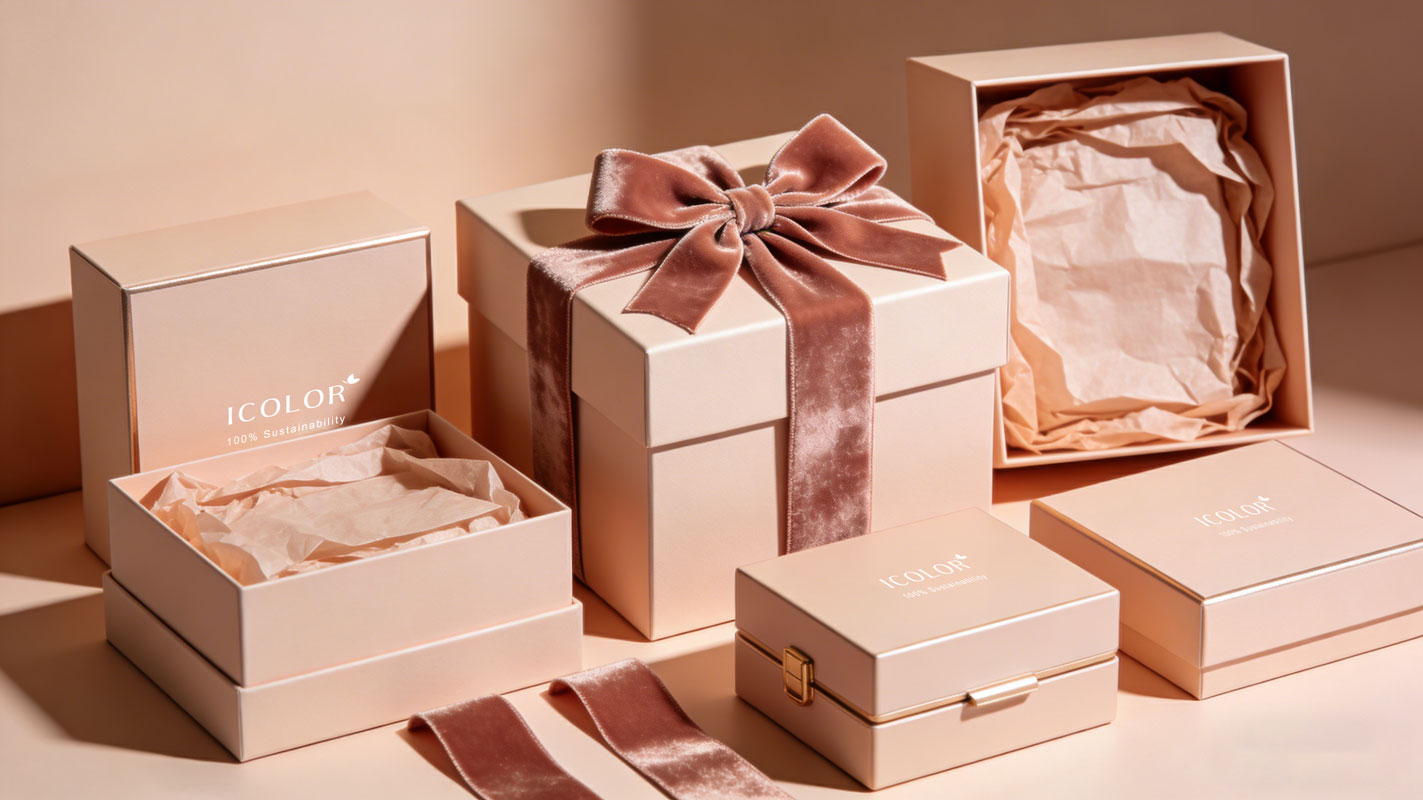
Buyer Summary
- For beauty and skincare brands comparing quotes for a set with boxes, sewn bags, inserts or unboxing accessories.
- Compare the same specification, quantity split, sample route, packing scope and delivery basis—not only the unit price.
- Plan around Ecoicolor’s normal MOQ: 500 pieces for sewn products and 1,000 pieces for paper products, with final review by component and SKU.
- Ask suppliers to separate included costs, optional upgrades, one-time charges and exclusions.
- For coordinated set development, review Ecoicolor’s cosmetic packaging solutions before requesting a final quote comparison.
- If the shared specification is not ready yet, prepare the component list, quantities, target price, artwork and approval route with Ecoicolor’s beauty packaging RFQ guide.
Need the quote scope checked before approval?
Send the component list, quantities, product dimensions, artwork status, destination and the quotations you want to compare. Ecoicolor can review the packaging route and identify missing assumptions.
Request a Quote-Scope Review View Cosmetic Packaging RoutesCompare the same scope before comparing price
Place every supplier quote against one controlled scope. The comparison should show whether the supplier priced the same structure, materials, finishes, quantities and packing route.
| Comparison field | What must match | Common source of a false saving |
|---|---|---|
| Component list | Box, bag, insert, card, label, ribbon, tissue and shipper | One quote leaves out secondary components |
| Quantity split | Total quantity plus quantity by SKU, size and color | Total volume is quoted as one SKU |
| Structure and size | Internal and external dimensions, board or fabric construction | A lighter or smaller structure is substituted |
| Decoration | Print colors, foil, embossing, embroidery, labels and hardware | Logo setup or premium hardware is excluded |
| Sample route | Swatch, blank sample, printed sample and approval stages | Only a basic sample is included |
| Packing | Individual packing, set assembly, carton quantity and labels | Retail-ready assembly is omitted |
| Delivery basis | EXW, FOB or another agreed handoff point | Freight and handoff assumptions differ |
If two quotations do not cover the same fields, the totals are not directly comparable. Ask for a revised breakdown before selecting the lowest number.
Separate recurring unit cost from one-time charges
A multi-component project may contain both recurring and one-time costs. Keep them in separate columns so the launch order and later reorder are not confused.
Recurring costs can include:
- The box, insert, sewn bag and printed accessory unit prices.
- Individual packing, tissue, protective sleeves or retail-set assembly.
- Carton labels, barcode labels and master carton packing.
- Routine inspection and the agreed handoff route.
One-time or project-dependent costs can include:
- Dies, molds, screens, printing plates or special tooling.
- Structural development and printed sample work.
- Color matching or material development that is outside the standard route.
- Third-party testing or document requests when specifically required.
Ask whether tooling can be reused on a reorder and whether a design or size change would require new setup. Do not assume every setup fee disappears after the first order.
Check MOQ by component and by SKU
One total project quantity does not automatically satisfy every component MOQ. Ecoicolor’s normal public starting points are:
- Sewn products: 500 pieces. This includes cosmetic bags, pouches, fabric cases and similar sewn packaging.
- Paper products: 1,000 pieces. This includes rigid boxes, paperboard boxes, paper tubes and paper inserts.
A set with 2,000 rigid boxes and 2,000 cosmetic bags may be workable at the family level, but the quote still needs to show how colors, sizes and artwork versions are split. Four colorways of 500 paper boxes each should not be presented as identical to one 2,000-piece paper-box SKU.
Ask each supplier to confirm:
- MOQ per component.
- MOQ per size, color and artwork version.
- Whether a shared structure is possible across SKUs.
- Whether overrun or underrun tolerance applies.
- Which parts are reviewed case by case.
Compare material and finish by a controlled reference
Material names alone are often too broad for a fair comparison. “Velvet,” “recycled fabric,” “textured paper” or “soft-touch finish” can cover different weights, hand feels, coatings and document scopes.
Use the same reference for each supplier:
- Physical swatch, approved sample or supplier sample code.
- Board thickness, paper type, fabric composition and lining route.
- Pantone or another agreed color reference.
- Logo size, position and method.
- Hardware finish and zipper specification where relevant.
- Document requirement by the exact material or component.
Do not treat a document attached to one material as proof for the entire packaging set. Ask the supplier to identify which component and material the document covers.
For early route selection, use Ecoicolor’s materials and printing guide and request matched swatches before approving a final specification.
Compare the sample route, not a fixed promise
Sample cost and timing depend on the structure, materials, artwork, finish and number of components. A useful quote states what the proposed sample is expected to prove.
| Sample stage | Decision it should support |
|---|---|
| Material or finish swatch | Hand feel, color direction and document route |
| Blank structural sample | Product fit, opening, protection and packing space |
| Printed sample | Logo position, print color, finish and assembly |
| Pre-production confirmation | Approved multi-component set before bulk production |
Confirm whether the sample price includes all components, shipping, color matching and revisions. Also confirm what happens when the buyer changes the size, material or artwork after the first sample.
Need to confirm the sample route?
Share the product dimensions, reference files and approval deadline so the sample stages can be reviewed against the real packaging set.
Review MOQ and Samples Use the Sample Approval WorkflowVerify inserts, fit and set assembly
For a box-and-insert project, the quote should not rely only on a product’s nominal volume. Share actual product dimensions or a physical product sample where possible.
The supplier should identify:
- Insert material and thickness.
- Product orientation and removal space.
- Bottle, jar or tool protection points.
- Tolerance around caps, pumps and irregular shapes.
- Whether the insert is supplied loose or assembled into the box.
- Whether the bag, card and accessory are packed inside the final set.
If one supplier prices an unassembled box and another prices a retail-ready set, their totals represent different work.
Compare QC, packing and handoff assumptions
The quote should state the checkpoints that affect production and shipment:
- Size and fit tolerances.
- Color and logo approval reference.
- Surface, stitching, zipper or hardware checks.
- Insert fit and set-completeness checks.
- Individual packing method.
- Master carton quantity, weight limit and carton marks.
- Barcode, SKU or warehouse-label responsibility.
- Handoff point and nominated-forwarder details.

When a quotation says “standard packing,” ask the supplier to describe it. A short packing line in the quote can prevent a large difference later in labor, carton use and delivery preparation.
Use a weighted quote-comparison table
The cheapest line is not always the best commercial route. Use a simple weighted review that reflects the launch risk.
| Review area | Suggested decision question |
|---|---|
| Scope completeness | Does the quote include every required component and service? |
| Specification match | Are structure, materials, finishes and dimensions comparable? |
| MOQ and SKU fit | Does the split match the real launch plan? |
| Sample path | Can the proposed samples prove fit, color and assembly? |
| Documentation | Is the required material or supplier document scope clear? |
| QC and packing | Are inspection, set assembly and carton details defined? |
| Timeline assumptions | Are buyer approval time and supplier production steps separated? |
| Communication | Are exclusions and open questions stated clearly? |
Assign higher weight to the areas that could block the launch. For a glass skincare set, insert fit and breakage protection may carry more weight than a decorative upgrade. For a GWP pouch, SKU split, logo consistency and pack-out timing may matter more.
Quote comparison template you can copy
We are comparing quotations for a beauty packaging set containing [component list]. Please confirm that your quotation uses the following controlled scope: [sizes and structures], [materials and finishes], [quantity by SKU/color], [sample stages], [individual and set packing], and [delivery basis]. Separate recurring unit costs from tooling, sample, development, testing and freight charges. List all exclusions, optional upgrades and buyer-supplied items. Please also confirm MOQ by component and SKU, document scope, approval points, QC checks, carton details and the assumptions behind the production schedule.
Use the same message for every shortlisted supplier. Record each reply in one table rather than comparing separate email threads.
Best fit and less suitable inquiries
Best fit
- Beauty or skincare brands coordinating two or more custom packaging components.
- Projects that meet the relevant sewn or paper-product MOQ.
- Teams with product dimensions, quantity split, artwork direction and a launch window.
- Buyers willing to approve materials and samples before bulk production.
- Brands that need the quote to show packing, QC and document scope clearly.
Less suitable
- Single-piece, personal-gift or retail replacement purchases.
- Projects that require paper products below the normal 1,000-piece MOQ as a standard offer.
- Requests based only on the lowest unit price with no controlled specification.
- Projects with no product size, quantity, artwork direction or approval contact.
- Buyers unwilling to review samples before bulk production.
FAQ
How do I compare cosmetic packaging quotes fairly?
Send every supplier the same component list, specifications, quantity split, sample route, packing scope and delivery basis. Separate recurring unit prices from tooling, samples, development, testing and freight.
Should the lowest unit price win?
Not automatically. First confirm that the quote includes the same materials, structure, decoration, insert, packing, QC and handoff scope. An omitted component or service can make a total look lower without reducing the real project cost.
How should MOQ be compared in a multi-component set?
Check MOQ by product family, component, size, color and artwork version. Ecoicolor normally starts sewn products at 500 pieces and paper products at 1,000 pieces, subject to final project review.
What sample costs should be separated?
Ask suppliers to separate material swatches, blank structural samples, printed samples, special tooling, shipping and revisions caused by specification changes.
What should be confirmed for a box insert?
Confirm the insert material, thickness, product dimensions, orientation, removal space, tolerance, protection points and whether it is supplied assembled inside the box.
How should delivery assumptions appear in the quote?
The quote should name the commercial handoff basis, destination or forwarder information, carton assumptions and whether freight, duties or warehouse delivery are included or excluded.
Ready to compare the complete packaging route?
Send the controlled specification, component quantities, product dimensions, sample needs and destination. Ecoicolor can review boxes, bags, inserts and accessories as one coordinated scope.
Send Quotes for Scope Review Review the Packaging System